Sharing Economy's Dirty Secret: More Sharing, More Waste

Sharing Economy's Dirty Secret: More Sharing, More Waste
Scientists Want to Bring Back the Ice Age to Save Us
Whale Pump: How Whale Dung Fertilizes the Ocean

Climate Tipping Cascades: How One Threshold Topples All
Iron-Air Batteries Could Solve Renewable Energy Storage
Megadrought Is Redrawing the Map of Earth's Ecosystems
TL;DR: Fog nets and atmospheric water generators are solving water scarcity in deserts by capturing moisture from air. Communities in Morocco, Peru, and Chile are using this low-tech, sustainable solution to harvest thousands of liters daily.
By 2030, the United Nations predicts water scarcity will displace 700 million people worldwide. Yet in Morocco's Anti-Atlas mountains, villagers wake each morning to find thousands of liters of fresh water waiting for them, captured overnight from fog that rolls through their valleys. This isn't science fiction or expensive desalination. It's atmospheric water harvesting, and it's quietly revolutionizing how desert communities survive.
Fog collection works through elegant simplicity. Large vertical mesh nets catch microscopic water droplets from fog, which coalesce and flow down into collection troughs. The technology mirrors nature's own design. The Namib Desert beetle, Stenocara gracilipes, has been doing this for millions of years with bumps on its back that are hydrophilic at the peaks and hydrophobic in the valleys, creating a water-harvesting surface.
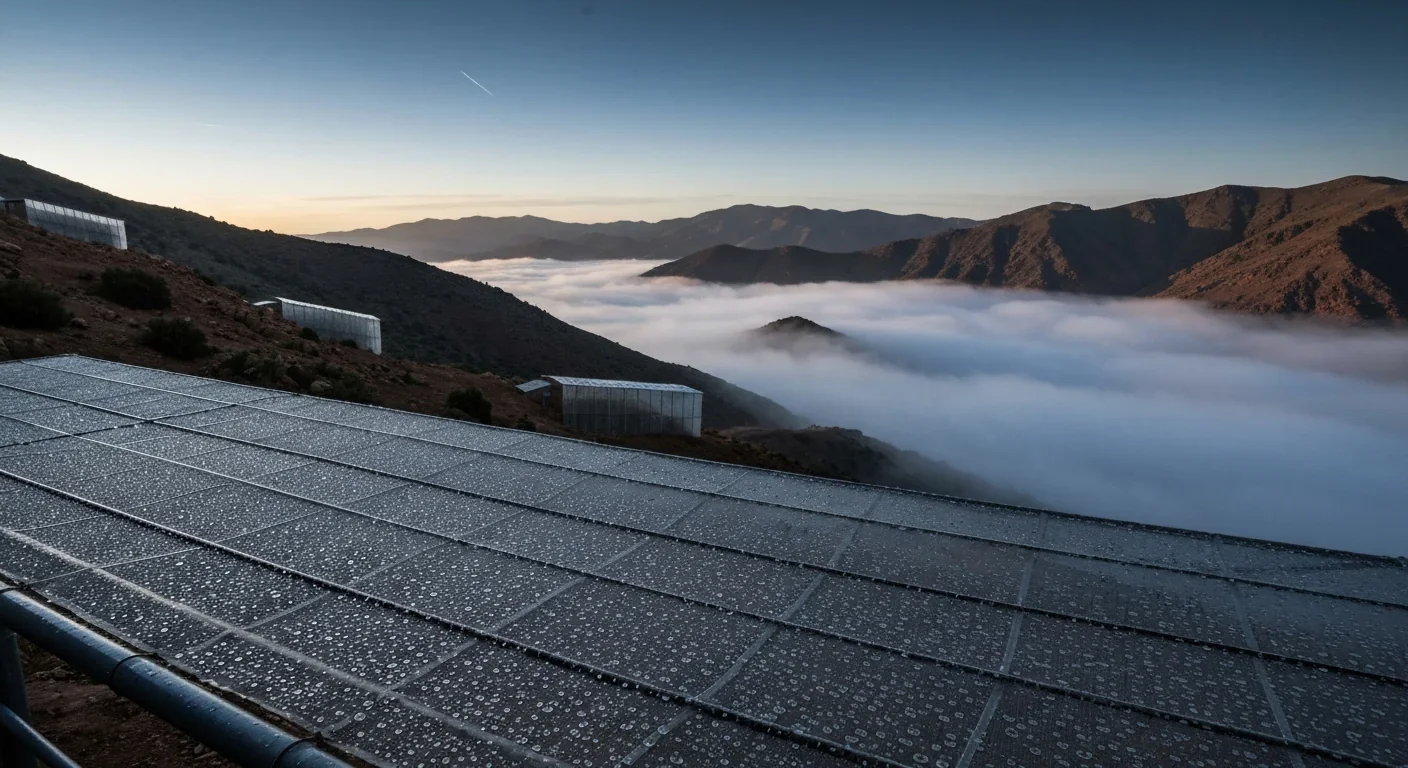
What makes this a true breakthrough is the scalability and accessibility. A single fog collector measuring just one square meter can produce 110 milliliters of water per day in optimal conditions. Scale that up to Morocco's Dar Si Hmad project, which deployed 94 collectors across five villages, and you're delivering clean water to 400 people daily.
Recent innovations have supercharged efficiency. MIT researchers working with Dar Si Hmad improved fog collection efficiency by 500% through better mesh designs and placement strategies. New materials incorporating hydrophilic-hydrophobic coatings inspired by that desert beetle can achieve 10% moisture capture rates, transforming what was once a supplementary water source into a primary lifeline.
Climate change is creating a "fog opportunity window" where atmospheric water harvesting becomes increasingly viable precisely where it's needed most.
The timing couldn't be more critical. Climate change is intensifying water scarcity in arid regions while simultaneously increasing fog formation in certain coastal deserts. This creates what scientists call a "fog opportunity window" where atmospheric water harvesting becomes increasingly viable precisely where it's needed most.
Humans have been harvesting atmospheric water for millennia. The Inca Empire built fog collection systems in the Atacama Desert long before modern materials existed. In the Canary Islands, ancient inhabitants constructed stone air wells that condensed water from humid air to survive on volcanic rock with minimal rainfall.
These weren't primitive technologies. They were sophisticated engineering solutions born from desperate necessity. The Zibold air well in Crimea, built in 1912, could produce up to 360 liters daily through nothing but careful design of stone surfaces that promoted condensation.
What changed wasn't the principle but the materials. Modern fog nets use polyethylene or polypropylene mesh that's lighter, more durable, and vastly more efficient than natural fibers. The shift from passive collection to engineered systems mirrors humanity's broader technological evolution.
The lesson from history is clear though. When conventional water sources fail, looking up rather than down can save civilizations. Today's fog harvesters aren't discovering something new. They're rediscovering what our ancestors knew: the atmosphere holds water, and clever design can capture it.
The physics is straightforward but the implementation requires precision. Fog consists of water droplets between 1-40 micrometers in diameter suspended in air. When these droplets encounter mesh fibers, surface tension causes them to adhere. As more droplets accumulate, gravity overcomes surface tension and water flows downward.
Mesh design is critical. Too fine and airflow restriction reduces collection. Too coarse and droplets pass through uncaptured. The optimal mesh has 35-55% shade coefficient, meaning it blocks between 35-55% of light while allowing airflow.

Modern collectors use Raschel mesh, a double-layer knitted fabric that maximizes collection efficiency. The material must withstand UV radiation, high winds, and constant moisture without degrading. Quality mesh can last 10-15 years before needing replacement.
Placement matters as much as materials. Collectors must face perpendicular to prevailing winds at elevations where fog frequency is highest, typically between 400-1000 meters in coastal mountains. Sites need consistent fog events, ideally 100-200 days annually.
"MIT researchers improved fog collection efficiency by about 500% through computational fluid dynamics modeling that optimized collector placement and orientation."
- Research published in collaboration with Dar Si Hmad
Advanced systems now incorporate biomimetic surfaces. Researchers coat mesh with hydrophilic-hydrophobic patterns that mimic the Namib beetle's back, creating preferential pathways for water flow. This seemingly small innovation can double collection rates.
Dew collection operates differently but complements fog harvesting. Radiative cooling surfaces drop below ambient temperature at night, causing atmospheric moisture to condense directly. A one square meter radiative cooler can produce 0.5-1 liter of water per night in humid conditions.
Lima, Peru receives just 13 millimeters of rainfall annually, making it one of the world's driest capitals. Yet it sits in a band of persistent coastal fog called garúa that blankets the city for eight months each year. This paradox drove innovation.
In the impoverished hillside community of Villa María del Triunfo, residents once waited for water trucks that came sporadically, paying premium prices for contaminated water. In 2006, a pilot fog collection project installed ten collectors on the steep slopes above the community.
Results exceeded expectations. Each collector measuring 40 square meters produced 200-400 liters daily during fog season. The system now includes reforestation efforts, as captured water irrigates native trees that increase local fog formation, creating a virtuous cycle of water generation.
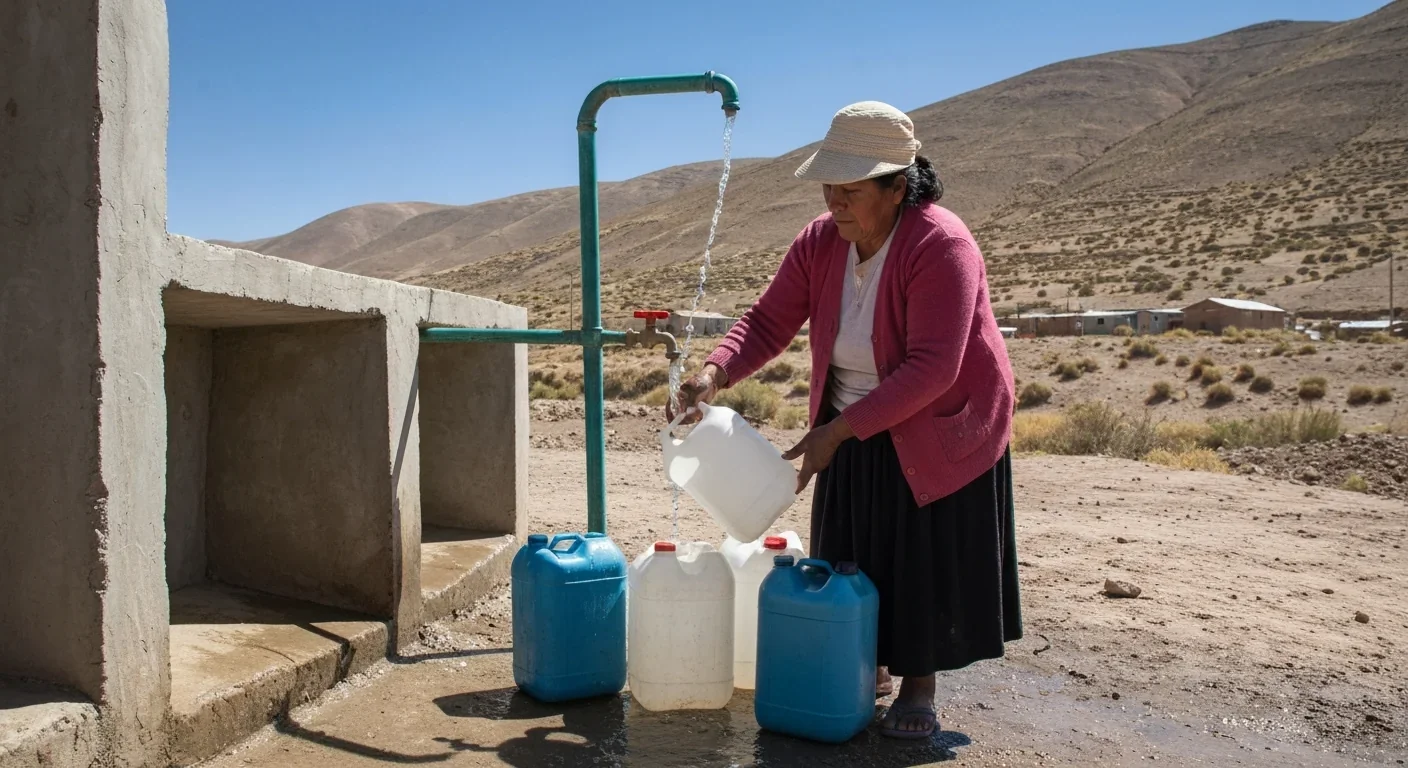
The project transformed lives beyond just water access. Children who previously spent hours hauling water from distant sources now attend school regularly. Women have time for economic activities instead of water collection. Gardens flourish where only dust existed before.
Chile's Atacama Desert, the driest non-polar desert on Earth, hosts similar projects. The village of Chungungo operated 94 fog collectors that provided water for 300 residents from 1992-2002, proving the technology's long-term viability.
Morocco's Dar Si Hmad project represents the world's largest functioning fog collection system. Installed in 2015, it serves five villages in the Aït Baamrane region where women previously walked three hours daily to fetch water from distant wells.
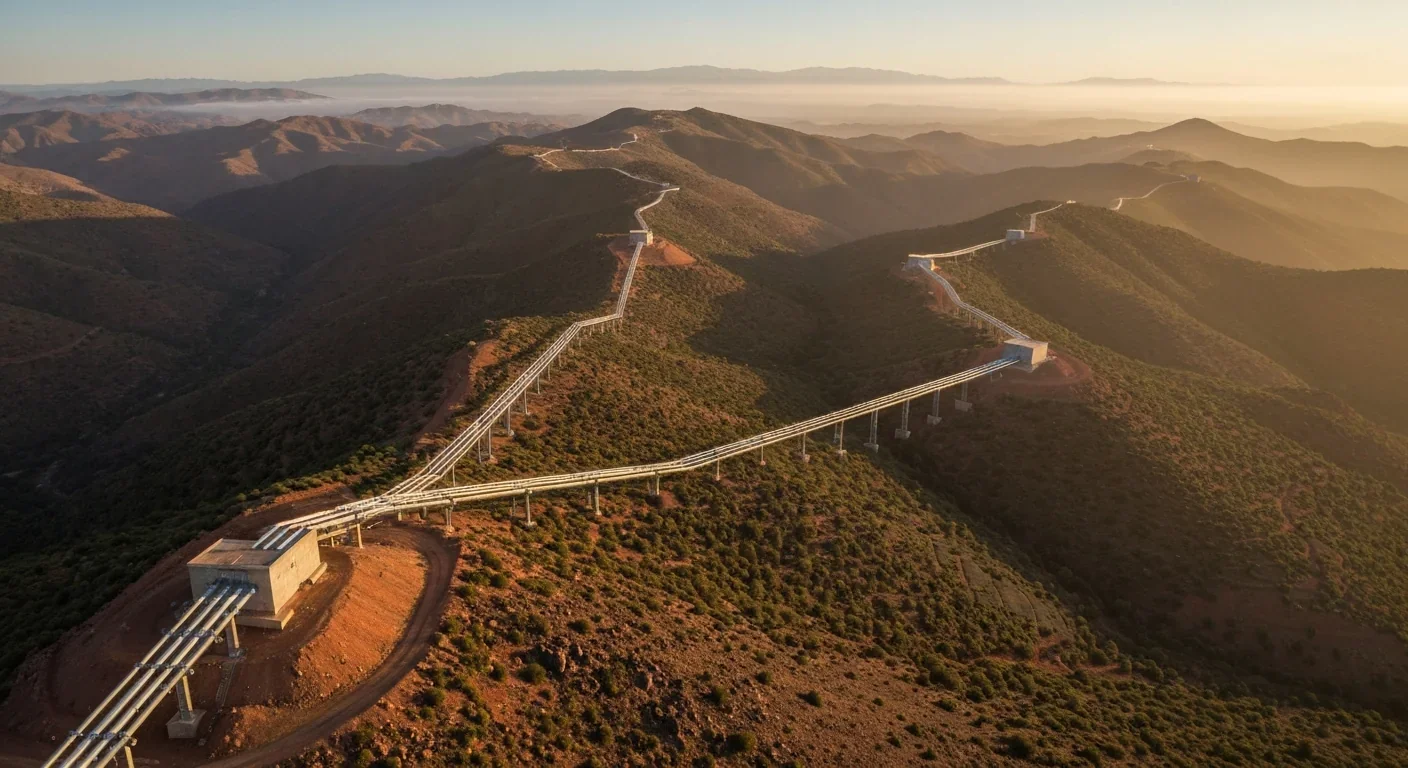
The system spans several mountain ridges with 94 fog collectors totaling 600 square meters of collection surface. During peak fog season, it produces 6,000 liters daily, distributed through a gravity-fed pipe network to village storage tanks.
Dar Si Hmad's fog water meets WHO drinking water standards without treatment, cleaner than the contaminated well water residents previously used.
What makes Dar Si Hmad remarkable is the community integration. Local women manage the system, handling maintenance, water distribution, and financial operations. This creates employment while ensuring community ownership and long-term sustainability.
The water quality is exceptional. Testing shows fog water meets WHO drinking water standards without treatment, cleaner than the contaminated well water residents previously used. The only processing needed is simple filtration to remove debris and occasional chlorination for storage safety.
MIT's collaboration improved efficiency through computational fluid dynamics modeling that optimized collector placement and orientation. The 500% efficiency gain didn't require new technology, just better application of existing methods. This highlights how thoughtful engineering multiplies impact in resource-constrained settings.
The project's success attracted international attention and UNESCO recognition. It's become a model for other regions considering atmospheric water harvesting, proving that low-tech solutions can solve high-stakes problems when properly implemented.
The economics of fog collection are compelling for remote arid communities. Initial installation costs run $75-200 per square meter of collection surface, depending on terrain difficulty and material choices. A basic system serving a small village might cost $15,000-30,000.
Compare this to alternatives. Drilling wells in mountainous areas can cost $50,000-100,000 with no guarantee of finding water. Trucking water to remote villages costs $10-50 per cubic meter depending on distance. Desalination plants require massive infrastructure and energy inputs.
Operating costs for fog collection are minimal. The system has no moving parts and requires no power. Maintenance involves cleaning mesh seasonally and occasionally replacing worn sections. Annual costs typically run less than 5% of initial investment.
Production costs per liter are remarkably low. Dar Si Hmad produces water at approximately $0.02 per liter when capital costs are amortized over 15 years. Residents previously paid $0.10-0.50 per liter for trucked water. The payback period is typically 3-7 years.
The technology's simplicity enables local manufacturing. Chilean companies now produce complete fog collection kits that communities can install themselves, reducing costs and building local expertise. This democratizes access to the technology.
Atmospheric water generators represent the high-tech end of the spectrum. These solar-powered or grid-connected devices actively extract water from air through cooling condensation. They work in broader conditions than fog collectors but cost $1,500-5,000 per unit for residential models and produce 20-50 liters daily.
Fog harvesting's environmental footprint is minimal. The collectors don't deplete water sources or harm ecosystems. They're capturing water that would otherwise remain suspended or fall as precipitation elsewhere. Unlike groundwater extraction, there's no risk of aquifer depletion or land subsidence.
The materials themselves have low environmental impact. Modern mesh is fully recyclable, and the simple structure requires minimal concrete or metal. The entire system can be disassembled and relocated if needed, leaving no permanent ecological scar.
Energy consumption is zero for passive fog collectors. This contrasts sharply with desalination, which consumes 3-10 kWh per cubic meter produced, or deep well pumping which requires continuous power. In an era of climate consciousness, fog collection's carbon neutrality is a major advantage.
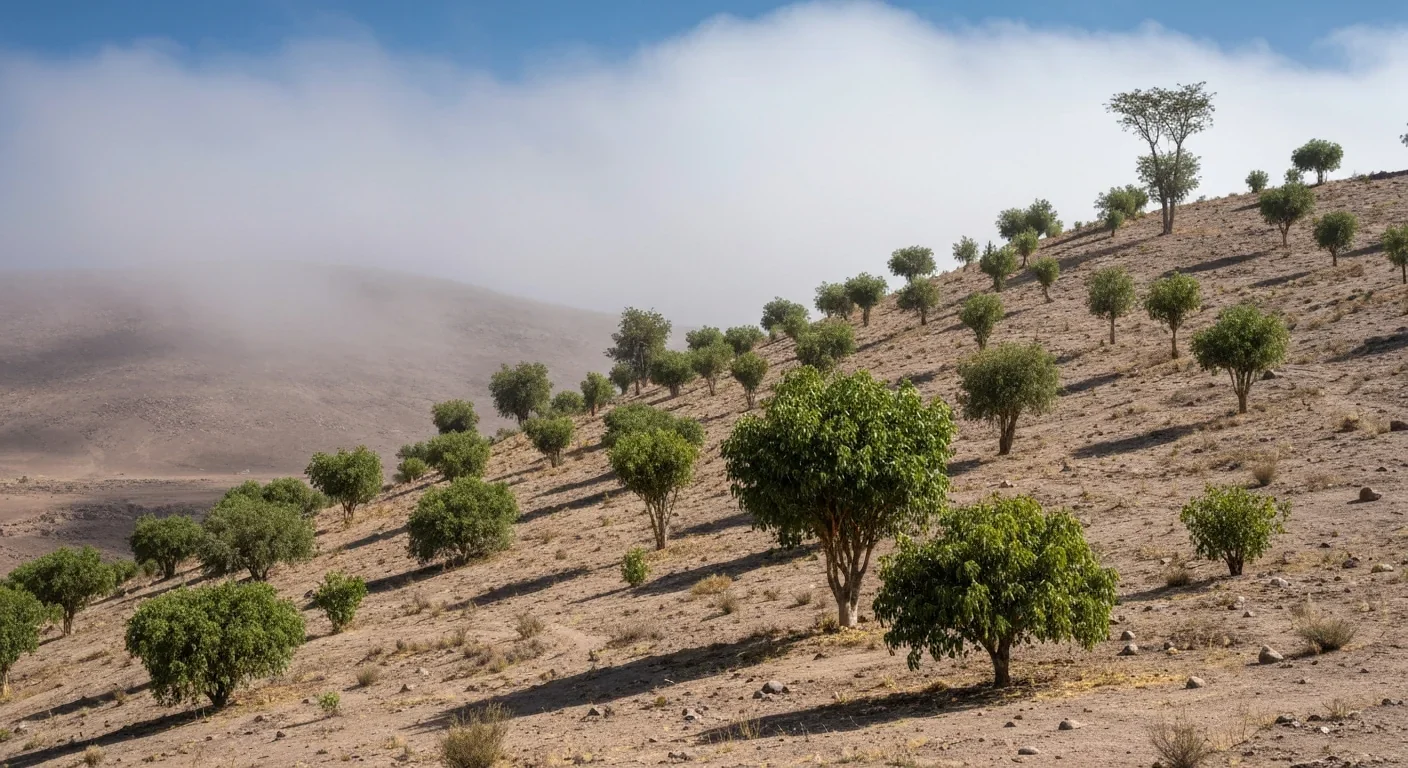
Some researchers worry about ecological effects of large-scale fog interception, particularly on downwind ecosystems that depend on fog moisture. Studies in Chile found minimal impact at current scales, but this warrants monitoring as deployment expands.
The sustainability extends to social dimensions. Projects that employ local residents and use local materials create lasting benefits beyond water provision. They build technical capacity and foster community resilience to climate change.
Fog water's purity eliminates needs for chemical treatment. No chlorination plants, no filtration systems, no chemical waste. The water arrives naturally distilled by evaporation, though it picks up trace minerals passing through mesh. This reduces operational environmental impact to essentially zero.
Climate models predict increased fog formation in certain coastal regions as warming oceans boost evaporation. This seeming paradox creates opportunities. Areas previously too dry for fog collection may become viable, even as traditional water sources fail.
The Atacama Desert is experiencing this shift. Climate data shows fog frequency increasing along coastal mountains even as rainfall remains negligible. Similar patterns appear in Namibia, Peru, and Morocco. The atmosphere is becoming a more reliable water source in precisely the regions facing most severe water stress.
"As traditional water infrastructure becomes less reliable, distributed atmospheric collection could provide resilience. Communities aren't dependent on distant watersheds or depleting aquifers."
- Climate adaptation researchers
This makes atmospheric water harvesting a climate adaptation strategy, not just a stopgap measure. As traditional water infrastructure becomes less reliable, distributed atmospheric collection could provide resilience. Communities aren't dependent on distant watersheds or depleting aquifers.
Researchers are developing climate-suitable crop varieties that thrive on fog irrigation. This could enable agriculture in areas previously unsuitable, expanding food production as climate change stresses conventional farmland. The water is free, renewable, and increasingly abundant.
Urban applications are emerging too. Alto Hospicio, Chile is studying city-scale fog collection to supplement municipal water supplies. If successful, this could provide a model for coastal desert cities worldwide, from Lima to Cape Town to cities in Baja California.
Recent materials science advances are revolutionizing collection efficiency. Hierarchical micro-nano structures inspired by desert plants and insects can increase capture rates by 300-400%. These surfaces actively direct water droplets toward collection channels using precisely engineered surface chemistry.
Graphene oxide coatings show particular promise. Researchers demonstrated graphene-coated mesh capturing water at 95% efficiency even in low-humidity conditions. While currently expensive, scalable manufacturing could bring costs down dramatically within a decade.
Metal-organic frameworks represent another frontier. These crystalline materials absorb water from air at night and release it when warmed by sunlight, achieving high efficiency without active energy input. Prototypes produce over 1 liter per kilogram of material daily at relative humidity as low as 20%.
The atmospheric water generator market is exploding. Analysts project the market will reach $6.22 billion by 2034, driven by improving efficiency and falling costs. Home units now produce 30-50 liters daily while consuming less power than a refrigerator.
Solar integration is advancing rapidly. Photovoltaic panels power active water generators during the day, making them viable for off-grid locations. Some designs use waste heat from panels to boost condensation rates, improving overall efficiency.
Smart sensors and IoT integration optimize performance. Real-time monitoring of humidity, wind, and temperature allows systems to adjust collection strategies automatically. Predictive algorithms can forecast optimal collection periods and maintenance needs.
Water scarcity affects 2.2 billion people worldwide, with that number projected to double by 2050. Different regions are approaching the crisis differently, creating a global laboratory of solutions.
Middle Eastern nations are investing heavily in desalination, leveraging abundant energy resources to power water production. Saudi Arabia and UAE derive over 50% of water from desalination, but this approach requires massive infrastructure and isn't viable for poor rural communities.
Latin American countries are embracing atmospheric water harvesting because it matches their geography. The Andean fog forests and coastal deserts provide ideal conditions. Projects in Peru, Chile, and Guatemala demonstrate the technology's potential at relatively low cost.
African nations see atmospheric collection as a climate adaptation tool. Namibia pioneered early fog collection in the 1960s. Today, projects span from Morocco to South Africa, often integrated with sustainable development and women's empowerment initiatives.
Asia is taking a mixed approach. India is deploying atmospheric water generators in schools and villages, while pursuing massive river-linking projects. China invests in cloud seeding alongside exploring fog collection for western provinces.
Island nations face unique vulnerabilities. Rising seas contaminate groundwater with saltwater intrusion, making atmospheric sources increasingly critical. Pacific islands and Caribbean nations are studying fog and dew collection to maintain freshwater independence.
International cooperation is expanding through technology transfer programs and shared research. The FogQuest organization coordinates global fog collection projects, sharing best practices across continents. UNESCO supports several atmospheric water harvesting initiatives as part of its water security programs.
Water scarcity limits agriculture more than any other factor. Fog-irrigated farming could unlock millions of hectares currently classified as marginal land. Early trials show promising results with adapted crop varieties.
Chile's Atacama region is experimenting with fog-irrigated vineyards and olive groves. The crops receive just enough moisture to survive in ultra-arid conditions, producing unique flavors valued in specialty markets. It's not high-volume production, but it's viable where nothing grew before.
Cannabis cultivation in arid climates increasingly uses dew collection systems to reduce water costs and environmental impact. The plants' relatively low water needs make them ideal candidates for atmospheric irrigation. This points toward broader applications in high-value specialty crops.
Reforestation projects use fog water to establish native tree species in degraded desert areas. Once established, these trees capture additional fog moisture themselves, bootstrapping ecosystem restoration. Peru's Lima fog forest restoration demonstrates this potential dramatically.
Industrial applications are emerging. Some mining operations in Chile use atmospheric water to reduce freshwater extraction. Construction sites in water-stressed regions deploy portable fog collectors for dust suppression and concrete mixing. The technology's scalability enables diverse applications.
The atmospheric water harvesting field needs diverse skills. Materials scientists develop better collection surfaces. Meteorologists identify optimal fog zones. Civil engineers design distribution systems. Social scientists ensure community acceptance and management capacity.
For communities, the necessary skills are accessible. Installation requires basic construction abilities, not advanced degrees. Maintenance involves cleaning and occasional repairs any handy person can manage. This democratization is crucial for widespread adoption.
Entrepreneurs are finding opportunities. Local businesses manufacturing mesh and collector frames create jobs while reducing import costs. Installation and maintenance companies serve multiple communities. Water distribution cooperatives provide governance structures.
Policymakers need to understand atmospheric water as infrastructure worthy of public investment. Zoning laws should accommodate collectors. Building codes could require atmospheric collection in suitable climates. Subsidies can accelerate adoption where economic returns take years to materialize.
Climate adaptation planning increasingly includes atmospheric water harvesting as a resilience strategy. Communities in fog-prone regions should assess potential now rather than waiting for crisis. Early movers gain knowledge and infrastructure advantages.
Individual preparedness matters too. Understanding dew point physics and humidity patterns helps homeowners maximize atmospheric water collection through simple techniques. Even suburban gardens can benefit from basic moisture harvesting in dry climates.
Atmospheric water harvesting won't solve every water crisis. It works only in specific climatic conditions and produces modest volumes compared to rivers or aquifers. But for millions living in fog-blessed arid regions, it offers something invaluable: independence from failing water systems and climate resilience built on local resources.
The technology's elegance lies in its simplicity. You don't need PhD scientists to maintain fog nets. You don't need continuous funding for energy and chemicals. You don't need distant government approval. You need mesh, mountains, and morning mist.
As climate change reshapes water availability, societies must diversify water sources. Atmospheric harvesting represents one tool in a portfolio that includes conservation, efficiency improvements, and conventional infrastructure. The wisest communities will deploy multiple strategies suited to local conditions.
The future likely holds a hybrid approach: passive fog collectors supplementing water supplies when conditions allow, high-tech atmospheric generators filling gaps when humidity drops, and traditional sources used more efficiently. This resilient mix adapts to climate variability better than any single solution.
What's certain is that looking skyward for water solutions will grow more common. The atmosphere contains 12,900 cubic kilometers of water at any moment, more than all rivers combined. Learning to tap this vast reservoir sustainably could prove as transformative as agriculture's invention or the Industrial Revolution's breakthroughs.
For communities in Peru's valleys and Morocco's mountains, the transformation has already begun. They're not waiting for distant governments or expensive technology. They're harvesting the sky, one droplet at a time, proving that humanity's oldest water source might also be our future's salvation.
Project Orion was a real 1960s program to reach other stars by detonating 800 nuclear bombs behind a spacecraft. The physics worked and the engineering was feasible, but the 1963 nuclear test ban treaty killed it. It remains the most credible interstellar spacecraft ever designed.

The locus coeruleus, a tiny brainstem structure, degenerates decades before Alzheimer's symptoms appear. Its loss cripples the brain's inflammation control, waste clearance, and sleep regulation. New imaging tools and noradrenergic therapies offer hope for early detection and prevention.
Research shows the sharing economy often increases total resource consumption through the Jevons paradox and rebound effects. Ride-sharing adds billions of vehicle miles, co-working spaces use more energy per worker, and diffused responsibility erodes conservation behavior. Breaking the paradox requires congestion pricing, accountability design, and matching sharing models to appropriate resource types.

Psychological reactance theory explains why banning or restricting things makes people want them more. From Prohibition to the Streisand effect to scarcity marketing, research shows that threatening people's freedom reliably backfires, and autonomy-supportive communication is far more effective.

A carnivorous pitcher plant in Borneo evolved to house bats instead of trapping insects, gaining up to 95% of its nitrogen from bat guano. The plant even built an ultrasonic reflector to help bats find it, revealing that carnivory in plants is a flexible spectrum.

The quantified self movement began as a hacker-ethos pursuit of personal insight, but corporate wearables now funnel biometric data to employers, insurers, and data brokers. With 81% of Americans wrongly believing health apps are HIPAA-protected, a regulatory void enables health data to be sold for pennies while generating anxiety instead of empowerment.

CXL memory pooling lets servers dynamically share DRAM over a cache-coherent interconnect, eliminating the 40% stranded memory waste in data centers. With commercial hardware now shipping and Azure deploying CXL cloud instances, this technology promises to cut memory costs by 50% while enabling composable infrastructure.

Loading featured articles...