Sharing Economy's Dirty Secret: More Sharing, More Waste

Sharing Economy's Dirty Secret: More Sharing, More Waste
Scientists Want to Bring Back the Ice Age to Save Us
Whale Pump: How Whale Dung Fertilizes the Ocean
Climate Tipping Cascades: How One Threshold Topples All

Iron-Air Batteries Could Solve Renewable Energy Storage
Megadrought Is Redrawing the Map of Earth's Ecosystems
TL;DR: Beaver reintroduction programs across the US, UK, and Europe are proving to be one of the most cost-effective nature-based solutions for restoring wetlands, fighting wildfires, and adapting to climate change, though scaling requires addressing real conflicts with landowners.
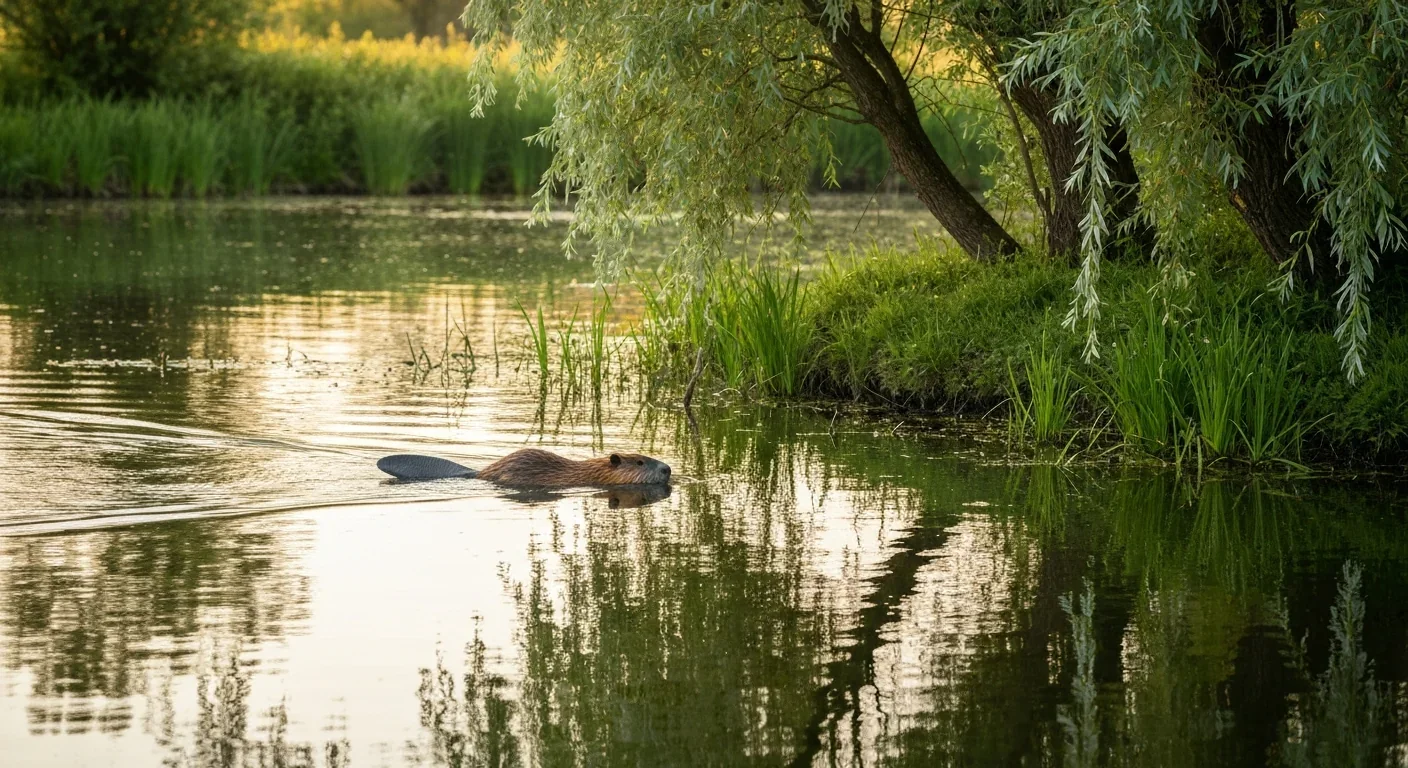
What started as a small experiment on tribal lands in California's Sierra Nevada is now spreading worldwide, and the results are forcing governments to rethink how they spend billions on watershed restoration.
In October 2023, seven beavers slipped into the waters of Tásmam Koyóm valley on the Tule River Reservation, marking California's first beaver relocation in over 70 years. Within 18 months, those animals had built a 100-meter dam that increased water surface area by more than 22%. No contractor was hired. No environmental impact statement was filed for the dam itself. The beavers just got to work.
"We can make our future different from our past," said CDFW Director Charlton H. Bonham at the release ceremony. "Our culture over time ran them off the landscape. That can't be our future."
The story of beavers in the modern era starts with an almost incomprehensible loss. Before European colonization, an estimated 60 to 400 million beavers shaped North America's waterways. The fur trade obliterated those numbers. By the early 1900s, as few as 100,000 remained. Eurasian beavers fared similarly, hunted to extinction across most of Europe by the 19th century.
The consequences went far beyond losing a single species. Beavers are what ecologists call a keystone species, organisms whose influence on an ecosystem is disproportionately large relative to their population. When beavers disappeared, so did the intricate networks of wetlands, ponds, and side channels their dams had maintained for millennia.
Rivers that once meandered through broad floodplains became narrow, fast-moving channels. Groundwater tables dropped. Wetland-dependent species from amphibians to migratory birds lost critical habitat. Research has shown that beaver-created wetlands can increase bird species diversity by up to 43% and amphibian populations by as much as 80% compared to streams without beaver activity. When the beavers left, those gains vanished.
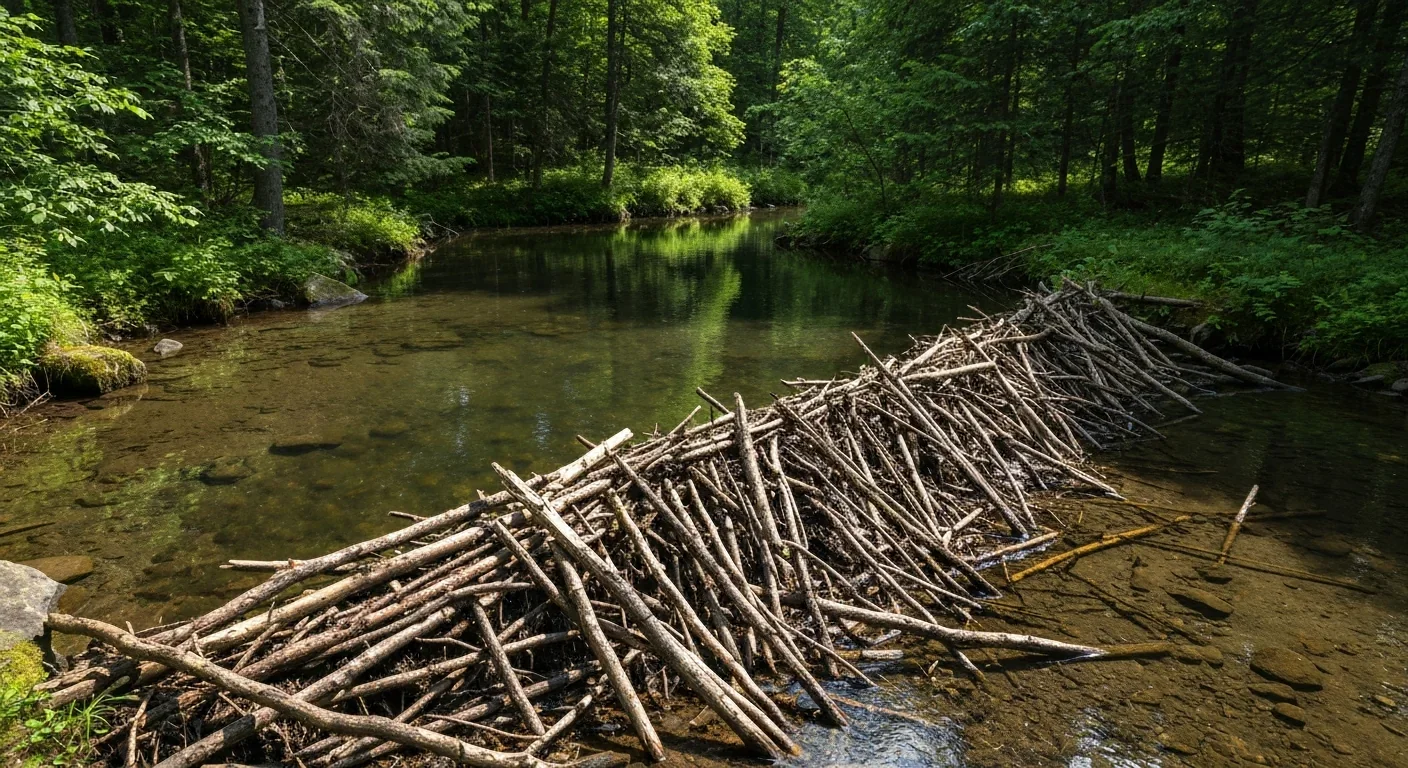
The recovery has been slow but steady. Legal protections and targeted reintroduction programs have pushed North American populations back up to an estimated 10 to 15 million. Eurasian beavers have rebounded to at least 1.5 million by 2020. Both species are now classified as "Least Concern" by the IUCN Red List. But the real breakthrough isn't just that beavers are surviving again. It's that scientists and policymakers are recognizing what these animals can do for us.
Beaver populations crashed from an estimated 60-400 million to just 100,000 by the early 1900s. Today, thanks to reintroduction programs and legal protections, North American beavers number 10-15 million, with Eurasian beavers reaching at least 1.5 million.
When a beaver builds a dam, it triggers a cascade of ecological changes that no human engineer has been able to replicate at comparable cost.
The dam itself slows water flow, which forces sediment to settle out. This process, called aggradation, raises the streambed over time and reconnects the channel to its floodplain. Water spreads laterally, soaking into the ground and recharging aquifer systems. In one striking example from Bavaria, beaver activity slowed water travel from 45 minutes to 20 days through a particular stretch, a roughly 95% increase in residence time.
The ecological ripple effects are enormous. The ponds behind dams create habitat complexity: deep pools for fish, shallow edges for amphibians, and standing dead trees for cavity-nesting birds. Beaver dams act as natural filtration systems, removing sediments, excess nutrients, and pollutants from downstream waters. An EPA review of 267 peer-reviewed studies confirmed that nitrate and suspended sediment levels consistently decrease downstream from beaver dams across all studied biomes.
The water quality picture is nuanced, though. That same EPA review found that some pollutants, including methylmercury and dissolved organic carbon, can increase in beaver-modified waterways. "The effects of beaver dams on water quality can often vary with time of year, or season," noted EPA scientist Heather Golden. This complexity means beaver-based restoration works best as part of a broader watershed management strategy, not a silver bullet.
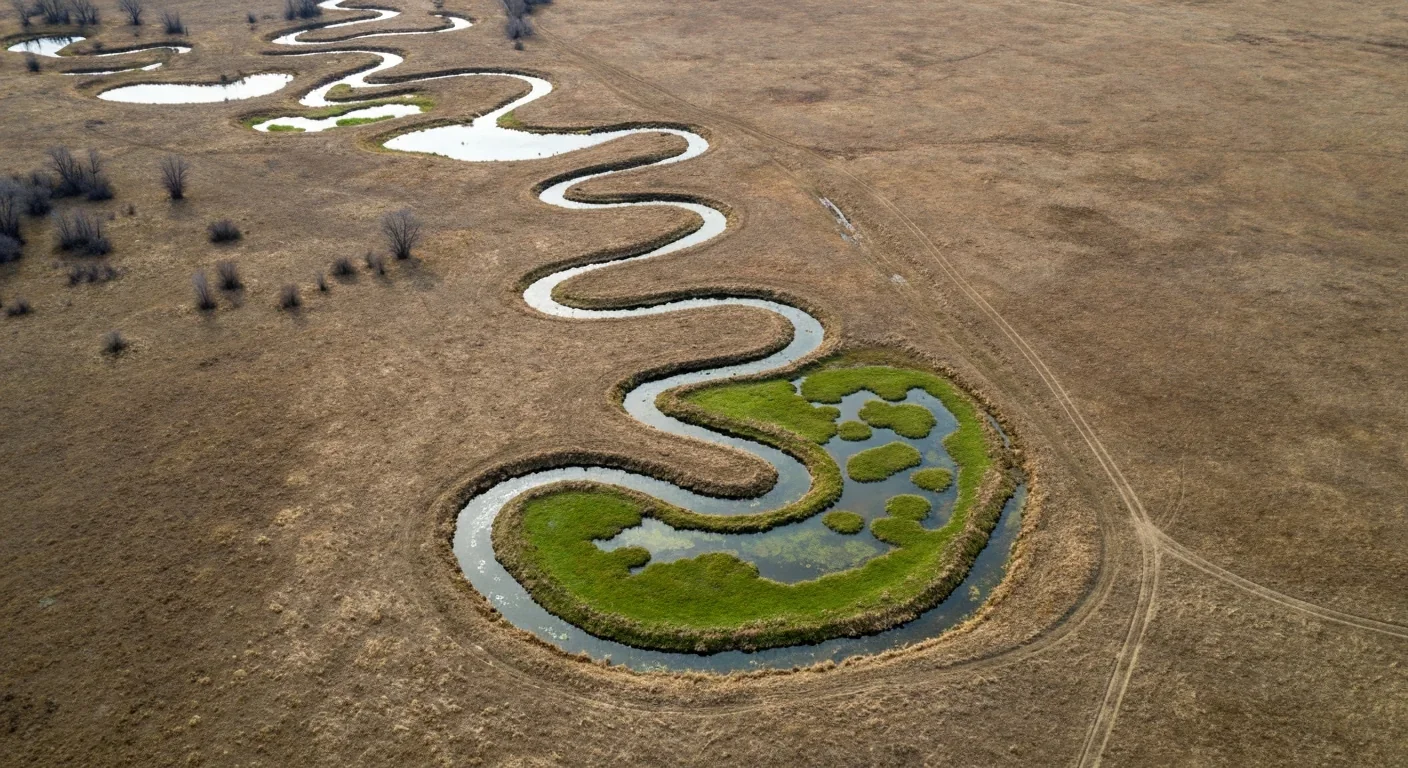
Perhaps the most compelling argument for beaver reintroduction comes from fire country. As wildfires grow more frequent and destructive across the American West, beaver-created wetlands are proving to be some of the most effective firebreaks nature has to offer.
The evidence is striking. Research by Dr. Emily Fairfax using NASA Landsat satellite imagery found that during five major western US wildfires, riparian areas with beaver dams experienced only a 19% reduction in vegetation greenness, while similar areas without beavers suffered a 51% reduction. The beaver zones stayed green and alive while the landscape around them burned.
"Beaver-dammed riparian zones can maintain green, living vegetation even during wildfires while riparian zones without beaver tend to burn."
- Dr. Emily Fairfax, University of Minnesota
A 2025 Stanford and University of Minnesota study analyzing over 1,500 beaver ponds across 40 streams in the western United States found that clusters of beaver dams act as wildfire "speed bumps," creating larger green areas that can withstand extreme weather events. These wetlands don't just survive fires passively. They create conditions where native fire-resistant vegetation thrives while drowning out flammable invasive species.
"Beavers are nature's Swiss Army knife," CDFW Director Bonham has said. "When beavers are on the landscape in the Sierra, the way they can create wet meadows serves as a fire break that can slow down or even stop catastrophic wildfire."
Firefighting crews are starting to use beaver wetlands as natural anchor points for establishing control lines, adding a practical operational benefit that goes beyond passive fire resistance.
When you compare the numbers, it's hard to argue against beavers on financial grounds.
In the Czech Republic, beavers in the Brdy Protected Landscape Area built a series of dams that accomplished ecological goals set by the government, saving approximately $1.2 million compared to the planned engineered solution. The government had been trying to build those dams since 2018 but was bogged down in bureaucracy. The beavers completed the work in weeks.
"Built the dams without any project documentation and for free, and achieved the desired ecological outcomes practically overnight."
- Bohumil Fišer, Head of the Brdy Protected Landscape Area
The Idaho example from 1948 is equally telling. The state's famous beaver parachute drop program relocated 76 beavers at roughly $8 per animal (about $180 in today's dollars), while the estimated value of each beaver's work over its lifetime was $300 (about $6,800 today). That's a return on investment most infrastructure projects can only dream about.
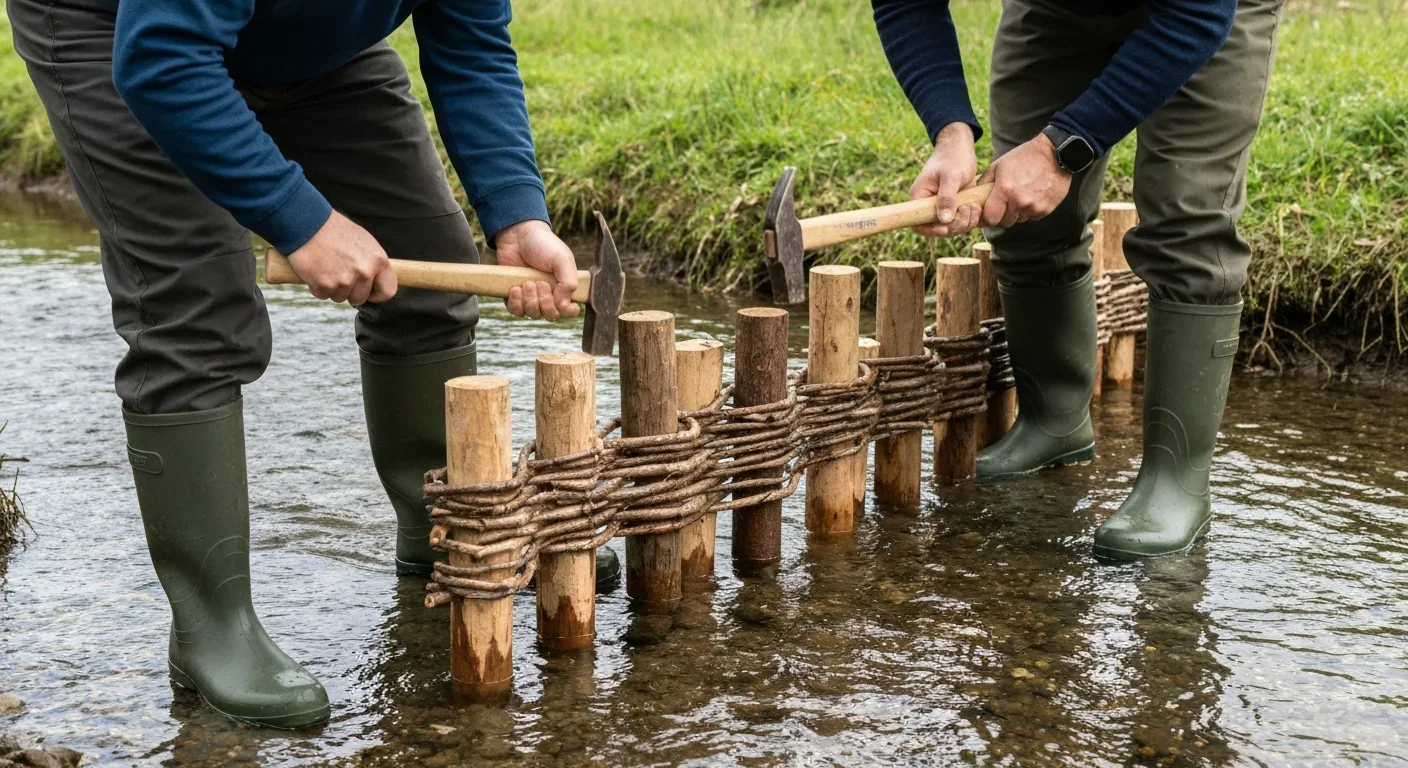
Beaver Dam Analogues, the human-built structures that mimic beaver dams, tell a similar cost story. BDAs can be built and maintained with local crews using readily available materials like wooden posts and woven branches. In some watersheds, BDAs have raised groundwater tables by over 12 inches, restored streamside vegetation by 33%, and reconnected up to 1,000 feet of channelized stream in just a few years.
The scale is growing rapidly. More than 100 BDAs have been installed along Wyoming's Trout Creek since 2020, attracting real beaver colonies that took over maintenance and expanded the structures themselves. British Columbia's 10,000 Wetlands project plans to install 100 BDAs across the province, aiming to restore more than 10,000 wetlands. The Raincoast Conservation Foundation reports 71 BDAs constructed at six sites during the project's first phase.
Not everyone is celebrating the return of beavers. And the concerns are legitimate.
In Devon, England, farmers Vicky and David Lawrence watched beavers devastate trees along their riverbanks. "In one area of our land they have caused devastation," Vicky said. "It should be full of trees all the way around, but all they've left is tree stumps." Her husband David noted that while beavers slowed water in the headwaters, the dams actually worsened flooding on their flatland farm by blocking natural water release points.
California's program has faced its own challenges. Between October 2023 and September 2024, CDFW placed 28 beavers at five release sites, but survival rates have been only 40 to 60%, with predation and illness being the primary causes of mortality. Human tampering with monitoring equipment has also hampered the program.
Coexistence tools like pond levelers, flow devices, and tree wraps can resolve most beaver-human conflicts for a few hundred to a few thousand dollars, far less than the cost of repeated lethal trapping or engineered flood control.
The good news is that a sophisticated toolkit for coexistence has emerged. Pond levelers work by preventing the running-water sound that triggers beaver dam-building, allowing landowners to control water levels without destroying dams. Flow devices like the Beaver Deceiver prevent beavers from blocking culverts. Tree protection wraps keep beavers from felling prized timber. The Human-Beaver Coexistence Fund even offers cost-share programs to help landowners pay for these nonlethal solutions, with individual projects costing just a few hundred to a few thousand dollars.
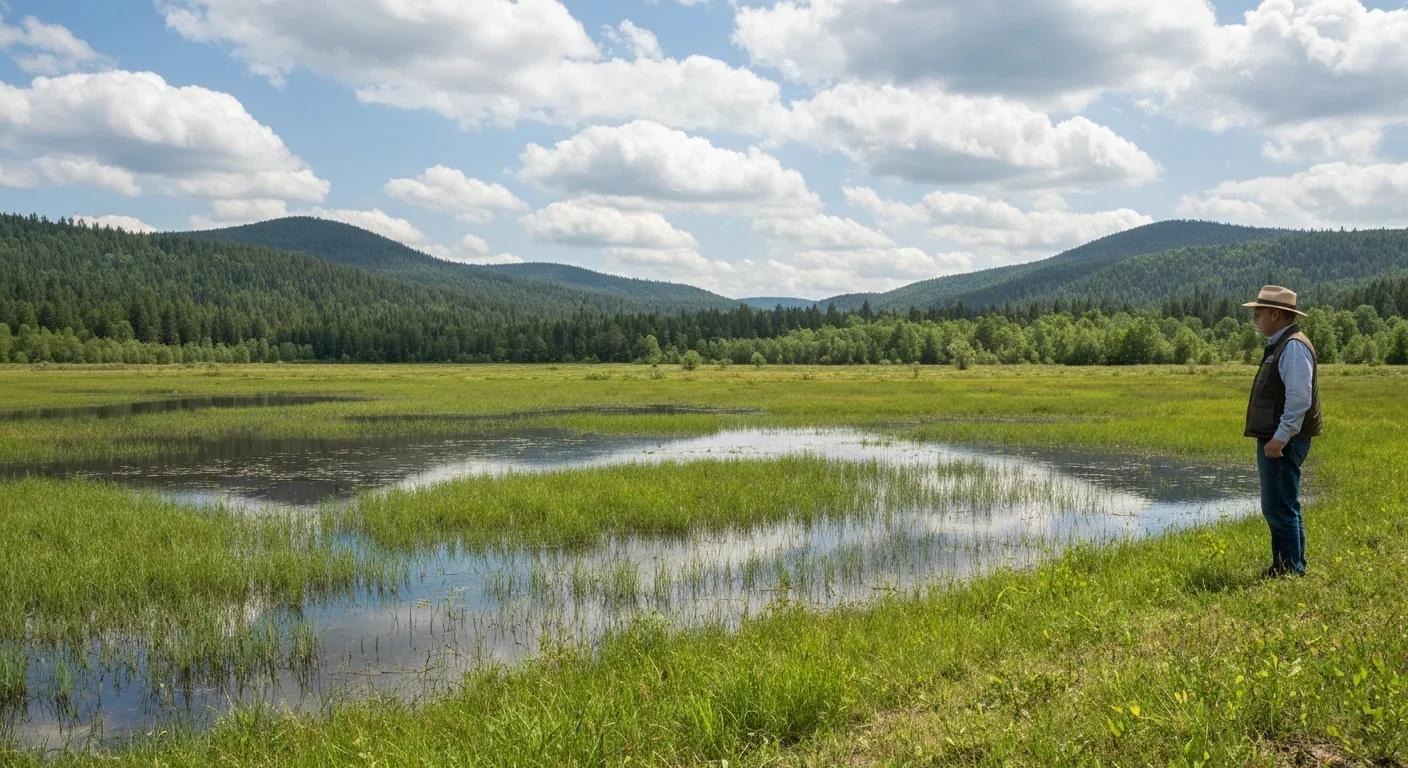
"This is a pragmatic, common-sense, 'wildlife-crosses-the-aisle' approach," the Wyoming Wildlife Federation notes. "Fix the function, and wildlife, water, and communities all win."
The policy landscape is shifting fast across multiple countries.
In England, the first beavers were released into the wild at Purbeck Heath, Dorset, in March 2025. The UK government now requires all new wild release projects to have a 10-year project plan with an exit strategy, integrating Environmental Land Management funding so farmers can participate without bearing all costs. Scotland declared beavers a native species with legal protection in 2019, and the wild population in the Tay catchment has naturally spread into the River Forth catchment. Wales announced support for managed reintroduction in September 2024.
In the United States, California's CDFW instituted a new policy in 2023 supporting non-lethal management strategies, and the state created its Beaver Restoration Program using funding from Assembly Bill 1757. Washington State passed legislation in 2024-2025 to support beaver relocation as a water management strategy.
The Czech Republic's success in the Brdy Protected Landscape Area demonstrates how even accidental beaver colonization can save governments millions. With approximately 15,000 Eurasian beavers now in the country, the Czech Republic is discovering that its most effective restoration workforce comes with fur and flat tails.
Indigenous communities are often leading the charge. In California, the Mountain Maidu people's restoration of Tásmam Koyóm represents not just ecological restoration but cultural reconnection. "Seeing the beavers slip into the water was a full circle moment," said Shannon Salem Williams, Mountain Maidu program manager. "It was like a big welcoming home." In British Columbia, BDA projects are being developed in partnership with the Nooaitch and Lower Nicola Indian Bands.
The trajectory is clear: beaver reintroduction is moving from a niche conservation project to a mainstream climate adaptation strategy. But scaling it responsibly requires learning from the failures alongside the successes.
The 40 to 60% mortality rate in California's translocation program shows that simply dropping beavers into a new landscape isn't enough. Site selection matters. Predator management matters. Community buy-in from neighboring landowners, as the Devon farming conflicts demonstrate, matters enormously.
BDAs offer a promising complement for landscapes where live beavers can't yet survive, serving as ecological scaffolding that creates conditions for eventual natural colonization. Once habitat improves, beavers are more likely to return and take over maintenance. That's the ideal scenario: a self-sustaining system that costs almost nothing to maintain after the initial investment.
"We need to bridge the gap between the potential benefits and what's actually happening on the ground."
- Jonah Piovia-Scott, Associate Professor, Washington State University
The evaluation of 161 studies on beaver-related restoration found that the benefits extend beyond what most people imagine, from lowering water temperatures during hot months to enhancing floodplain connectivity to preventing wildfire spread. And yet, as researcher Jonah Piovia-Scott of Washington State University acknowledged, "We need to bridge the gap between the potential benefits and what's actually happening on the ground."
That gap is closing fast. Within the next decade, you'll likely see beaver-based restoration included in federal wildfire mitigation budgets, state water management plans, and agricultural subsidy programs across the Western world. The question isn't whether we should be working with beavers. The question is whether we can afford not to.

Project Orion was a real 1960s program to reach other stars by detonating 800 nuclear bombs behind a spacecraft. The physics worked and the engineering was feasible, but the 1963 nuclear test ban treaty killed it. It remains the most credible interstellar spacecraft ever designed.

The locus coeruleus, a tiny brainstem structure, degenerates decades before Alzheimer's symptoms appear. Its loss cripples the brain's inflammation control, waste clearance, and sleep regulation. New imaging tools and noradrenergic therapies offer hope for early detection and prevention.
Research shows the sharing economy often increases total resource consumption through the Jevons paradox and rebound effects. Ride-sharing adds billions of vehicle miles, co-working spaces use more energy per worker, and diffused responsibility erodes conservation behavior. Breaking the paradox requires congestion pricing, accountability design, and matching sharing models to appropriate resource types.

Psychological reactance theory explains why banning or restricting things makes people want them more. From Prohibition to the Streisand effect to scarcity marketing, research shows that threatening people's freedom reliably backfires, and autonomy-supportive communication is far more effective.
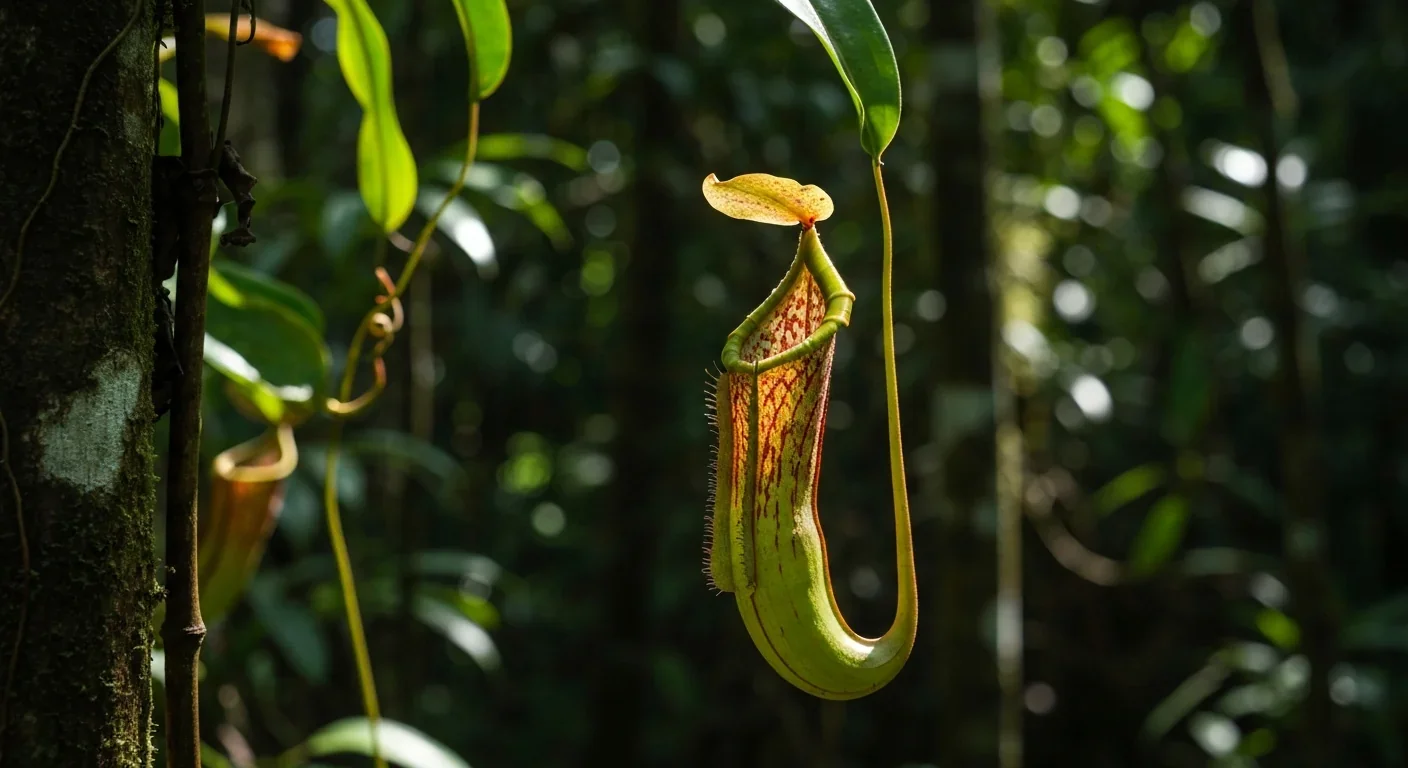
A carnivorous pitcher plant in Borneo evolved to house bats instead of trapping insects, gaining up to 95% of its nitrogen from bat guano. The plant even built an ultrasonic reflector to help bats find it, revealing that carnivory in plants is a flexible spectrum.

The quantified self movement began as a hacker-ethos pursuit of personal insight, but corporate wearables now funnel biometric data to employers, insurers, and data brokers. With 81% of Americans wrongly believing health apps are HIPAA-protected, a regulatory void enables health data to be sold for pennies while generating anxiety instead of empowerment.

CXL memory pooling lets servers dynamically share DRAM over a cache-coherent interconnect, eliminating the 40% stranded memory waste in data centers. With commercial hardware now shipping and Azure deploying CXL cloud instances, this technology promises to cut memory costs by 50% while enabling composable infrastructure.

Loading featured articles...