Sharing Economy's Dirty Secret: More Sharing, More Waste

Sharing Economy's Dirty Secret: More Sharing, More Waste
Scientists Want to Bring Back the Ice Age to Save Us
Whale Pump: How Whale Dung Fertilizes the Ocean
Climate Tipping Cascades: How One Threshold Topples All
Iron-Air Batteries Could Solve Renewable Energy Storage
Can Engineered Mist Save California's Dying Redwoods?
TL;DR: Earth's ecosystems are migrating, collapsing, and transforming under the worst megadrought in 1,200 years. Alpine plants shift fastest while old-growth forests resist until catastrophic collapse. With drylands projected to cover over half the planet by 2100, billions of people face a fundamentally reshaped world.
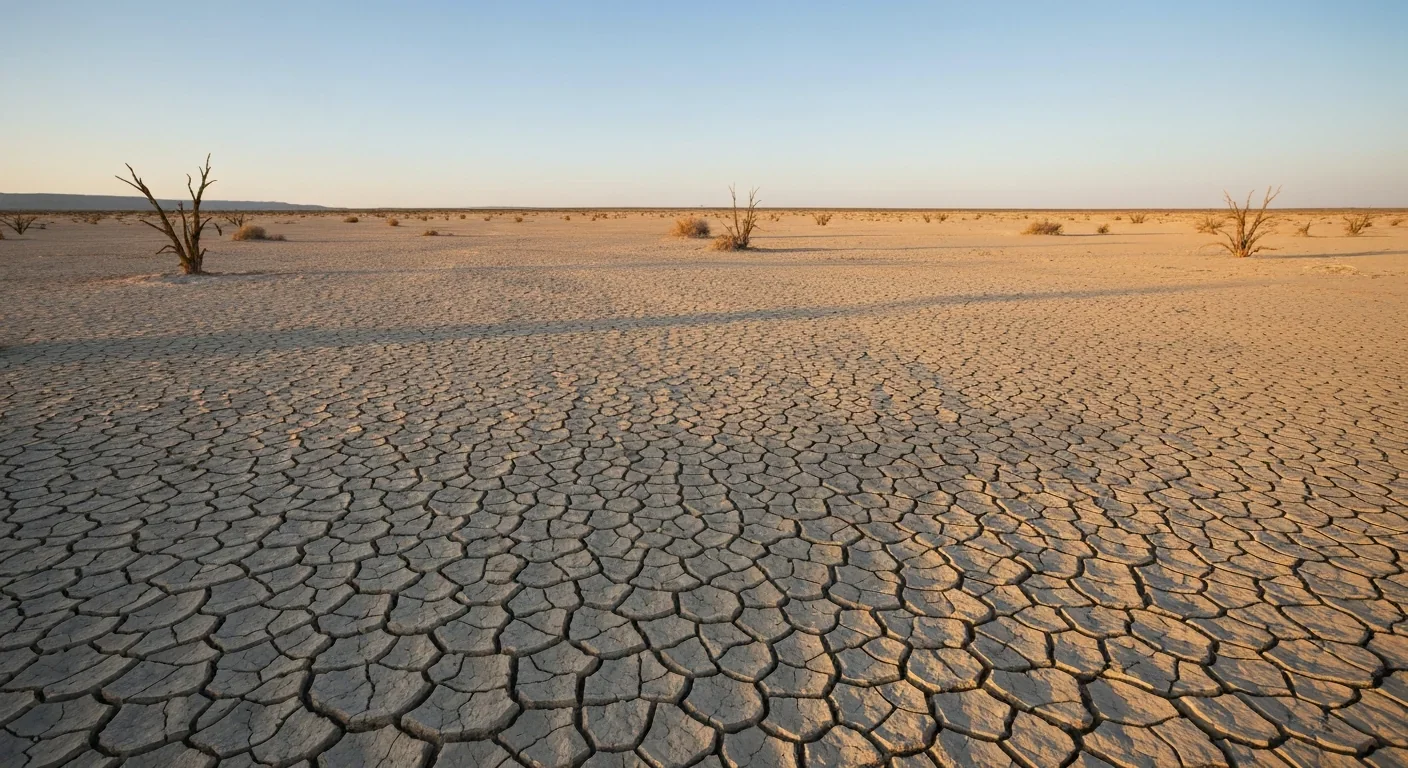
The map of life on Earth is being redrawn right now, and most of us haven't noticed. Across the American Southwest, the Mediterranean Basin, southern Africa, and parts of Australia, entire ecosystems are packing up and moving, collapsing, or transforming into something unrecognizable. This isn't a slow, gentle transition. In the worst megadrought to hit western North America in at least 1,200 years, forests are dying in weeks, wetlands are vanishing in seasons, and the landscapes that millions of people and countless species depend on are shifting faster than anyone predicted.
Here's the number that should stop you cold: the megadrought gripping the American Southwest since 2000 represents the driest 22-year period in at least 1,200 years, according to tree-ring reconstructions published in Nature Climate Change in 2022. From 2000 to 2021, mean annual precipitation in the southwestern North American region was 8.3% below the 1950-1999 average, while temperatures ran 0.91°C above normal. That might sound modest. It's not.
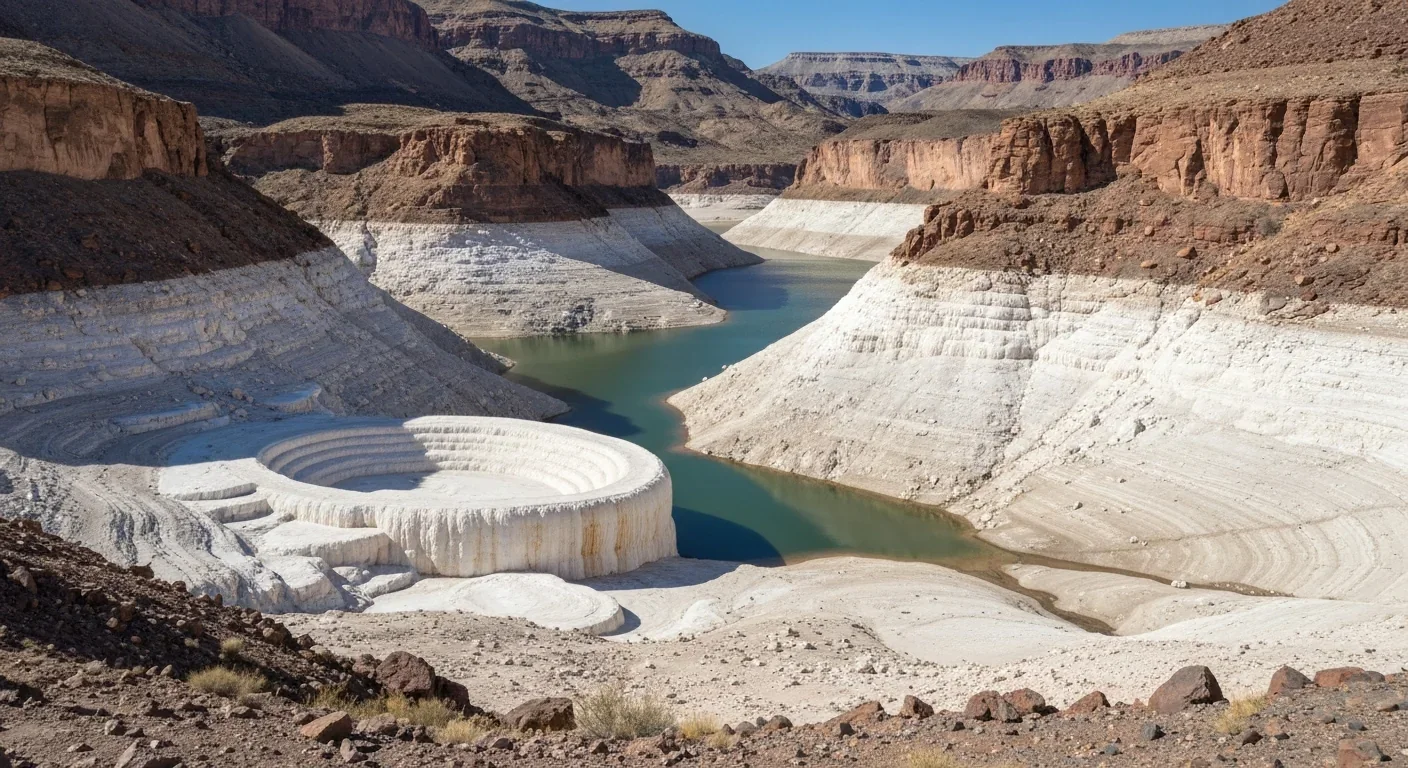
The combination of less rain and more heat has created a compounding crisis. Warmer air sucks more moisture from soil and vegetation through increased evapotranspiration, which dries out forests, fuels wildfires, and pushes already-stressed ecosystems past their breaking points. The Colorado River system has lost approximately 30% of its flow since 2000. Lake Mead and Lake Powell have dropped to historically unprecedented low levels, with cascading consequences for every living thing downstream.
The 2000-present southwestern North American megadrought is the driest 22-year period in at least 1,200 years, with temperatures running nearly 1°C above the historical average while precipitation fell 8.3% below normal.
This isn't just an American problem. The Gobi Desert is swallowing 3,600 square kilometers of grassland every year. Lake Chad has shrunk by more than 90% since 1987. The Sahara has pushed 250 kilometers southward across a 6,000-kilometer front. Megadrought is a global phenomenon, and its fingerprints are everywhere.
To understand where we're headed, it helps to look at where we've been. Megadroughts have historically driven the mass migration of human populations away from drought-affected lands, and they've done the same to ecosystems. Tree-ring data, lake sediments, and pollen records show that prolonged droughts during the Medieval Climate Anomaly (roughly 900-1300 CE) caused wholesale vegetation shifts across North America.
During those earlier megadroughts, persistent La Nina-like conditions in the tropical Pacific suppressed rainfall across the Southwest for decades at a stretch. Pinyon-juniper woodlands contracted. Grasslands turned to scrub. Springs dried up, and the wildlife that depended on them disappeared or relocated. Ancient Puebloan societies abandoned entire regions.
What makes the current megadrought different, and more dangerous, is temperature. Past megadroughts were primarily driven by precipitation deficits. Today's version comes with a warming amplifier that accelerates evaporation, dries soils faster, and pushes heat waves to compound drought severity in ways the paleoclimate record never experienced. The result is a drought that hits harder and faster than its historical predecessors, even when precipitation deficits are comparable.
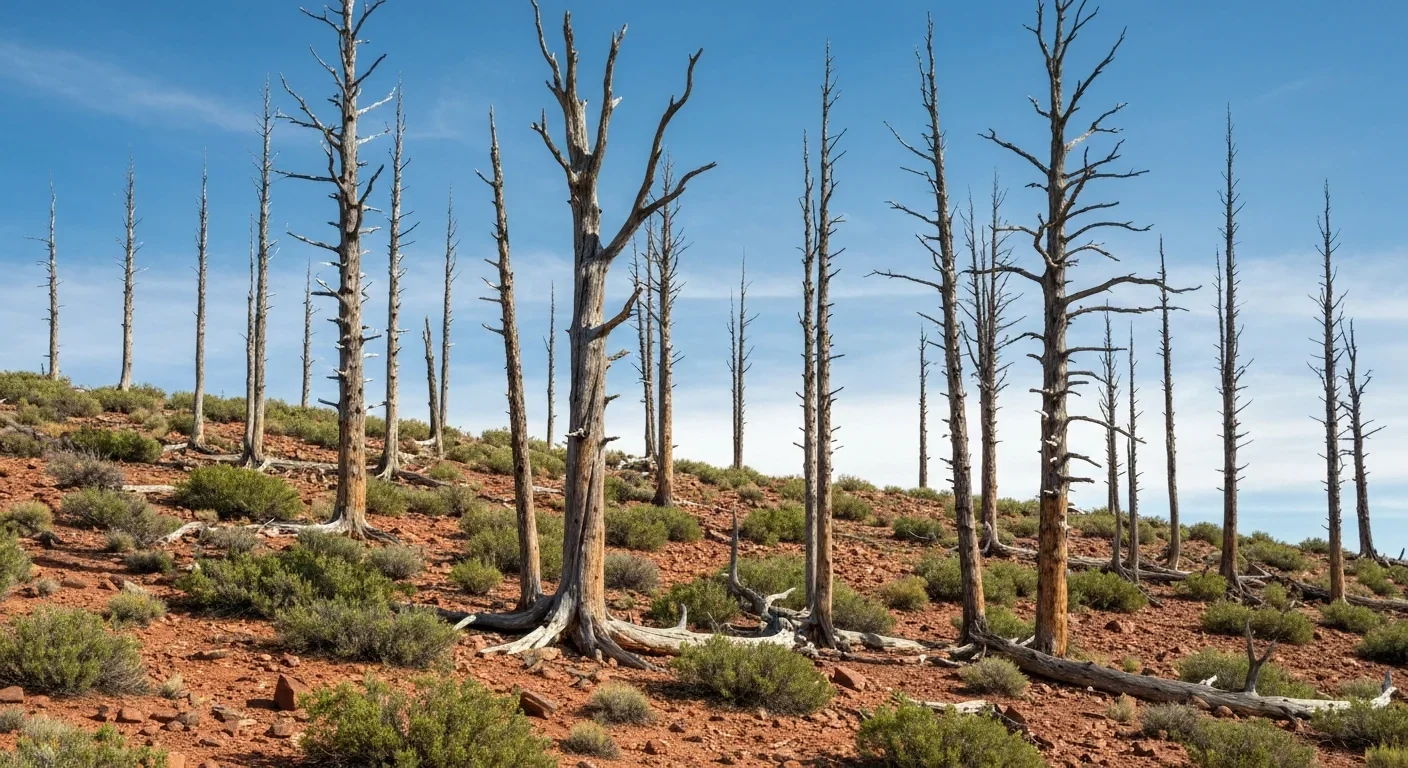
Paleoecologists studying no-analog communities have found that past climate shifts produced entirely new species assemblages with no modern equivalent. Pollen records from the last glaciation reveal plant communities that simply don't exist today, combinations of species that thrived under conditions we've never seen in the modern era. The implication for our current moment is unsettling: the ecosystems emerging from this megadrought may not resemble anything in the historical playbook.
Not all ecosystems respond to megadrought at the same pace, and that difference matters enormously for conservation, agriculture, and human planning.
The Fast Movers: Alpine and Montane Ecosystems
Alpine plant communities are among the fastest responders. Research tracking 124 endemic plant species in the Sikkim Himalaya found that 87% showed warming-driven range shifts, with a mean upward displacement of 27.53 meters per decade. Warmer winters are making previously inhospitable high-altitude zones habitable for lower-elevation species, which then crowd out the mountaintop specialists above them. It's like everyone in a building trying to move to the penthouse because the lower floors are overheating, eventually pushing the original residents off the roof.
The terrifying catch: montane ecosystems can't migrate upward forever. Mountains have summits. When species reach the top, there's nowhere left to go.
"As the ground floor gets too hot, everyone tries to move to the cooler penthouse, leading to overcrowding and pushing the original penthouse residents off the roof."
- Researchers describing alpine habitat contraction in the Sikkim Himalaya
The Middle Ground: Grasslands and Shrublands
Grasslands and shrub communities can reorganize relatively quickly because their dominant species reproduce fast and disperse seeds efficiently. Across the drought-stressed regions of the American Southwest, grasslands are converting to shrublands as woody plants that tolerate drier conditions outcompete grasses. This shift can happen within years, not decades, because shrub seeds travel on wind and in animal guts, colonizing newly available ground before grasses can recover.
The Resisters: Old-Growth Forests
Old-growth forests are the slowpokes of ecosystem migration, but not because they're resilient. They simply take a long time to die. Deep-rooted trees can tap groundwater reserves that sustain them for years beyond the point where surface conditions have become hostile. Then, suddenly, they collapse. The pinyon-juniper woodlands of the American Southwest demonstrated this pattern spectacularly during the 2002-2003 drought, when mass die-offs affected millions of hectares practically overnight. At Bandelier National Monument, more than 95% of pinyon pine canopy was lost in a single catastrophic event.
These forests don't migrate. They endure, then crash. And once they crash, what grows back is often something entirely different.
Understanding why ecosystems move at different speeds requires looking at the biological machinery underneath.
Seed dispersal is the fundamental speed limit. Wind-dispersed species like many grasses and composites can colonize new territory within a single growing season. Heavy-seeded trees like oaks depend on animals, primarily jays and squirrels, to carry their seeds, which limits their expansion to perhaps a few hundred meters per year. Climate velocity, the rate at which climate zones shift geographically, is outpacing the natural dispersal ability of many plant species, creating a growing gap between where species need to be and where they actually are.
Root depth and water access determine how long an ecosystem can resist change. Groundwater depletion compounds surface drought, accelerating ecosystem collapse beyond what precipitation deficits alone would cause. When the water table drops below root reach, even deep-rooted species begin to fail.
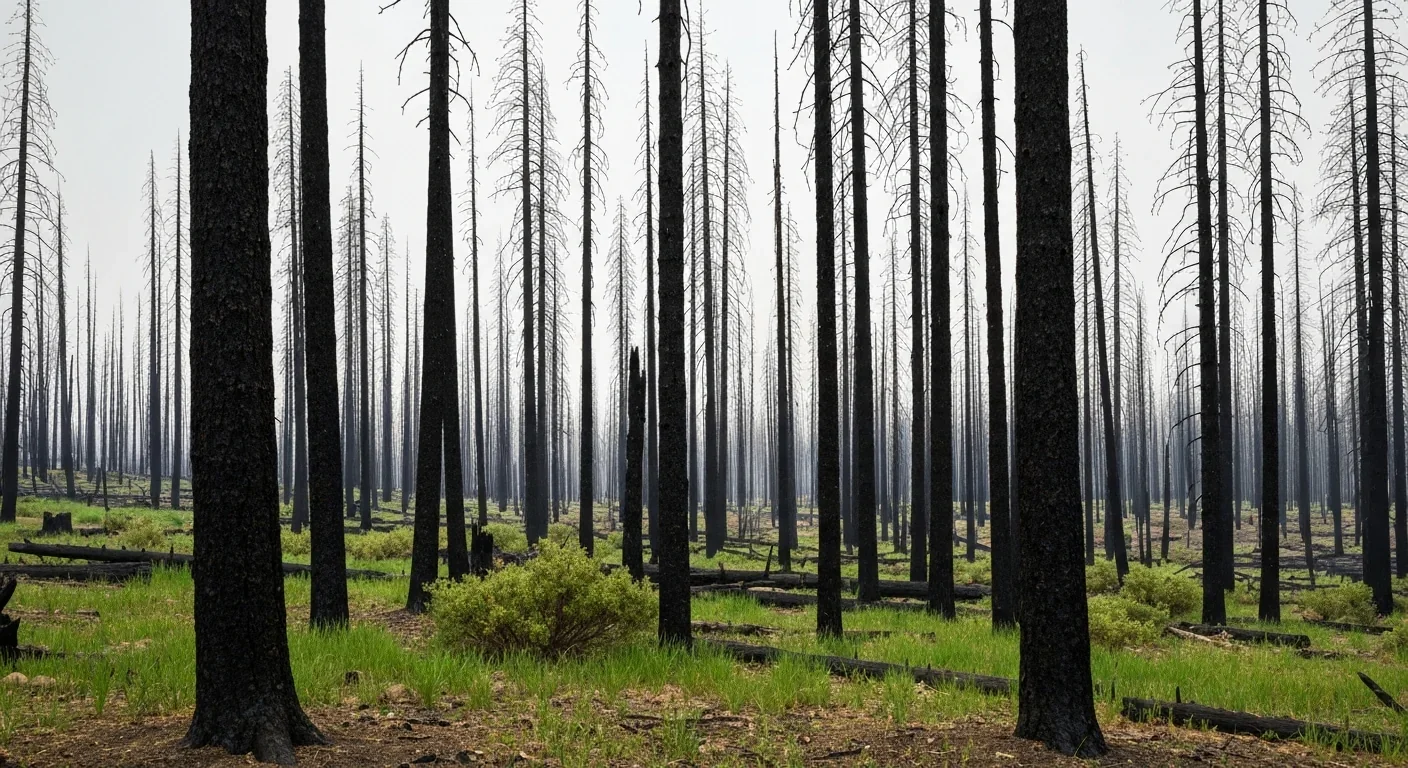
Fire doesn't just damage drought-stressed forests. It acts as a reset button, converting decades of gradual decline into instant ecosystem transformation. Post-fire landscapes often return as grassland or shrubland because drought prevents tree seedlings from establishing.
Fire acts as a reset button. Drought-dried forests become tinderboxes, and when they burn, the fire effectively converts decades of gradual decline into instant transformation. Post-fire landscapes often don't regenerate as forest. Instead, they come back as grassland or shrubland, because drought conditions prevent tree seedlings from establishing. One fire can accomplish what would otherwise take 50 years of gradual attrition.
Altered flow regimes compound the stress on riparian systems. Research on the Colorado River shows that hydropeaking from dams significantly impacts riparian plant communities, with obligate wetland species experiencing the greatest negative effects. Daily fluctuating water levels created by dam operations exclude species that need consistent moisture, mimicking and amplifying megadrought stress.
When ecosystems shift, everything connected to them shifts too.
The bird communities of pinyon-juniper woodlands offer a window into these cascades. Research across Bandelier, Grand Canyon, and Mesa Verde national parks found that as canopy gave way to understory shrubs, the entire insectivore guild reorganized. Foliage-gleaning birds increased with shrub cover while aerial insectivores and bark foragers declined. Bird community composition may actually serve as an early warning system for biome shifts, changing before the vegetation transformation becomes visible to the naked eye.
The water story is equally stark. The wetlands and riparian forests along the Colorado River are rapidly drying up, and it's not just wildlife feeling the squeeze. The 40 million people who rely on the Colorado River and its tributaries now face a reality where demand exceeds supply. Increasing water demand from growing cities and agriculture, combined with decreasing river flows driven by climate change, has drastically degraded ecosystems along the entire basin.
"The wetlands and riparian forests along the Colorado River basin are rapidly drying up, and it's not just wildlife that is being affected by water scarcity: the 40 million people who rely on the Colorado River and its tributaries are facing the prospect of shortages."
- National Audubon Society, Colorado River Basin Report
Globally, the scale of human vulnerability is staggering. Drylands occupy approximately 40-41% of Earth's land area and are home to more than 2 billion people. Under moderate warming scenarios, dryland extent is projected to expand from 38% to 50-56% of Earth's land surface by century's end. That's a transformation affecting billions of lives, reshaping agriculture, displacing communities, and rewriting economies across continents.
The American Southwest gets the most research attention, but megadrought-driven ecosystem shifts are playing out on every inhabited continent.
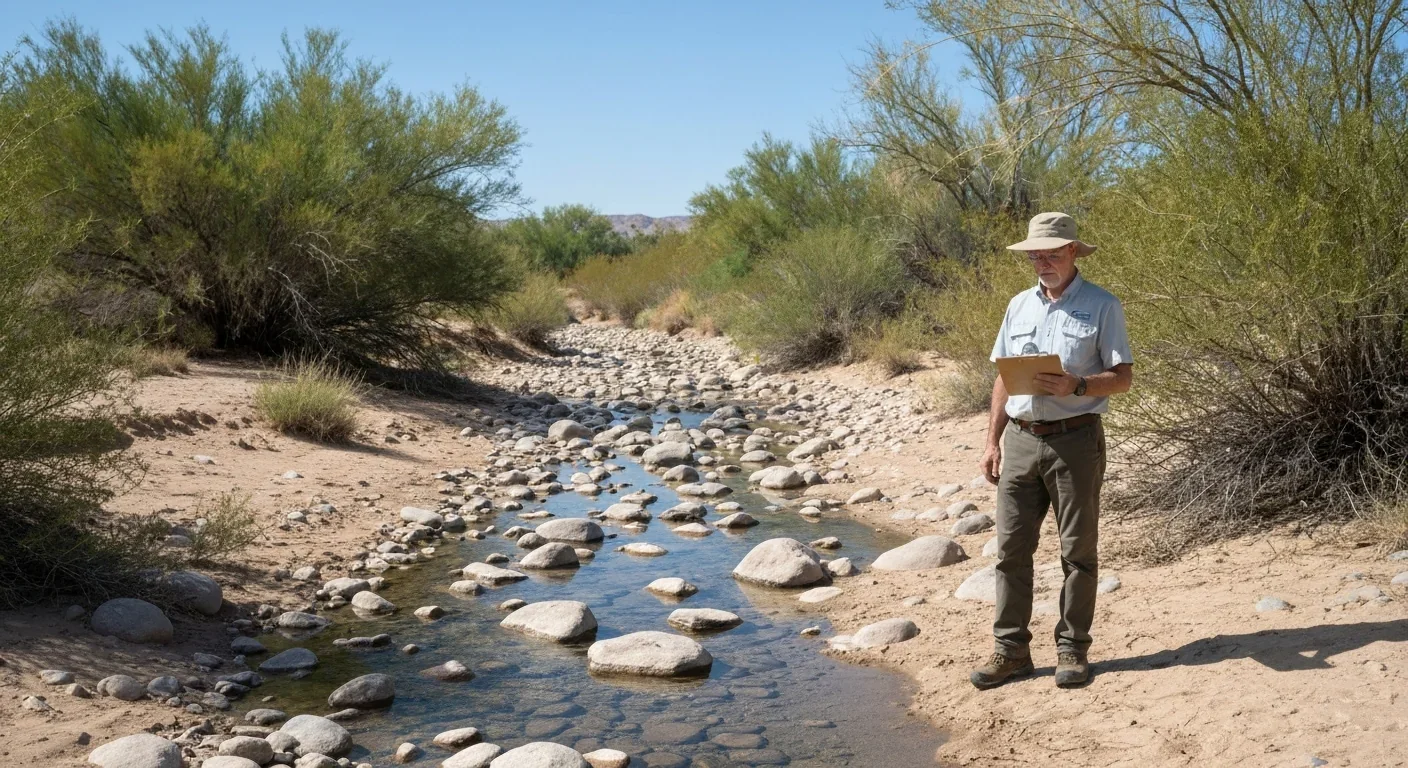
In the Mediterranean Basin, projections suggest significant precipitation declines by 2100 under high-emission scenarios, threatening the region's iconic shrublands and cork oak forests. In sub-Saharan Africa, the Sahara's southward march continues displacing pastoral communities who have managed grassland ecosystems for millennia. Australia's prolonged droughts have stressed eucalyptus forests and driven unprecedented bushfire seasons.
What's striking is how different cultures are responding. In the Colorado River Basin, Audubon has partnered with the Cocopah Tribe to bring resources to key riparian areas, demonstrating that indigenous knowledge and modern conservation science can work together. A historic U.S.-Mexico binational agreement now supplies water flow to the Colorado River Delta, providing a fragile thread of hope for a key ecosystem.
By 2070, species distribution models project that over half of California could be occupied by novel assemblages of bird species, combinations that have never existed before. These no-analog communities represent uncharted ecological territory where our conservation playbooks may not apply.
So what do we do when the ground beneath our feet is, quite literally, changing?
Assisted migration programs are already underway. In California, researchers are piloting relocation efforts for drought-sensitive species like Joshua trees, physically moving them to areas where future climate projections suggest they'll survive. It's conservation triage, an acknowledgment that protecting species in place may no longer be viable.
Land managers and conservation practitioners need to think in terms of climate velocity and dispersal capacity, identifying which species can keep pace with shifting conditions and which need help. Monitoring programs that track bird community shifts and vegetation changes can provide early warning of tipping points before they become irreversible.
Assisted migration programs for drought-sensitive species like Joshua trees are already being piloted in California, physically relocating them to areas where future climate models suggest they can survive. It's conservation triage for a world in motion.
For the 40 million people depending on the Colorado River's dwindling flows, adaptation means fundamentally rethinking water allocation, urban planning, and agricultural practices. For the 2 billion people living in expanding drylands worldwide, it means preparing for a world where the ecosystems their livelihoods depend on may simply cease to exist in their current form.
The ecosystems are already moving. The question is whether we'll be smart enough to move with them, or get left behind in landscapes we no longer recognize.
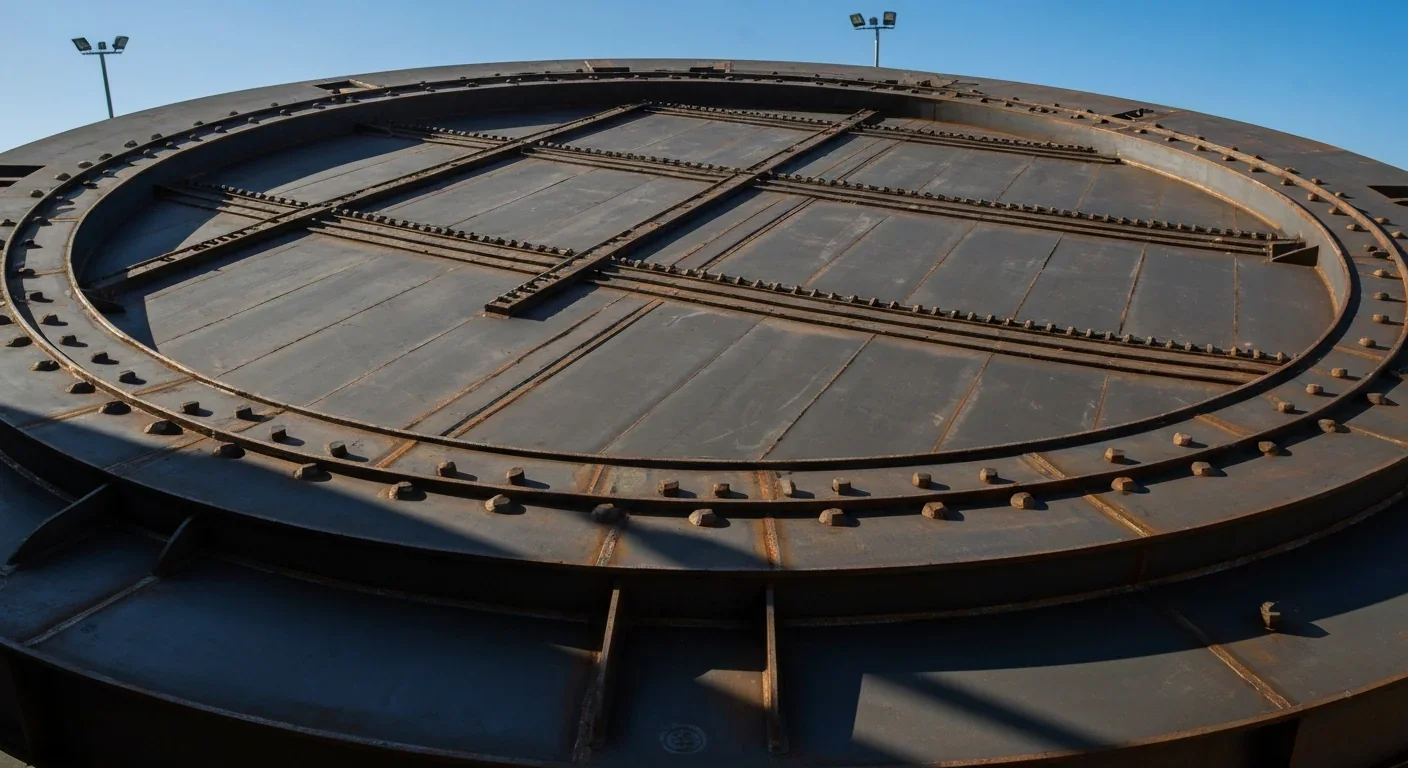
Project Orion was a real 1960s program to reach other stars by detonating 800 nuclear bombs behind a spacecraft. The physics worked and the engineering was feasible, but the 1963 nuclear test ban treaty killed it. It remains the most credible interstellar spacecraft ever designed.

The locus coeruleus, a tiny brainstem structure, degenerates decades before Alzheimer's symptoms appear. Its loss cripples the brain's inflammation control, waste clearance, and sleep regulation. New imaging tools and noradrenergic therapies offer hope for early detection and prevention.
Research shows the sharing economy often increases total resource consumption through the Jevons paradox and rebound effects. Ride-sharing adds billions of vehicle miles, co-working spaces use more energy per worker, and diffused responsibility erodes conservation behavior. Breaking the paradox requires congestion pricing, accountability design, and matching sharing models to appropriate resource types.

Psychological reactance theory explains why banning or restricting things makes people want them more. From Prohibition to the Streisand effect to scarcity marketing, research shows that threatening people's freedom reliably backfires, and autonomy-supportive communication is far more effective.
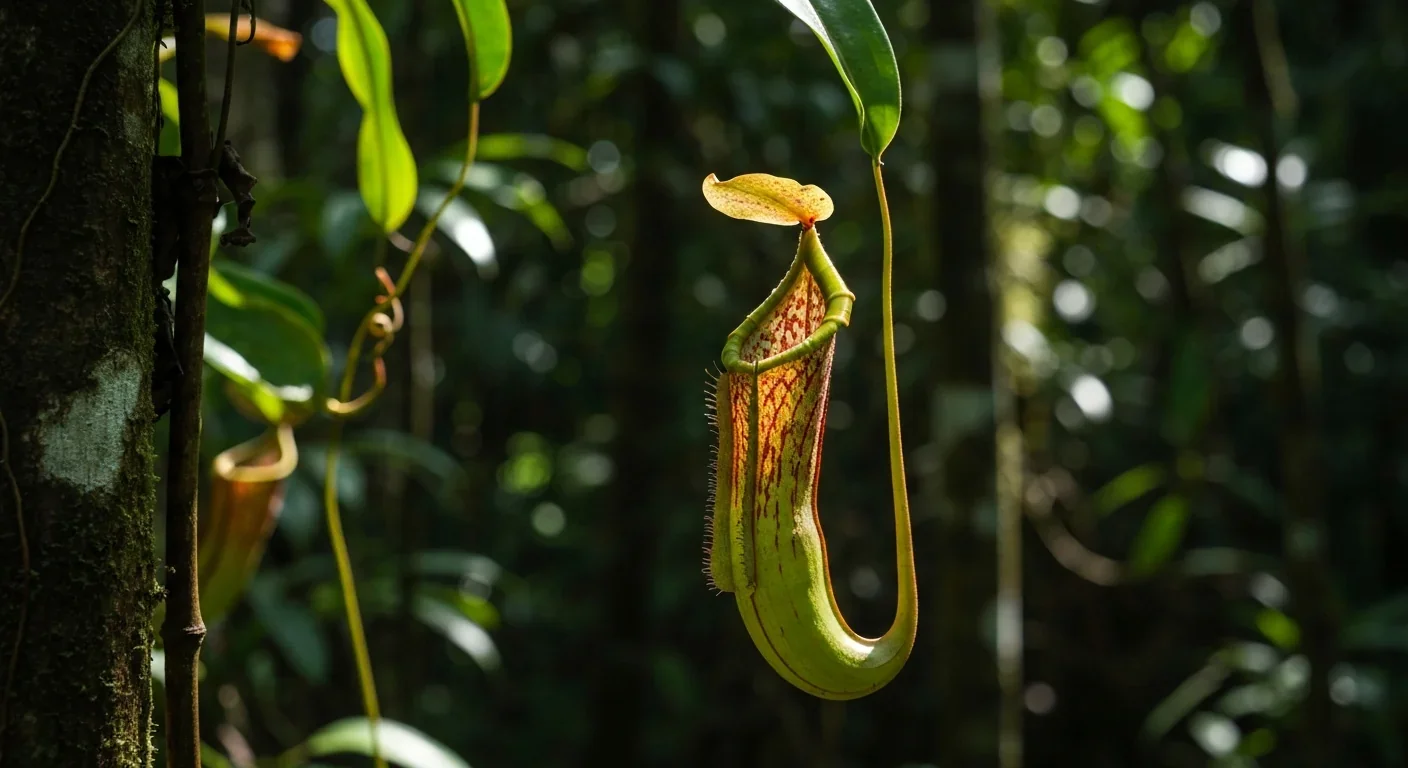
A carnivorous pitcher plant in Borneo evolved to house bats instead of trapping insects, gaining up to 95% of its nitrogen from bat guano. The plant even built an ultrasonic reflector to help bats find it, revealing that carnivory in plants is a flexible spectrum.

The quantified self movement began as a hacker-ethos pursuit of personal insight, but corporate wearables now funnel biometric data to employers, insurers, and data brokers. With 81% of Americans wrongly believing health apps are HIPAA-protected, a regulatory void enables health data to be sold for pennies while generating anxiety instead of empowerment.

CXL memory pooling lets servers dynamically share DRAM over a cache-coherent interconnect, eliminating the 40% stranded memory waste in data centers. With commercial hardware now shipping and Azure deploying CXL cloud instances, this technology promises to cut memory costs by 50% while enabling composable infrastructure.

Loading featured articles...