Sharing Economy's Dirty Secret: More Sharing, More Waste

Sharing Economy's Dirty Secret: More Sharing, More Waste

Scientists Want to Bring Back the Ice Age to Save Us
Climate Tipping Cascades: How One Threshold Topples All
Iron-Air Batteries Could Solve Renewable Energy Storage

Megadrought Is Redrawing the Map of Earth's Ecosystems

Can Engineered Mist Save California's Dying Redwoods?
TL;DR: Whales act as biological nutrient elevators, fertilizing oceans with iron-rich feces and nitrogen-rich urine that fuel phytoplankton blooms and carbon sequestration. Commercial whaling destroyed 80% of this system, and restoring whale populations could significantly boost marine productivity and climate mitigation.
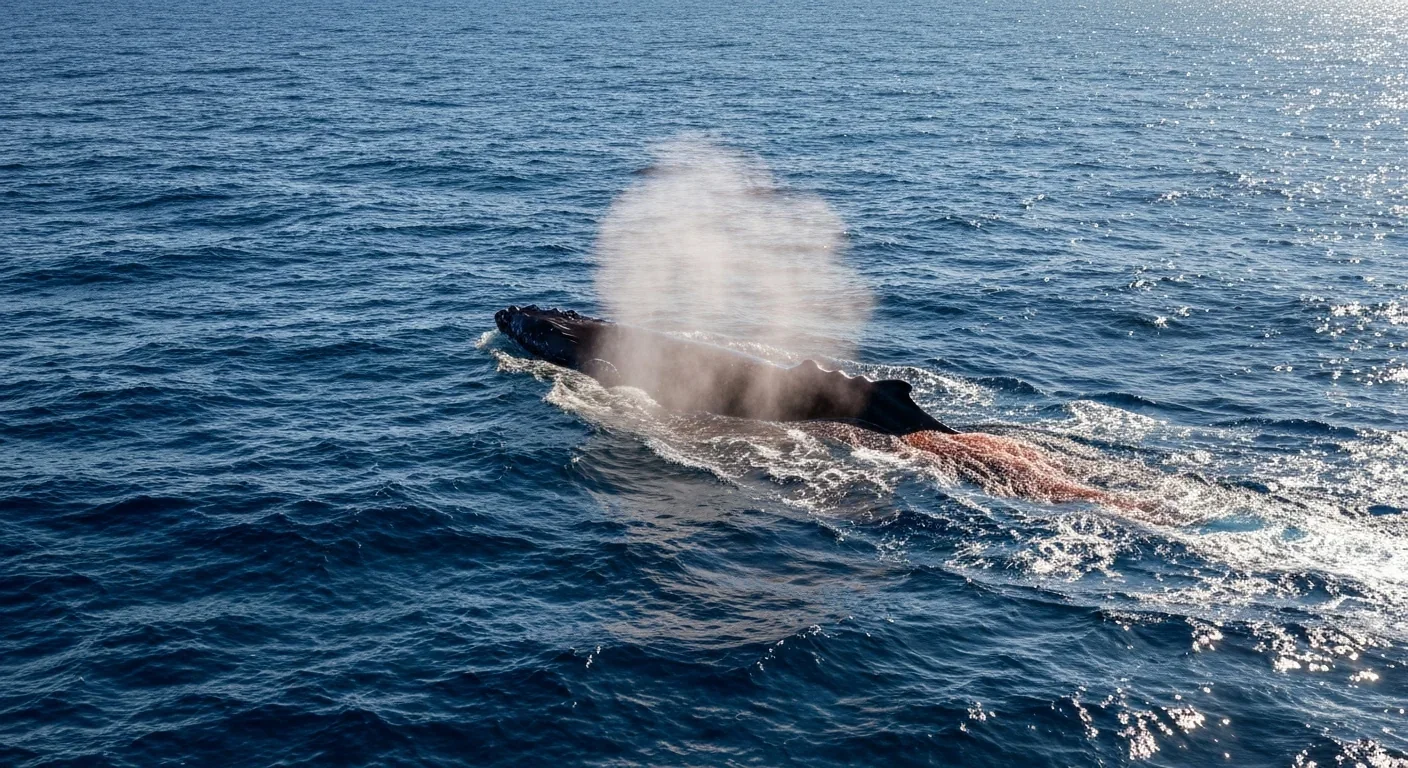
Every time a whale surfaces to breathe and releases a massive, bright-red plume of feces into the sunlit water, it's doing something scientists are only now beginning to fully appreciate: farming the ocean. Not metaphorically. The nutrients in that cloud of excrement trigger cascading biological reactions that feed entire marine food webs and pull carbon dioxide out of the atmosphere. And for decades, we barely noticed.
The process has a name: the whale pump. It's one of the most elegant and underappreciated mechanisms in ocean science, and recent research suggests we've been dramatically undervaluing its contribution to marine productivity and climate regulation. What's emerging from labs and field studies is a picture of whales not as passive giants drifting through the deep, but as active ecosystem engineers whose bodily functions shape the chemistry of entire ocean basins.
The mechanics are beautifully simple. Whales feed at depth, typically between 200 and 1,000 meters below the surface, consuming enormous quantities of krill, fish, and squid. A blue whale alone can eat roughly two tonnes of krill per day during summer feeding season. All that biomass gets processed through the whale's digestive system, extracting calories and, critically, concentrating trace metals and nutrients.
Then the whale rises to breathe. And defecates. The feces are warm, buoyant, and liquid, forming expansive plumes that spread across the surface before dispersing. These plumes are extraordinarily rich in iron, nitrogen, and phosphorus, the exact nutrients that surface waters in many parts of the ocean desperately lack.
Here's the key detail that makes this so consequential: iron concentration in whale feces is more than 10 million times higher than in surrounding seawater. In the Southern Ocean, where vast stretches of water are classified as "high-nutrient, low-chlorophyll" zones, iron is the limiting factor for phytoplankton growth. Whale excrement delivers it directly to the sunlit zone where photosynthesis happens.
Iron concentration in whale feces is more than 10 million times higher than in surrounding seawater, making whale excrement one of the most potent natural fertilizers in the ocean.
The result? Phytoplankton blooms. These microscopic organisms are responsible for roughly half of all global photosynthesis, capturing an estimated 37 billion metric tons of CO2 annually. When whales fertilize the surface with their waste, they're essentially supercharging this natural carbon capture system.
A groundbreaking study on sperm whales in the Southern Ocean found that just 12,000 individuals defecate roughly 50 tonnes of iron into the photic zone each year. That iron stimulates the export of 400,000 tonnes of carbon annually to the deep ocean, while the whales themselves only respire about 200,000 tonnes. The math is striking: sperm whales are a net carbon sink. They pull more carbon out of the atmosphere than they put in.
But the whale pump isn't just vertical. A 2025 study published in Nature Communications by Joe Roman and colleagues at the University of Vermont revealed something that reframes the entire picture: whales also transport nutrients horizontally, across thousands of miles of open ocean.
The researchers calculated that great whales, including humpbacks, right whales, and gray whales, transport about 4,000 tons of nitrogen each year to low-nutrient coastal areas in the tropics and subtropics. They also move more than 45,000 tons of biomass. The team calls it the "great whale conveyor belt," and the mechanism is straightforward: whales gorge themselves in nutrient-rich polar waters, then migrate thousands of kilometers to warm breeding grounds where they fast, mate, and release enormous quantities of nitrogen-rich urine.
Consider a humpback whale traveling from Alaska to Hawaii. During that 5,000-kilometer journey, it's urinating, defecating, shedding skin, and eventually dying, all of which deposit nutrients into waters that would otherwise be biological deserts. In the Hawaiian Islands Humpback Whale National Marine Sanctuary, nutrient inputs from whales roughly double what local physical forces deliver.
"We call it the 'great whale conveyor belt' or it can also be thought of as a funnel because whales feed over large areas, but they need to be in a relatively confined space to find a mate, breed, and give birth."
- Joe Roman, biologist at the University of Vermont
A single fin whale produces nearly 1,000 liters of urine per day while feeding. That urine is packed with nitrogen and phosphorus. Multiply that by thousands of whales migrating simultaneously, and you begin to understand the scale of this biological plumbing system.
This is where the story gets uncomfortable. Commercial whaling removed an estimated 2 to 3 million large whales from the oceans during the 20th century. Today, roughly 1.3 million whales remain, compared to an estimated 4 to 5 million before industrial hunting began.
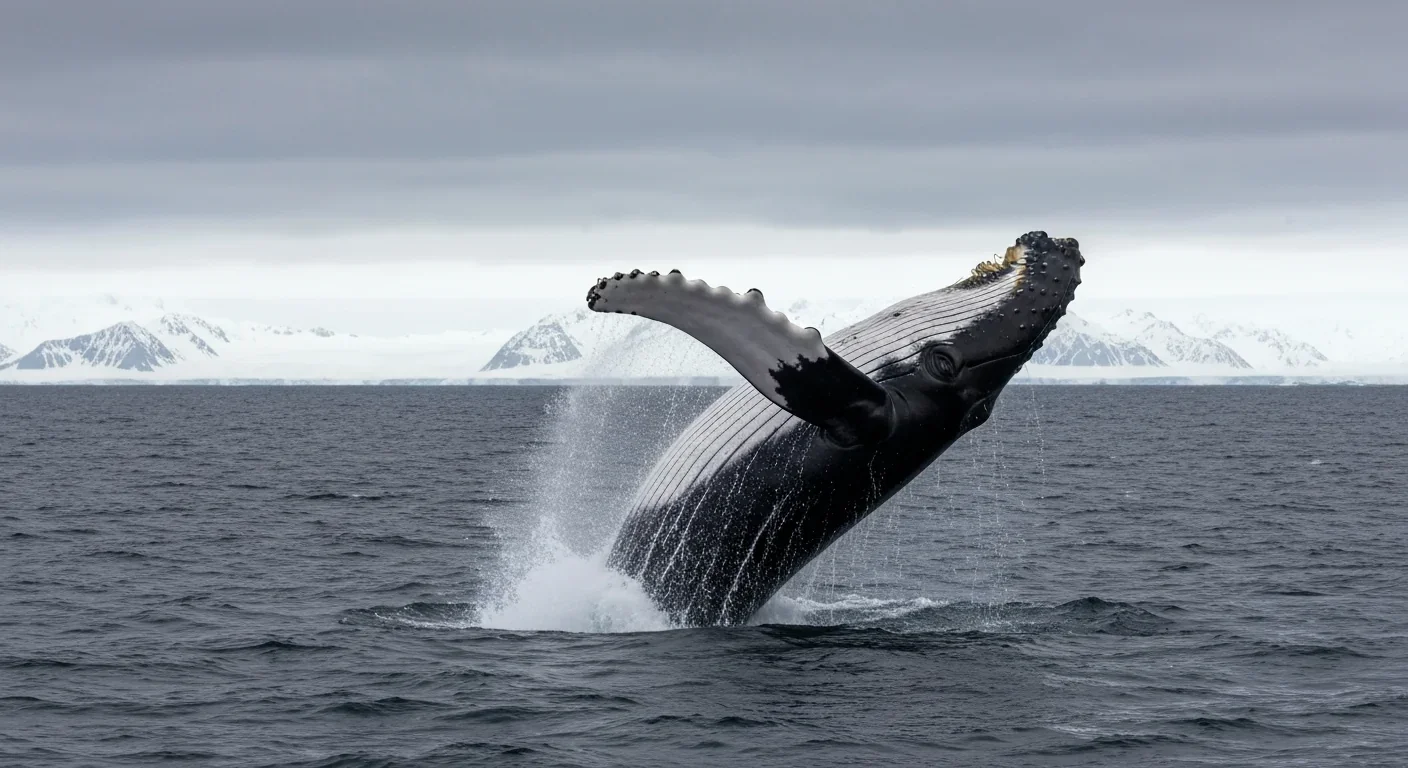
The consequences for ocean chemistry have been severe. When you remove 80% of the world's whales, you don't just lose charismatic megafauna. You lose a nutrient recycling system that operated at three or more times its current capacity. The researchers behind the Nature Communications study estimate that pre-whaling nutrient inputs were at least triple what they are today.
A study published in Trends in Ecology and Evolution put it bluntly: commercial hunting decreased whale populations by 81%, with "unknown effects on the biological carbon pump." The reduction of sperm whales in the Southern Ocean alone resulted in an extra 2 million tonnes of carbon remaining in the atmosphere each year.
As Ari Friedlaender, a professor of ocean sciences, explained: "Recently, we demonstrated how much commercial whaling impacted nutrient recycling by whales in their feeding grounds, and this work augments our understanding of how tropical systems are also impacted."
Think about it this way: we spent a century dismantling one of the ocean's most important fertilization systems and then wondered why marine productivity declined. It's as if we ripped out the irrigation system on a farm and blamed the soil for being dry.
A 2025 study from the University of Washington, published in Communications Earth & Environment, broke new ground by analyzing the actual chemical forms of trace metals in whale feces for the first time. Researchers Patrick Monreal and Randie Bundy examined five fecal samples from humpback and blue whales and found that iron was present in all of them.
What surprised them was the copper. "We were really shocked by how much copper was in the whale poop," Bundy told ScienceDaily. "We initially thought, 'oh, no, is the whale poop actually toxic?'" It turns out the copper was bound to organic ligands that render it non-toxic, and these ligands likely originate from bacteria in the whales' gut. This microbial component may actually enhance how available these metals are to phytoplankton, making whale excrement an even more efficient fertilizer than previously assumed.
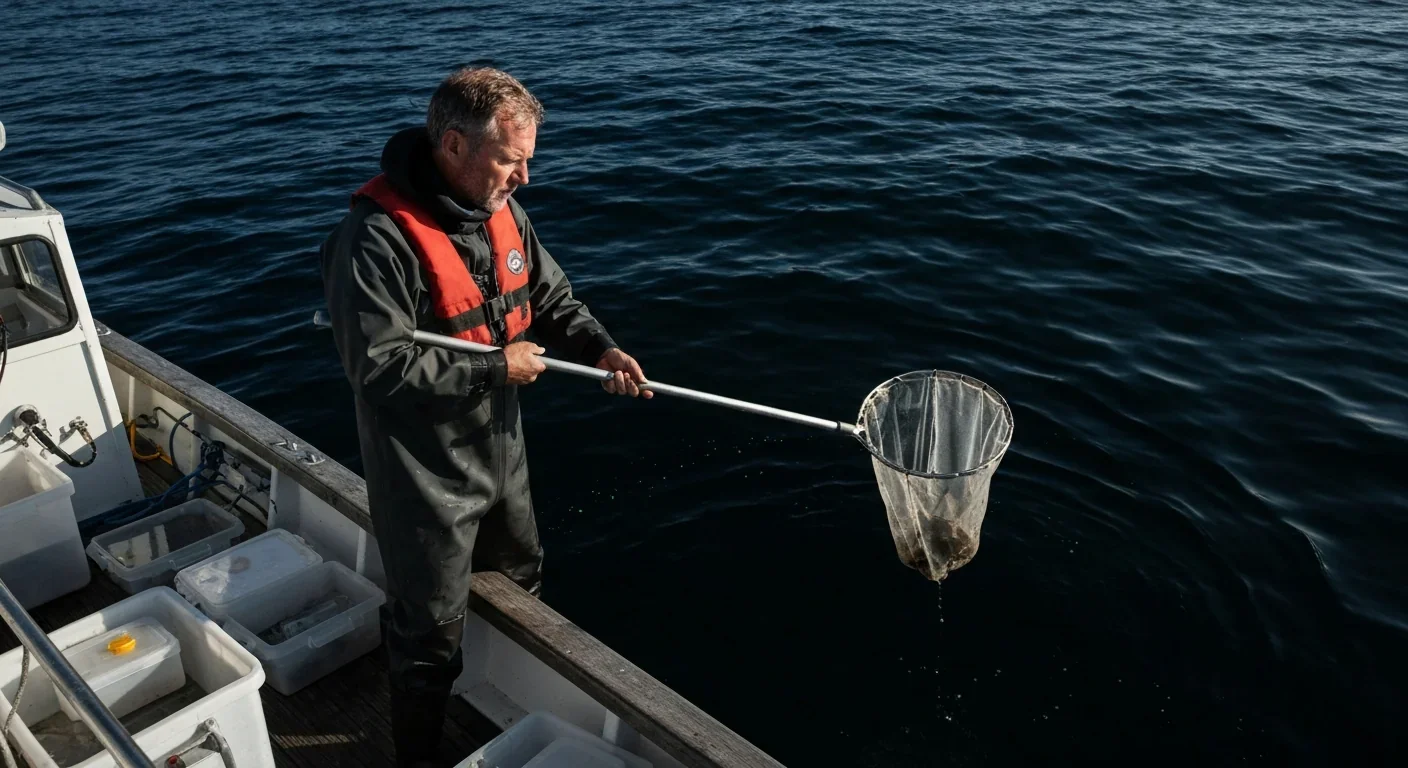
Whale gut bacteria appear to package iron and copper in organic forms that phytoplankton can readily absorb, making whale feces a more efficient ocean fertilizer than scientists previously assumed.
This finding adds a layer of biological sophistication to the whale pump. It's not just about dumping nutrients into the water. The whale's gut microbiome appears to be actively packaging those nutrients in forms that phytoplankton can readily absorb.
In the Gulf of Maine, whales release an estimated 23,000 tonnes of nitrogen annually into surface waters. That's more nitrogen than all the rivers in that system combined. When a single minke whale can produce up to 40 kilograms of feces per day, and the Svalbard population of 15,000 minke whales defecates up to 600 tonnes of excrement daily, the cumulative effect becomes staggering.
The whale pump operates during a whale's life, but whales continue to shape ecosystems after death. When a great whale dies, its carcass sinks to the ocean floor in what scientists call a "whale fall". Each great whale stores an average of 33 tons of CO2 in its body over its lifetime, and when it sinks, that carbon is effectively sequestered in the deep ocean for centuries.
But a whale fall does more than lock away carbon. A single carcass can support over 30,000 organisms for 10 to 50 years, creating a chemosynthetic ecosystem in the pitch-dark abyss. Tube worms, specialized mussels, bone-eating osedax worms, and sulfur-metabolizing bacteria colonize the skeleton in successive stages, extracting nutrients that ripple through deep-sea food webs.
One estimate puts the total carbon exported to the deep sea via whale carcasses at roughly 210,000 tonnes per year. Combined with the surface fertilization effect, the full carbon picture of whales is far larger than any single mechanism suggests.
So where does this leave us? The argument for whale conservation as a nature-based climate solution is compelling, though it comes with important caveats. The WWF estimates that recovering baleen whale populations could store carbon equivalent to a 272,000-acre forest, roughly the size of Rocky Mountain National Park.
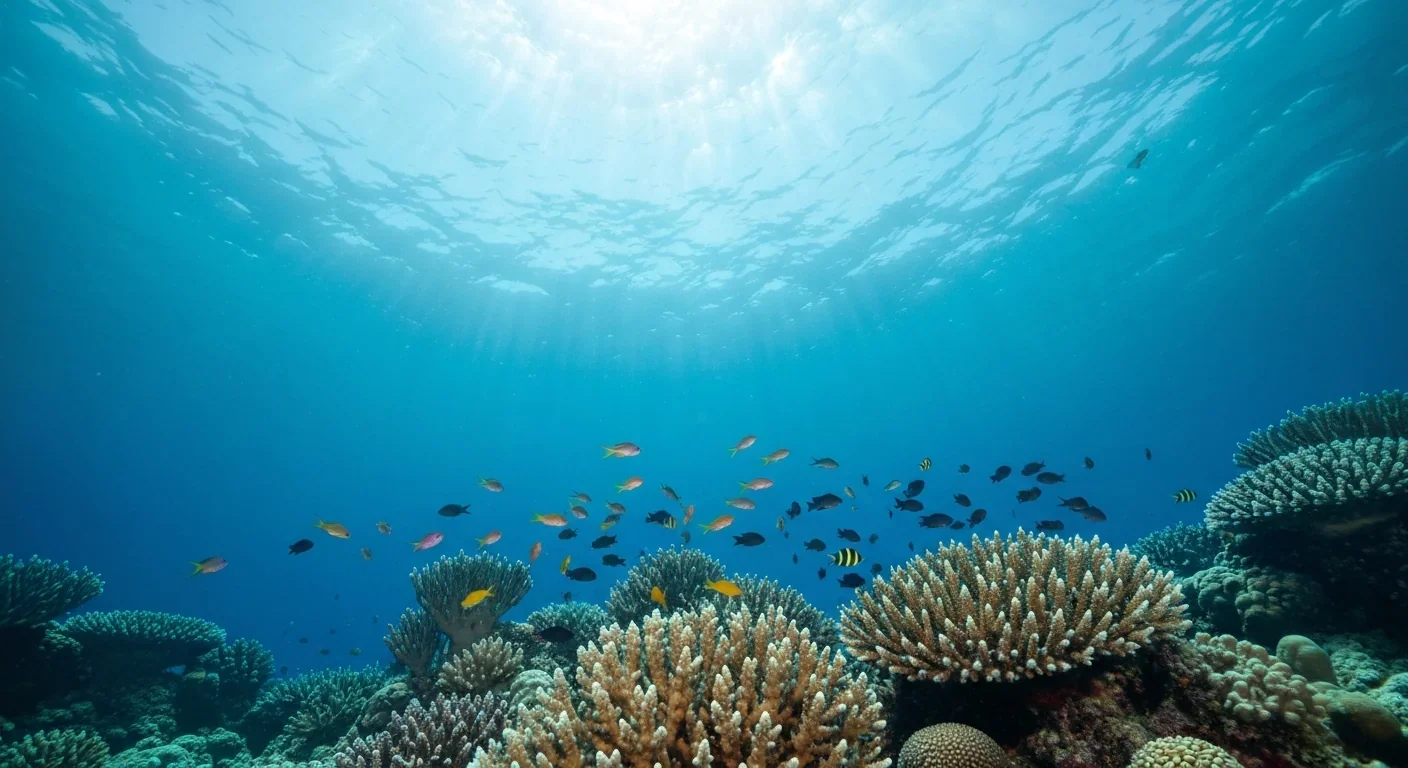
Economists have valued a single great whale at over $2 million in lifetime ecosystem services, including carbon sequestration, fisheries enhancement, and ecotourism. That's not sentiment. That's a balance sheet.
"Whale recovery has the potential for long-term self-sustained enhancement of the ocean carbon sink."
- Heidi Pearson, lead author, Trends in Ecology and Evolution
But some researchers urge caution. As one skeptical analysis in The Conversation pointed out, only about 1% of the carbon that sinks below the surface actually gets stored in seafloor sediment for the long term. The net climate impact of whale recovery, while real, should not be confused with a substitute for reducing fossil fuel emissions.
That balanced view matters. Whales are not going to solve climate change on their own. But dismissing their contribution because it's not the whole answer misses the point. Ocean ecosystems operate through interconnected feedback loops, and whales sit at the center of several critical ones. Restoring whale populations isn't a silver bullet. It's a force multiplier for an ocean that's been running on a fraction of its biological capacity.
The International Whaling Commission's 1986 moratorium on commercial whaling was a turning point, and some populations have partially recovered. Humpback whales are one success story, rebounding from near extinction to sustainable numbers in several regions.
But whales still face significant threats: ship strikes, entanglement in fishing gear, ocean noise pollution, and the cascading effects of climate change on their prey. Protecting the "blue corridors" that whales use for migration is essential, because these routes double as the conveyor belts that distribute nutrients across ocean basins.
The science is converging on a remarkable conclusion. For millions of years before humans intervened, whales ran a planetary-scale fertilization system that sustained ocean productivity, supported fisheries, and regulated atmospheric carbon. We broke that system. The encouraging news is that unlike so many environmental problems, this one has a clear path forward: let the whales come back.
As Andrew Pershing, an oceanographer at Climate Central, put it: "Because of their size, whales are able to do things that no other animal does. They're living life on a different scale."
The whale pump is proof that sometimes the most powerful climate technology isn't technology at all. It's a 100-ton animal doing what it's always done, eating deep, surfacing, and letting nature take its course.
Project Orion was a real 1960s program to reach other stars by detonating 800 nuclear bombs behind a spacecraft. The physics worked and the engineering was feasible, but the 1963 nuclear test ban treaty killed it. It remains the most credible interstellar spacecraft ever designed.

The locus coeruleus, a tiny brainstem structure, degenerates decades before Alzheimer's symptoms appear. Its loss cripples the brain's inflammation control, waste clearance, and sleep regulation. New imaging tools and noradrenergic therapies offer hope for early detection and prevention.
Research shows the sharing economy often increases total resource consumption through the Jevons paradox and rebound effects. Ride-sharing adds billions of vehicle miles, co-working spaces use more energy per worker, and diffused responsibility erodes conservation behavior. Breaking the paradox requires congestion pricing, accountability design, and matching sharing models to appropriate resource types.

Psychological reactance theory explains why banning or restricting things makes people want them more. From Prohibition to the Streisand effect to scarcity marketing, research shows that threatening people's freedom reliably backfires, and autonomy-supportive communication is far more effective.

A carnivorous pitcher plant in Borneo evolved to house bats instead of trapping insects, gaining up to 95% of its nitrogen from bat guano. The plant even built an ultrasonic reflector to help bats find it, revealing that carnivory in plants is a flexible spectrum.

The quantified self movement began as a hacker-ethos pursuit of personal insight, but corporate wearables now funnel biometric data to employers, insurers, and data brokers. With 81% of Americans wrongly believing health apps are HIPAA-protected, a regulatory void enables health data to be sold for pennies while generating anxiety instead of empowerment.

CXL memory pooling lets servers dynamically share DRAM over a cache-coherent interconnect, eliminating the 40% stranded memory waste in data centers. With commercial hardware now shipping and Azure deploying CXL cloud instances, this technology promises to cut memory costs by 50% while enabling composable infrastructure.

Loading featured articles...