Sharing Economy's Dirty Secret: More Sharing, More Waste

Sharing Economy's Dirty Secret: More Sharing, More Waste
Whale Pump: How Whale Dung Fertilizes the Ocean
Climate Tipping Cascades: How One Threshold Topples All

Iron-Air Batteries Could Solve Renewable Energy Storage
Megadrought Is Redrawing the Map of Earth's Ecosystems
Can Engineered Mist Save California's Dying Redwoods?
TL;DR: Scientists are restoring Ice Age ecological dynamics through rewilding projects like Siberia's Pleistocene Park and de-extinction efforts by Colossal Biosciences. These initiatives aim to reintroduce megafauna or their proxies to repair broken ecosystems, protect Arctic permafrost, and slow climate change.
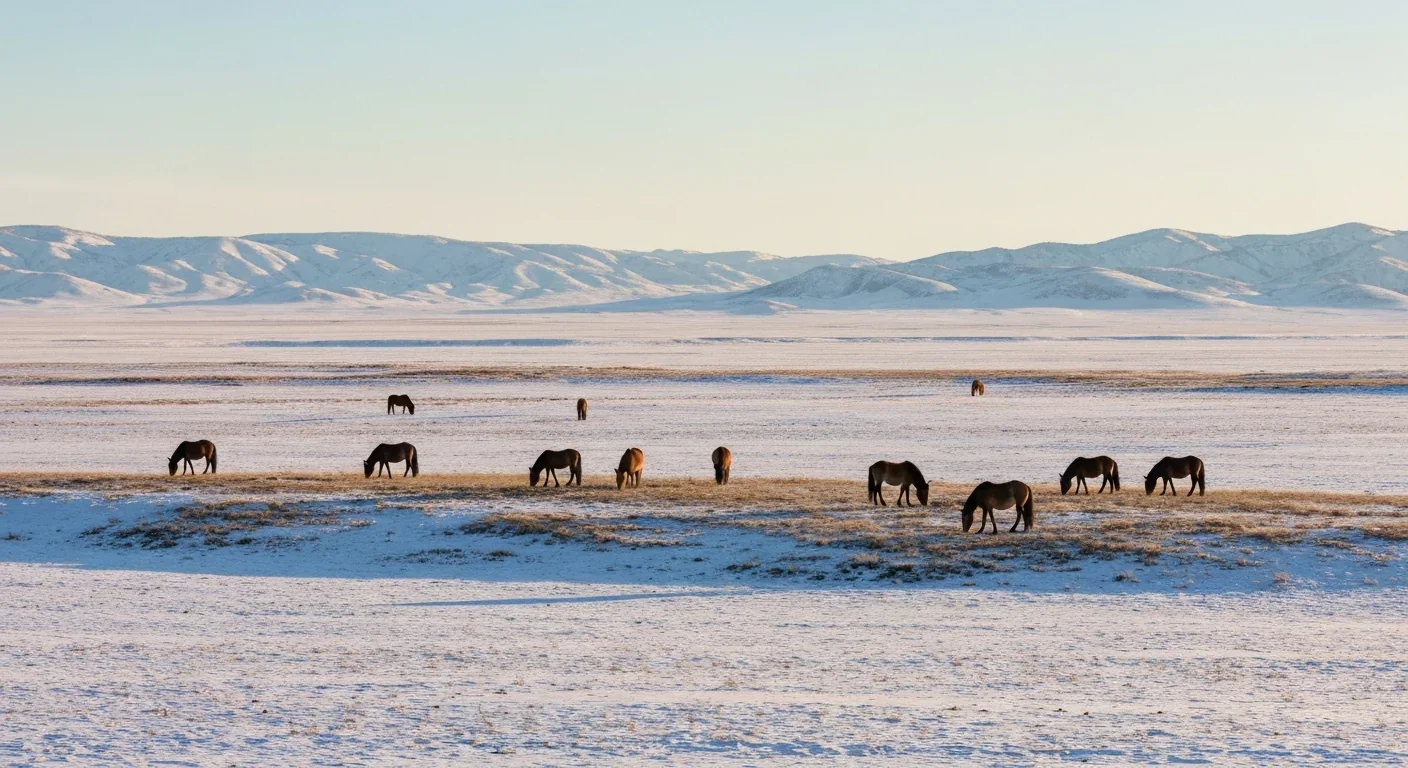
Imagine walking across the Siberian tundra and hearing the thunder of hooves where silence has reigned for 10,000 years. That's not a fantasy for Nikita Zimov, who runs a 144-square-kilometer nature reserve in northeastern Siberia where bison, wild horses, and musk oxen are slowly transforming frozen scrubland back into the grasslands that once fed woolly mammoths. And he's not alone. A growing global network of scientists, geneticists, and conservationists is working to reverse one of humanity's oldest ecological crimes, betting that restoring Ice Age dynamics could be our most unexpected weapon against climate change.
The numbers are staggering. Approximately 178 species of large mammals vanished between 50,000 and 10,000 years ago. North and South America lost more than half their megafauna. Australia was devastated. Only Africa, where animals had evolved alongside humans for millions of years, escaped with relatively modest losses of about 21%.
Paleontologist Paul Martin first proposed the "overkill hypothesis" in a landmark 1966 Nature paper, arguing that extinctions tracked human arrival on each continent, not temperature shifts. Megafauna survived dozens of previous warming periods. What they couldn't survive was a new apex predator armed with spears and fire. As one analysis concluded, the odds of this pattern being coincidental are "basically 100% if humans were the culprit and very near 0% if we weren't."
But the real tragedy isn't just what disappeared. It's what stopped working. These giants weren't passive scenery. They were ecological engineers. Woolly mammoths and giant ground sloths trampled shrubs, uprooted trees, dispersed seeds, and cycled nutrients through their dung. Their grazing maintained vast grassland ecosystems, the mammoth steppe, that stretched across the Northern Hemisphere with biomass densities rivaling the African savanna, roughly 10 tons of animal per square kilometer. When they vanished, forests encroached, fire regimes shifted, and entire plant communities restructured.
A paleoecological study from Panama's Lake La Yeguada documented three distinct collapse phases, showing that each wave of megafauna loss triggered increased wildfire frequency and the decline of large-fruited plant species that depended on giant dispersers.
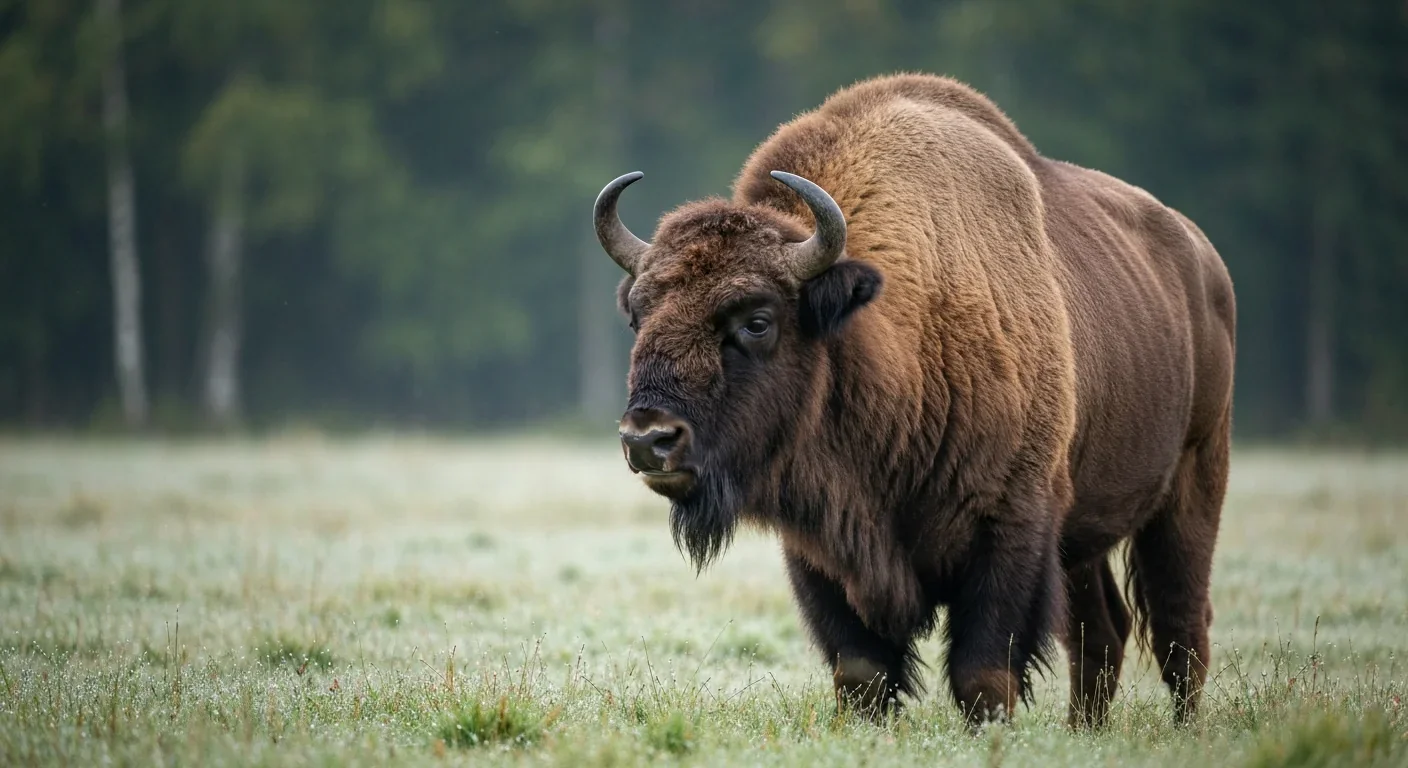
Arctic permafrost contains roughly twice as much carbon as the entire atmosphere. If it thaws, the resulting methane and CO2 release could trigger a warming feedback loop that no amount of emissions cuts could reverse.
Ecologists have a term for this domino effect: trophic cascades. When you remove a key species from a food web, the consequences ripple outward in ways that can reshape entire landscapes. The concept dates back to Aldo Leopold, who watched deer populations explode and mountain slopes erode after wolves were hunted from the American Southwest.
The most famous modern example played out in Yellowstone National Park. After wolves were reintroduced in 1995, elk changed their grazing behavior, allowing willows and aspens to recover along riverbanks. Canopy cover increased two to threefold in some areas. Beavers returned. Stream channels stabilized.
But here's where it gets complicated. Professor Chris Wilmers at UC Santa Cruz led a meta-analysis of over 170 studies and found that the Yellowstone story has been "really oversimplified in the media." Trophic cascades in terrestrial ecosystems tend to be weaker than in marine ones, shaped by complex interactions among prey behavior, human land use, and competing predators.
"Restoring predators certainly will add to biodiversity, but it's not going to have a simple effect that you can easily predict before restoring these species."
- Professor Chris Wilmers, UC Santa Cruz
That nuance matters enormously for rewilding advocates. If trophic cascades are context-dependent, then the case for restoring megafauna needs hard data from real experiments. Which is exactly what's happening in one of the most remote corners of the planet.
In 1996, Russian scientist Sergey Zimov fenced off a section of Siberian tundra near Chersky and started importing large herbivores. His hypothesis was radical: that the mammoth steppe hadn't disappeared because of climate change. It disappeared because humans killed the animals that maintained it.
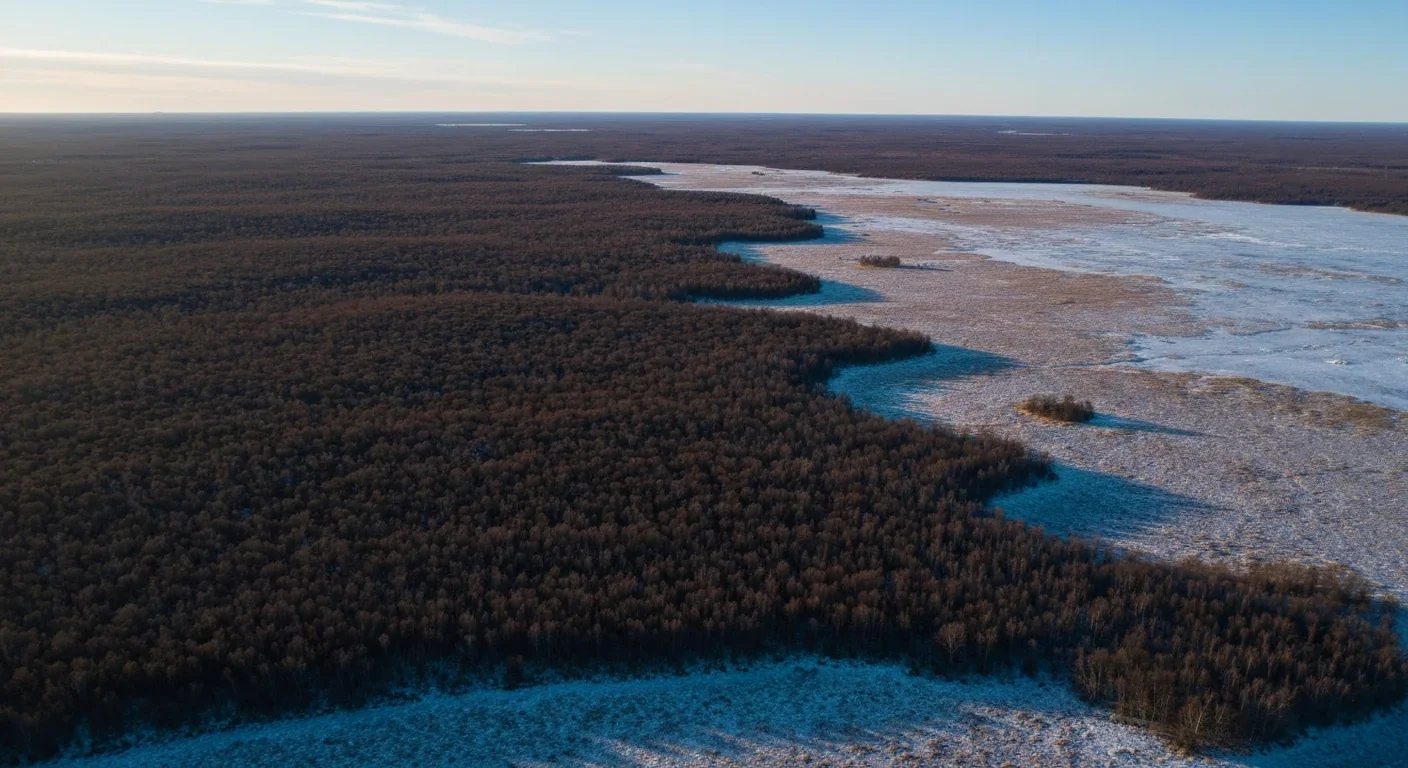
Three decades later, Pleistocene Park is providing some of the most compelling evidence in rewilding science. The park now hosts nine species of large herbivores, including Yakutian horses, European bison, musk oxen, moose, reindeer, yaks, and Bactrian camels. Grazing has transformed portions of the landscape from shrub-dominated tundra to open steppe.
The permafrost data is even more striking. When air temperatures drop to minus 40 degrees Celsius, the ground beneath intact snow cover stays at around minus 5 degrees, insulated by fluffy snow. But where animals have trampled the snow flat, soil temperatures plunge to minus 30 degrees. That 25-degree difference matters because compacted snow conducts cold far more efficiently, keeping permafrost frozen.
This isn't a minor technical point. Arctic permafrost contains roughly twice as much carbon as the entire atmosphere. If it thaws, the methane and CO2 released could accelerate warming in a feedback loop that no amount of emissions cuts could reverse. The park has installed a 35-meter-high flux tower continuously monitoring greenhouse gas emissions, building a long-term dataset that could prove whether managed grazing stabilizes permafrost at scale.
While Zimov works with animals that exist today, a Texas-based company is trying to create one that hasn't walked the Earth for 4,000 years. Colossal Biosciences, founded in 2021, has raised over $600 million, reached a valuation of $10.2 billion, and set an audacious goal: produce the first woolly mammoth hybrid calf by 2028.
The science is grounded in real genetics. The woolly mammoth genome is 99.6% identical to the Asian elephant's. Colossal's team uses CRISPR gene editing to splice mammoth DNA from specimens frozen in Arctic permafrost into elephant cells, targeting genes for cold adaptation: ear size, subcutaneous fat, hemoglobin efficiency, and hair growth. In 2025, they showcased "woolly mice" with mammoth-inspired traits as proof of concept.

The company has already produced three dire wolf pups, genetically engineered from gray wolf DNA. But the IUCN SSC Canid Specialist Group declared these animals were "neither dire wolves nor proxies for conservation." Paleogeneticist Nic Rawlence was blunter: "I think it's honestly a pipedream. Extinction is still forever."
"A mammoth will never be cloned, at least not one that is pure mammoth."
- Beth Shapiro, Chief Science Officer, Colossal Biosciences
What they're building is a cold-adapted elephant-mammoth hybrid carrying roughly 1% mammoth DNA, enough, they argue, to perform the ecological functions mammoths once filled.
You don't need to resurrect extinct species to practice rewilding. Across Europe, a quieter revolution is producing measurable results. Rewilding Europe, founded in 2011, now operates across more than one million hectares in ten rewilding areas spanning nine countries.
The European bison is the poster species. In Romania's Southern Carpathians, a reintroduction begun in 2014 has grown to over 200 individuals. Research suggests that 170 bison grazing within 48 square kilometers can capture approximately two million tons of carbon. Bison break up soil, disperse seeds, and create habitat mosaics supporting dozens of other species.
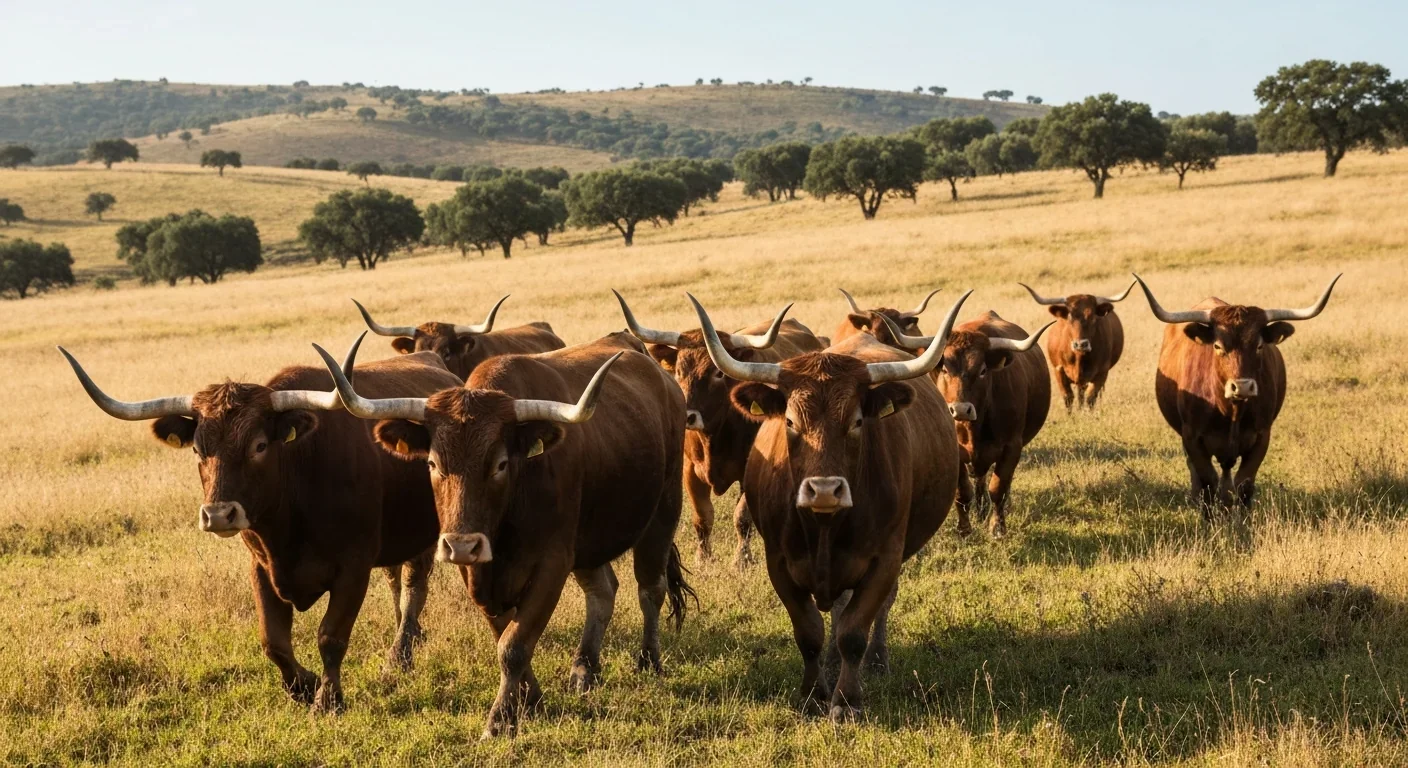
The Tauros Programme takes this further by selectively back-breeding domestic cattle to recreate the extinct aurochs. Using eight foundational breeds, the program has produced approximately 500 animals across six European countries, with herds released into Portugal's Coa Valley, Denmark, and Scotland.
Wolves tell a remarkable story too. Europe's wolf population has surged from about 100 in the 1970s to 20,300 in 2023, almost entirely through natural dispersal rather than human reintroduction. In Spain's Iberian Highlands, Przewalski's horses serve as functional surrogates for the extinct European wild horse, lowering fire risk and boosting biodiversity. Every euro invested in rewilding generates three to four euros in local value through ecotourism and nature-based enterprises.
Not everyone is convinced. Biologist Jeanne Loring from the Scripps Institute warns that reintroducing engineered megafauna "could be catastrophic." Critics raise concerns about animal welfare, land-use conflicts, Indigenous sovereignty, and the opportunity cost of diverting conservation funding from endangered species toward speculative de-extinction.
The Oostvaardersplassen reserve in the Netherlands became a cautionary tale when rewilded ungulates suffered mass starvation, demonstrating that rewilding without predators or management can produce ecologically interesting but socially unacceptable outcomes.
A 2023 global study found that the strongest predictors of rewilding success weren't ecological but social: local awareness of benefits and visible proof of concept. The science matters, but community buy-in matters more.
A 2023 study in Frontiers in Conservation Science analyzed 120 global rewilding case reports and confirmed this finding. The IUCN recognized the challenge when it launched its Global Guidelines for Rewilding in 2025, developed with over 60 organizations, emphasizing participatory rewilding where communities shape plans rather than having projects imposed from above.
Ecologist Jens-Christian Svenning, who coined the term "trophic rewilding," frames the philosophy with a subtle distinction. "The 're' in rewilding means 'again,' rather than 'back,'" he says. The goal isn't recreating a Pleistocene snapshot. It's restarting ecological processes that natural systems perfected over millions of years.
That distinction shifts the conversation from nostalgia to practicality. We don't need woolly mammoths exactly as they were. We need large herbivores to compact snow, maintain grasslands, and keep permafrost frozen. Bison and horses can do that now. Mammoth hybrids might amplify the effect later.
"After all, natural processes have worked on their own for millions of years, autonomously, to maintain biodiversity and ecosystem functionality."
- Jens-Christian Svenning, Aarhus University
The next decade will be decisive. Colossal aims to introduce mammoth hybrids to Siberia by the early 2030s. Rewilding Europe plans self-sustaining Tauros herds across six countries by mid-decade. And the IUCN's guidelines are creating a policy framework that could unlock government funding at scale.
After 11,700 years of living in a world emptied of its largest inhabitants, we're being asked to consider a provocative possibility: that the best way forward might be to bring something ancient back.

Project Orion was a real 1960s program to reach other stars by detonating 800 nuclear bombs behind a spacecraft. The physics worked and the engineering was feasible, but the 1963 nuclear test ban treaty killed it. It remains the most credible interstellar spacecraft ever designed.

The locus coeruleus, a tiny brainstem structure, degenerates decades before Alzheimer's symptoms appear. Its loss cripples the brain's inflammation control, waste clearance, and sleep regulation. New imaging tools and noradrenergic therapies offer hope for early detection and prevention.
Research shows the sharing economy often increases total resource consumption through the Jevons paradox and rebound effects. Ride-sharing adds billions of vehicle miles, co-working spaces use more energy per worker, and diffused responsibility erodes conservation behavior. Breaking the paradox requires congestion pricing, accountability design, and matching sharing models to appropriate resource types.

Psychological reactance theory explains why banning or restricting things makes people want them more. From Prohibition to the Streisand effect to scarcity marketing, research shows that threatening people's freedom reliably backfires, and autonomy-supportive communication is far more effective.

A carnivorous pitcher plant in Borneo evolved to house bats instead of trapping insects, gaining up to 95% of its nitrogen from bat guano. The plant even built an ultrasonic reflector to help bats find it, revealing that carnivory in plants is a flexible spectrum.

The quantified self movement began as a hacker-ethos pursuit of personal insight, but corporate wearables now funnel biometric data to employers, insurers, and data brokers. With 81% of Americans wrongly believing health apps are HIPAA-protected, a regulatory void enables health data to be sold for pennies while generating anxiety instead of empowerment.

CXL memory pooling lets servers dynamically share DRAM over a cache-coherent interconnect, eliminating the 40% stranded memory waste in data centers. With commercial hardware now shipping and Azure deploying CXL cloud instances, this technology promises to cut memory costs by 50% while enabling composable infrastructure.

Loading featured articles...