Sharing Economy's Dirty Secret: More Sharing, More Waste

Sharing Economy's Dirty Secret: More Sharing, More Waste

Scientists Want to Bring Back the Ice Age to Save Us
Whale Pump: How Whale Dung Fertilizes the Ocean
Iron-Air Batteries Could Solve Renewable Energy Storage
Megadrought Is Redrawing the Map of Earth's Ecosystems

Can Engineered Mist Save California's Dying Redwoods?
TL;DR: Scientists have identified 16 climate tipping elements that can trigger each other in cascading chain reactions. New research shows five may already be at risk at current warming, and crossing just one threshold can double the number of systems that collapse.
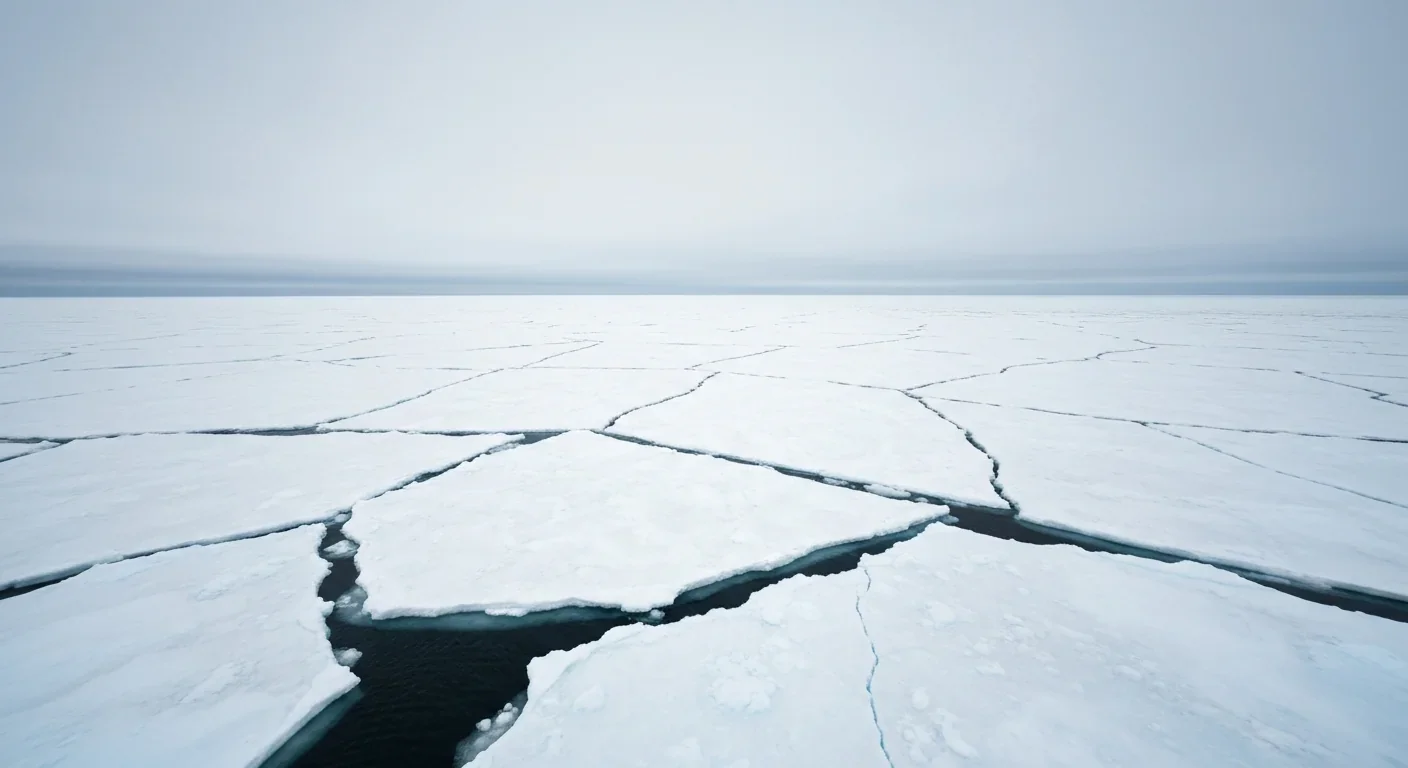
Imagine pushing a single domino in a line of sixteen. You don't get to choose which ones fall next, or how fast. Now imagine those dominoes are the Greenland ice sheet, the Amazon rainforest, the Atlantic Ocean's circulation system, and a dozen other planetary systems that regulate the climate you were born into. That's the scenario climate scientists are increasingly warning about. And some of the dominoes may already be wobbling.
In 2022, a landmark study published in Science by David Armstrong McKay and colleagues changed how we think about climate risk. The research team identified 16 major tipping elements in the Earth system, each capable of undergoing abrupt, potentially irreversible shifts once a critical temperature threshold is crossed. What made their findings so alarming was the thresholds themselves: five of these elements could be triggered at the current warming level of roughly 1.1 degrees Celsius above pre-industrial temperatures. Previous estimates from the IPCC had placed most tipping risks at 4 to 5 degrees of warming. Armstrong McKay's team effectively slashed the safety margin in half, or worse.
The study didn't just catalog individual risks. It highlighted something more troubling: these systems are connected. Crossing one tipping point can lower the threshold for the next, setting off a cascade that feeds on itself. As Tim Lenton of the University of Exeter put it, "We are rapidly approaching multiple Earth system tipping points that could transform our world with devastating consequences for people and nature."
"We are rapidly approaching multiple Earth system tipping points that could transform our world with devastating consequences for people and nature."
- Tim Lenton, University of Exeter
A climate tipping element is a large-scale component of the Earth system that can shift to a qualitatively different state once a critical threshold is crossed. In climate science, a tipping point is a critical threshold that, when crossed, leads to large, accelerating, and often irreversible changes. Think of it like a glass of water on a tilting table: at first nothing happens, then suddenly everything spills, and you can't put the water back.
The recognized tipping elements include the Atlantic Meridional Overturning Circulation (AMOC), the Amazon rainforest, the Greenland and West Antarctic ice sheets, permafrost regions, warm-water coral reefs, and several others. Each operates on its own timescale. Arctic summer sea ice has already declined roughly 13% per decade since satellite observations began in 1979, making it one of the fastest-moving elements. The Greenland ice sheet, which holds enough ice to raise sea levels by about 7 meters, responds over centuries to millennia.
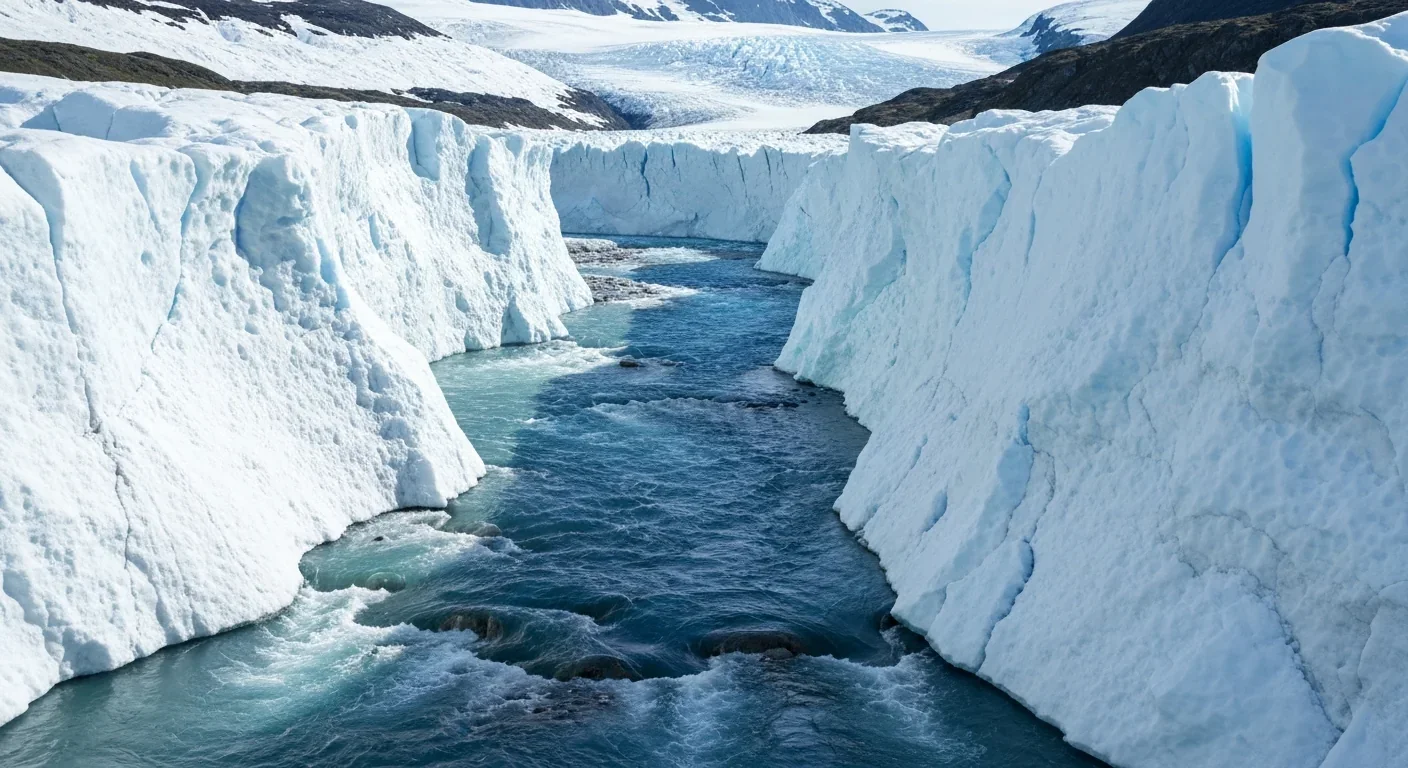
What connects them is a shared vulnerability to warming, and a shared capacity to make warming worse.
The reason climate tipping cascades are so much more dangerous than a simple temperature reading suggests is feedback loops. An international study identified 27 amplifying feedback loops out of 41 total feedback mechanisms examined, many of which aren't fully incorporated into existing climate models. These self-reinforcing cycles push the planet toward irreversible tipping points faster than previously projected.
Consider the ice-albedo feedback. Ice reflects sunlight. When it melts, the darker land or ocean beneath absorbs more heat, which melts more ice, which exposes more dark surface. This is a major reason the Arctic is warming nearly four times faster than the global average. Then there's the water vapor feedback, which approximately doubles the warming effect of CO2 alone, since warmer air holds more moisture and water vapor is itself a potent greenhouse gas.
Add in permafrost carbon release, where thawing frozen ground releases stored carbon as CO2 and methane. Methane is about 80 times more potent than CO2 over a 20-year period. Permafrost stores roughly twice as much carbon as the entire atmosphere, and between 110 and 231 billion tons of CO2 equivalents could be released by 2040. Once that carbon is out, it doesn't go back. Even if temperatures stabilize, the decomposition continues.
Permafrost stores twice as much carbon as the entire atmosphere. Between 110 and 231 billion tons of CO2 equivalents could be released by 2040, and once the thaw begins, the carbon loss is irreversible even if temperatures stabilize.
These tipping elements don't exist in isolation. They're linked through physical mechanisms that allow one collapse to trigger another.
The most studied cascade pathway runs like this: melting of the Greenland ice sheet pours freshwater into the North Atlantic. That freshwater disrupts the density-driven motor of the AMOC, weakening or potentially collapsing this massive ocean circulation system. A weakened AMOC shifts tropical rain belts, drying out the Amazon rainforest. As the Amazon dries, wildfires and die-back release its stored carbon, further warming the planet and feeding back into more ice melt.
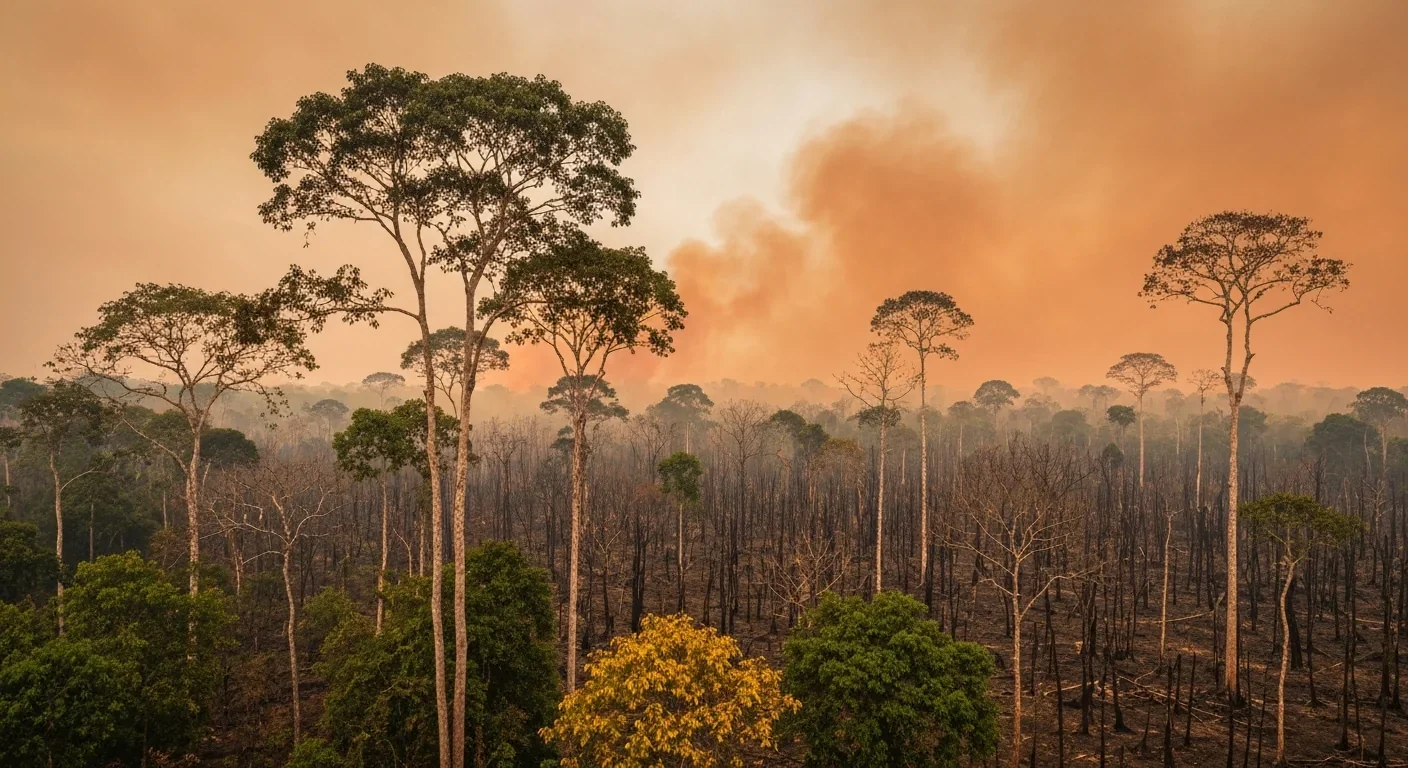
As Johan Rockstrom described it: "These tipping elements can potentially act like a row of dominoes. Once one is pushed over, it pushes Earth towards another."
"These tipping elements can potentially act like a row of dominoes. Once one is pushed over, it pushes Earth towards another."
- Johan Rockstrom, Potsdam Institute for Climate Impact Research
Research published by Carbon Brief found that the majority of interactions between tipping elements, 13 of 19 studied links, lead to further destabilization. Accounting for these interactions can more than double the expected number of tipped elements compared to models that treat each one separately.
Not all warming levels carry equal cascade risk, and the numbers matter enormously for policy.
At 1.5 degrees of warming, four to seven tipping elements are at risk if warming stabilizes permanently. But if the overshoot is temporary, kept under 100 years, that number drops to two to four. At 2 degrees, Monte Carlo simulations show a 15% probability of cascading tipping. Jump to 3 degrees, and that probability climbs to 66%. At 2.7 degrees, the likely range expands to 7 to 10 tipping elements. At 4 degrees, it's 10 to 13.
At 2 degrees of warming, there is a 15% chance of triggering a tipping cascade. At 3 degrees, that probability jumps to 66%. Each fraction of a degree matters enormously.
The policy-critical insight from Ritchie, Cox, and Huntingford's 2025 paper is that tipping is not instantaneous. The duration of an overshoot matters as much as its peak. Fast elements like coral reefs require only decades of excess warmth to flip. Slow elements like the Greenland ice sheet can tolerate longer overshoots. This means the speed of emissions cuts directly determines how many dominoes fall.
Scientists aren't just waiting for catastrophe. They're actively hunting for early warning signals that tipping elements are approaching their thresholds.
The primary technique is detecting "critical slowing down," where a system nearing a tipping point takes longer to recover from disturbances. Boers' 2021 analysis found exactly this pattern in North Atlantic ocean data, suggesting the AMOC is losing dynamical resilience.
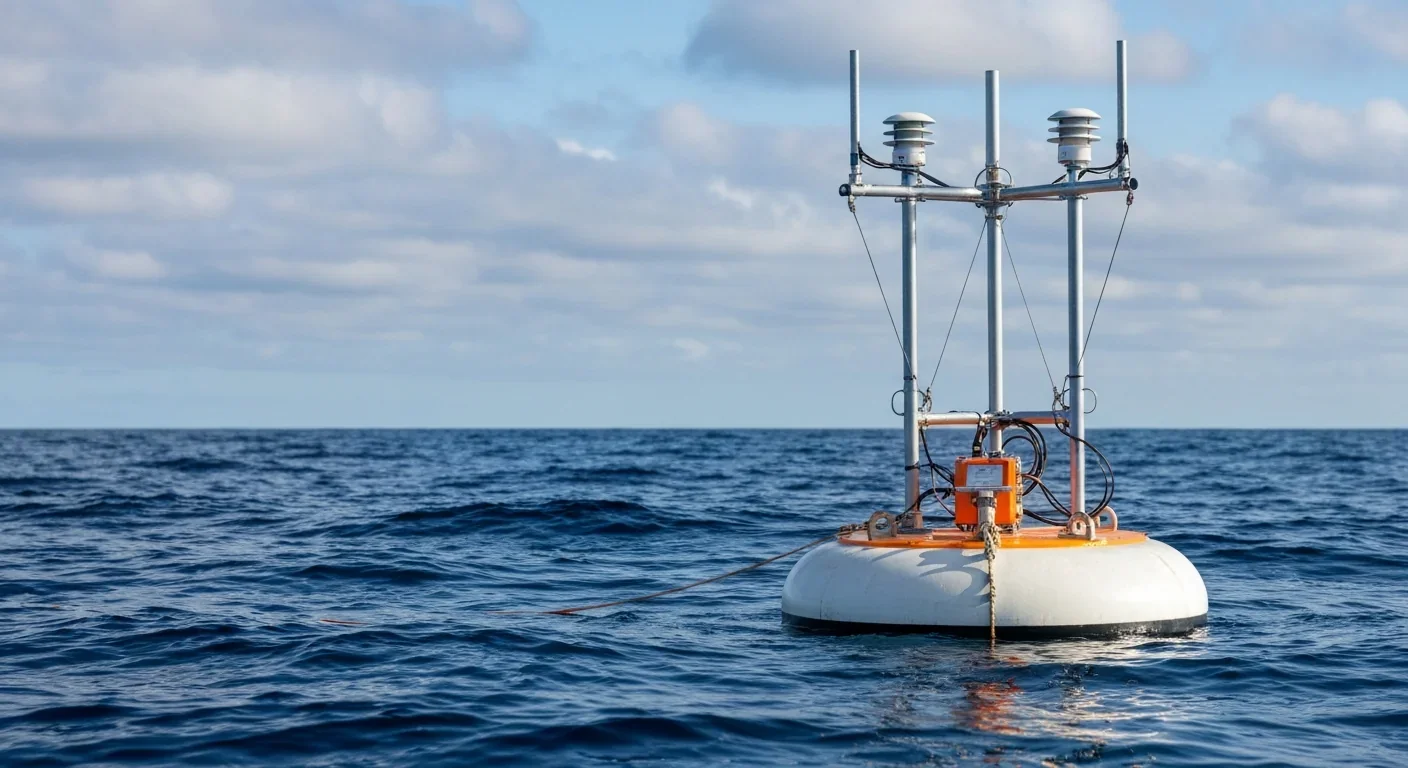
A 2026 study from Utrecht University discovered something more specific: the Gulf Stream's position could serve as an early warning for AMOC collapse. In their simulation, the Gulf Stream suddenly jumped 219 kilometers north about 25 years before the AMOC collapsed. Satellite observations already show the Gulf Stream drifting northward over the past three decades.
For the Amazon, Boulton and colleagues identified statistical indicators of declining resilience through satellite data. The forest experienced unprecedented fire events in 2024, with the burning area doubling the previous 40-year record.
The challenge is that these warning signals work best for only one type of tipping, the bifurcation-induced kind. For noise-induced and rate-induced tipping, the signals fail, meaning some cascades could arrive without statistical forewarning.
In 2018, Will Steffen and colleagues published a paper in PNAS introducing "Hothouse Earth," a scenario where cascading tipping points lock the planet into a self-sustaining warming trajectory stabilizing only at 4 to 5 degrees above pre-industrial, regardless of what humanity does with emissions afterward.
As Christopher Wolf put it: "Crossing even some of the thresholds could commit the planet to a hothouse trajectory with long-lasting and possibly irreversible consequences." At 3 to 4 degrees, scientists warn, "the economy and society will cease to function as we know it."

This isn't theoretical anymore. Global temperatures exceeded 1.5 degrees for 12 consecutive months, accompanied by record wildfires and floods. The AMOC is at its weakest in over a millennium, losing about 0.46 sverdrups per decade since 1950. The Amazon has lost roughly 15% of its forest cover, with a 20 to 25% threshold estimated to trigger an irreversible savanna transition.
The Tipping Point Modelling Intercomparison Project (TIPMIP), coordinated by the Potsdam Institute, brings together modeling groups to simulate interactions between tipping elements. New satellite tools like ESA's Sentinel-1C provide unprecedented monitoring data.
But many scientists argue the IPCC still under-weights cascade risk, not fully accounting for interactions between tipping elements. Current climate models rarely implement fully interactive ice-sheet dynamics with ocean circulation, a critical gap in cascade modeling.
The British government invested $80 million in solar modification research. Potsdam Institute researchers warn that surpassing 2 degrees would make tipping risks "accelerate even more rapidly."
The science carries one overwhelming message: time matters more than we thought.
Every fraction of a degree matters. The difference between holding warming above 1.5 degrees for 30 years versus 100 years could mean two tipping elements falling versus seven. As William Ripple noted, Earth's climate stabilized over 11,000 years ago, enabling agriculture and complex societies. We're moving away from that stability.
"After a million years of oscillating between ice ages separated by warmer periods, the Earth's climate stabilized more than 11,000 years ago, enabling agriculture and complex societies. We're now moving away from that stability."
- William Ripple, Oregon State University
But this isn't a story without agency. Research shows that with aggressive action, the Amazon could still recover if deforestation stopped. Better monitoring through Gulf Stream observation and satellite permafrost tracking can provide advance notice. Emissions reductions can shrink the overshoot window.
The dominoes are teetering. Whether they fall in sequence depends on the choices made in this decade, not the next century. The question is no longer whether the planet has climate tipping cascades. It's whether we'll act before the first domino takes the rest with it.
Project Orion was a real 1960s program to reach other stars by detonating 800 nuclear bombs behind a spacecraft. The physics worked and the engineering was feasible, but the 1963 nuclear test ban treaty killed it. It remains the most credible interstellar spacecraft ever designed.

The locus coeruleus, a tiny brainstem structure, degenerates decades before Alzheimer's symptoms appear. Its loss cripples the brain's inflammation control, waste clearance, and sleep regulation. New imaging tools and noradrenergic therapies offer hope for early detection and prevention.
Research shows the sharing economy often increases total resource consumption through the Jevons paradox and rebound effects. Ride-sharing adds billions of vehicle miles, co-working spaces use more energy per worker, and diffused responsibility erodes conservation behavior. Breaking the paradox requires congestion pricing, accountability design, and matching sharing models to appropriate resource types.

Psychological reactance theory explains why banning or restricting things makes people want them more. From Prohibition to the Streisand effect to scarcity marketing, research shows that threatening people's freedom reliably backfires, and autonomy-supportive communication is far more effective.

A carnivorous pitcher plant in Borneo evolved to house bats instead of trapping insects, gaining up to 95% of its nitrogen from bat guano. The plant even built an ultrasonic reflector to help bats find it, revealing that carnivory in plants is a flexible spectrum.

The quantified self movement began as a hacker-ethos pursuit of personal insight, but corporate wearables now funnel biometric data to employers, insurers, and data brokers. With 81% of Americans wrongly believing health apps are HIPAA-protected, a regulatory void enables health data to be sold for pennies while generating anxiety instead of empowerment.

CXL memory pooling lets servers dynamically share DRAM over a cache-coherent interconnect, eliminating the 40% stranded memory waste in data centers. With commercial hardware now shipping and Azure deploying CXL cloud instances, this technology promises to cut memory costs by 50% while enabling composable infrastructure.

Loading featured articles...