Sharing Economy's Dirty Secret: More Sharing, More Waste
Sharing Economy's Dirty Secret: More Sharing, More Waste
Scientists Want to Bring Back the Ice Age to Save Us
Whale Pump: How Whale Dung Fertilizes the Ocean
Climate Tipping Cascades: How One Threshold Topples All
Iron-Air Batteries Could Solve Renewable Energy Storage
Megadrought Is Redrawing the Map of Earth's Ecosystems
TL;DR: Permafrost contains twice the carbon humans have ever emitted. As Arctic temperatures rise four times faster than the global average, ancient frozen ground is thawing and releasing massive amounts of greenhouse gases in a self-reinforcing feedback loop that most climate models don't account for.
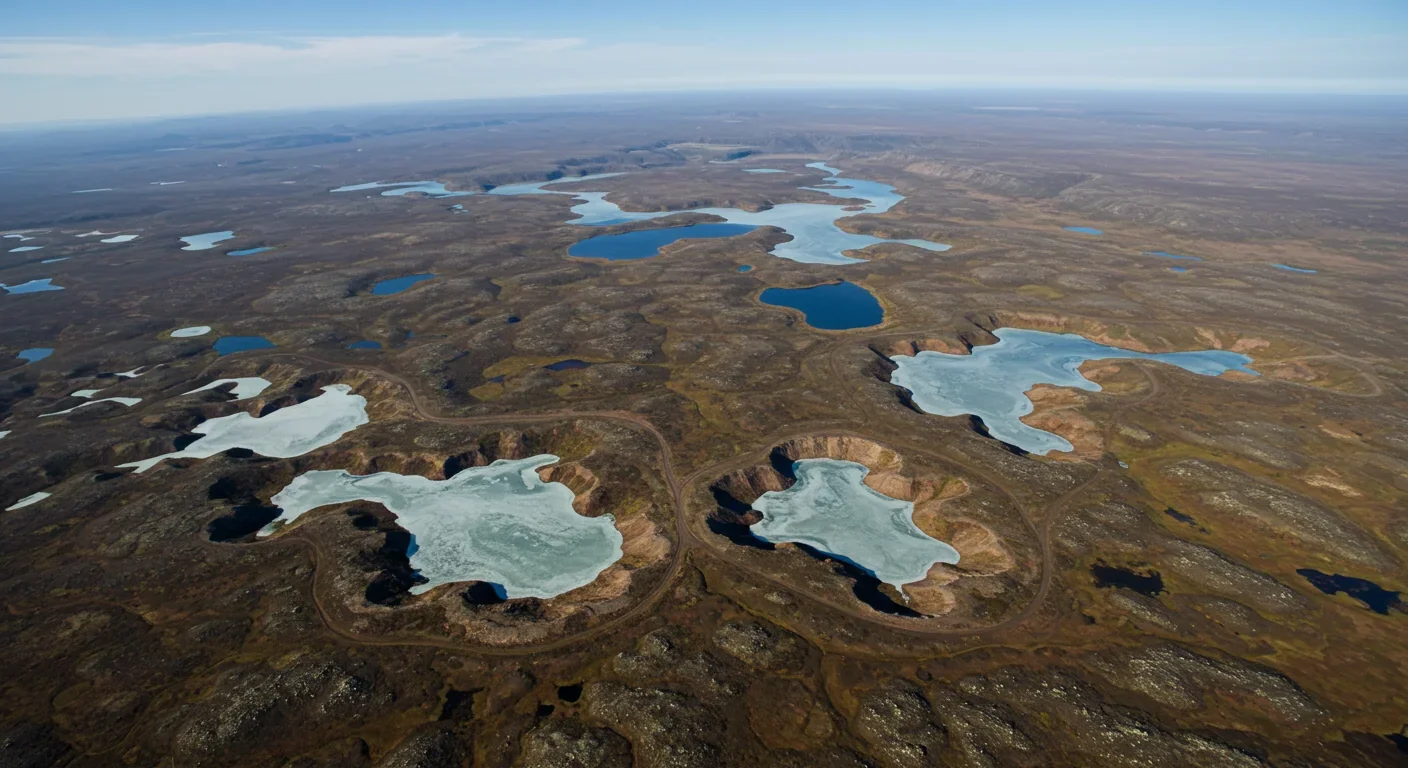
By 2100, scientists predict that Earth's frozen ground could release greenhouse gases equivalent to twice everything humanity has ever emitted. This isn't science fiction, it's the permafrost carbon feedback, and most people don't even know it exists. While politicians debate emission targets and activists march for climate action, hundreds of meters beneath Arctic tundra and boreal forests, ancient ice is quietly unlocking a carbon reserve that dwarfs our entire industrial history.
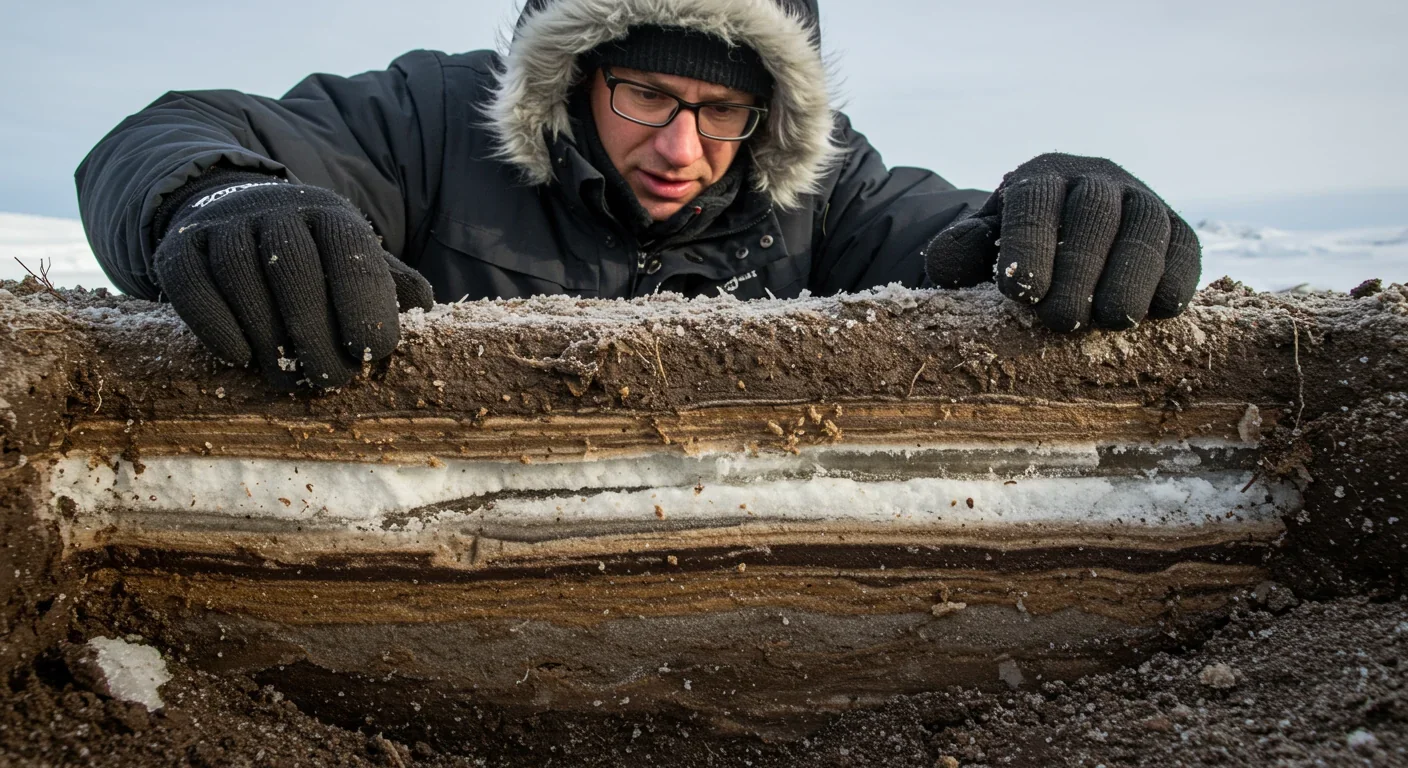
Permafrost is permanently frozen ground, any soil or rock that stays at or below 0°C for at least two consecutive years. Think of it as Earth's deep freeze, locking away organic matter from plants and animals that died thousands of years ago. Some of this frozen ground, particularly yedoma permafrost, goes hundreds of meters deep and has been frozen since the last Ice Age.
The Arctic is home to most of the world's permafrost, covering about 24% of exposed land in the Northern Hemisphere. But it also exists in high-mountain regions like the Himalayas, the Andes, and the European Alps. These frozen landscapes aren't barren, they support ecosystems, Indigenous communities, and increasingly, industrial infrastructure.
What makes permafrost so critical isn't just what it is, but what it contains. Trapped in that frozen soil is an estimated 1,600 gigatons of carbon, more than twice the amount currently in Earth's atmosphere. That carbon has been safely locked away for millennia, but rising temperatures are changing everything.
The Arctic is warming four times faster than the rest of the planet. In some regions, temperatures have already climbed 8.8°F since the 1970s. When permafrost warms, ice within the soil begins to melt, the ground becomes unstable, and organic matter that's been frozen for thousands of years starts to decompose.
This decomposition process is where things get dangerous. Microbes that were dormant in the frozen ground wake up and begin breaking down ancient plant and animal material. In oxygen-rich environments, this produces carbon dioxide. In waterlogged, oxygen-poor conditions, it produces methane, a greenhouse gas 80 times more potent than CO₂ over a 20-year period.
Wildfire adds another layer of risk. As the Arctic warms, northern boreal forests become drier and more fire-prone. These fires don't just burn trees, they burn through the organic layer protecting permafrost, accelerating thaw and releasing stored carbon directly into the atmosphere. It's a cascade: warming triggers fires, fires expose permafrost, permafrost thaws and releases more greenhouse gases, which causes more warming.
Here's the nightmare scenario: permafrost thaw creates a self-reinforcing cycle. More warming means more thaw, more thaw means more carbon release, more carbon release means more warming. This feedback loop operates independently of human emissions, it's a climate multiplier we've set in motion.
Current climate models don't fully account for this feedback. Most projections calculate future warming based on human emissions alone, but they underestimate or exclude the additional warming from permafrost carbon. That means our climate targets, like limiting warming to 1.5°C or 2°C, may already be out of reach if permafrost releases accelerate.
The scary part? Early evidence suggests this is already happening. Studies show that Arctic permafrost ecosystems are shifting from carbon sinks to carbon sources under just 2°C of warming. In alpine regions, the transition is even more dramatic, with greenhouse gas sink capacity weakening significantly.
Scientists sometimes call this the "carbon bomb" because of its explosive potential. If a significant fraction of permafrost carbon is released this century, it could push global temperatures well beyond what any Paris Agreement scenario anticipates.
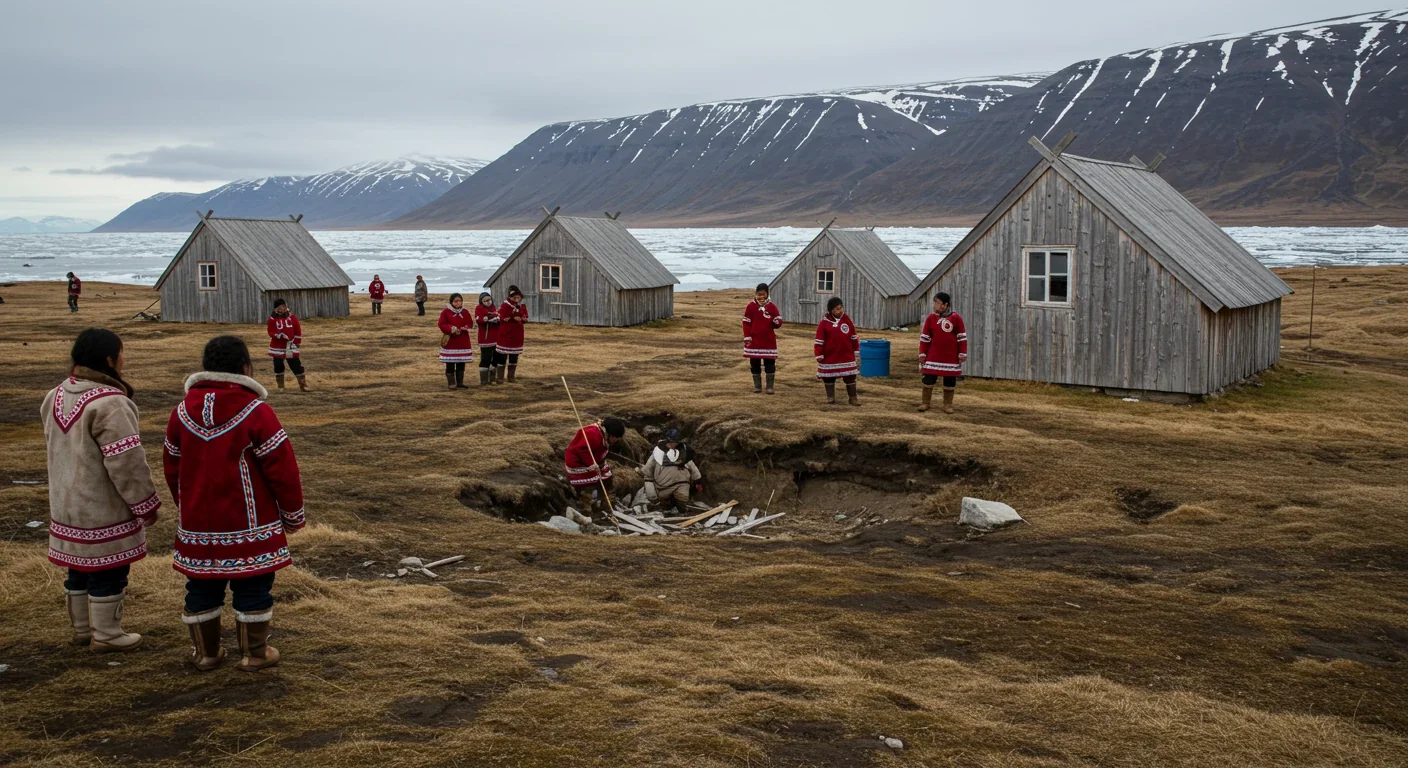
Permafrost thaw isn't just an abstract climate problem, it's reshaping landscapes and threatening communities right now. When ground ice melts, the soil collapses unevenly, creating a phenomenon called thermokarst. This produces sinkholes, mounds, tunnels, ravines, and other dramatic landforms that can appear within months.
In the Himalayas, thawing permafrost triggered deadly flash floods in August 2024. Debris flows began at elevations between 4,200 and 4,800 meters in the permafrost transition zone. Channels that were once 20 meters wide suddenly expanded to 80 meters, releasing multiple destructive surges that slammed into downstream villages. Scientists warn that without early warning systems and better monitoring, these disasters will recur.
Infrastructure built on permafrost is also at risk. Roads buckle, pipelines crack, and buildings tilt or collapse as the ground beneath them destabilizes. In Alaska, construction over permafrost, heavy vehicle movement, and deforestation all accelerate localized thaw, creating hazards that weren't anticipated when structures were built decades ago.
The damage goes beyond physical structures. Thawing permafrost disrupts ecosystems that countless species depend on. Lakes drain suddenly, forests drown, and migration patterns shift as the land itself transforms. For Indigenous communities who have lived on these lands for generations, permafrost thaw threatens cultural heritage, traditional hunting grounds, and entire ways of life.
Not all permafrost responds the same way to warming. Arctic and alpine permafrost show dramatically different behaviors. A 2°C temperature rise enhances the greenhouse gas sink capacity of Arctic ecosystems in some areas, thanks to increased plant growth that temporarily offsets carbon releases. But in alpine regions, the same warming significantly weakens the sink, turning these areas into net emitters.
Both regions, though, show rising nitrous oxide emissions. Despite their relatively low volume, nitrous oxide molecules have a substantial climate impact, nearly 300 times more powerful than CO₂ over a century. This gas often gets overlooked in permafrost discussions, but recent research highlights its growing importance.
Understanding these regional differences matters for policy. Solutions that work in the Arctic may not translate to the Alps or the Andes. We need location-specific monitoring, modeling, and mitigation strategies.
The scale of the permafrost threat can feel overwhelming, but there are concrete actions individuals, communities, and governments can take.
Indigenous knowledge holds critical insights. In Alaska, the Gwich'in people practice early-spring cultural burning, intentionally burning meadows and lake edges before summer. This removes dry fuel and creates firebreaks that prevent large wildfires from penetrating deep into the organic layer, protecting the permafrost beneath. These low-cost, community-driven strategies have worked for centuries and offer scalable models for wildfire management elsewhere.
Improved monitoring and early warning systems can save lives and property. The Himalayan flash floods could have provided 4 to 24 minutes of warning with proper sensors in upper catchments. Sustained permafrost monitoring through aerial surveys, field assessments, and satellite data can help communities anticipate hazards and plan evacuations.
Land-use planning needs to account for permafrost vulnerability. Scientists recommend strict risk zonation, buffer zones, and limits on construction in high-risk areas, especially on fragile alluvial fans and gully zones. Human exposure is rising as housing and tourism infrastructure expand into permafrost regions, a trend that must be reversed.
Policy must integrate permafrost feedback into climate models. Right now, permafrost carbon isn't fully included in standard climate projections. That's like planning a budget while ignoring half your expenses. Governments need to fund research that quantifies permafrost emissions and incorporates those findings into international climate agreements.
Rapid decarbonization remains the most powerful tool. Every fraction of a degree matters. Limiting warming to 1.5°C instead of 2°C or 3°C dramatically reduces the extent and speed of permafrost thaw. That means aggressive emissions cuts, renewable energy transitions, and protecting carbon sinks like forests and wetlands.
Permafrost thaw is not a distant, speculative risk. It's happening now, accelerating, and already contributing to climate change. Yet it remains largely invisible in public discourse. Most climate conversations focus on fossil fuel emissions, deforestation, and renewable energy, all critical issues. But permafrost represents a feedback mechanism that operates beyond human control once triggered.
The longer we ignore it, the harder it becomes to manage. Permafrost thaw is slow at first, then sudden. Ground that's been frozen for 50,000 years can destabilize in a few decades. Once large-scale thaw begins, stopping it is nearly impossible.
This isn't about doom and gloom, it's about recognizing reality so we can act accordingly. If we continue treating permafrost as a niche scientific topic rather than a central climate challenge, we'll be blindsided by impacts we could have mitigated.
Stay informed. Follow research from institutions studying permafrost, like the Woodwell Climate Research Center, the Permafrost Carbon Network, and university Arctic research programs. Understand that permafrost thaw is a global issue, not just an Arctic problem.
Advocate for climate action that acknowledges permafrost feedback. When discussing climate policy, mention permafrost. Push for inclusion of permafrost emissions in national climate commitments and international agreements.
Support Indigenous land stewardship. Indigenous communities have protected these landscapes for millennia. Funding and legal support for their land management practices can be one of the most cost-effective climate interventions available.
Reduce your own emissions. The same actions that reduce fossil fuel pollution also reduce permafrost thaw: using public transit, insulating homes, supporting renewable energy, eating less meat, and flying less. Every ton of CO₂ avoided helps keep permafrost frozen a little longer.
Permafrost isn't sexy. It doesn't make headlines like hurricanes, wildfires, or heat waves. But beneath the ground in the Arctic and high mountains, a slow-motion climate disaster is unfolding. The carbon locked in frozen soil for thousands of years is waking up, and when it fully emerges, it could make our current climate crisis look like a preview.
The good news? We still have time to act. But that window is closing. The difference between 1.5°C and 2°C of warming could determine whether permafrost thaw remains manageable or spirals into runaway feedback. The difference between action now and delay could mean protecting communities or watching them disappear.
Permafrost thaw is the silent carbon bomb. It's time we stopped ignoring the ticking.
Project Orion was a real 1960s program to reach other stars by detonating 800 nuclear bombs behind a spacecraft. The physics worked and the engineering was feasible, but the 1963 nuclear test ban treaty killed it. It remains the most credible interstellar spacecraft ever designed.

The locus coeruleus, a tiny brainstem structure, degenerates decades before Alzheimer's symptoms appear. Its loss cripples the brain's inflammation control, waste clearance, and sleep regulation. New imaging tools and noradrenergic therapies offer hope for early detection and prevention.
Research shows the sharing economy often increases total resource consumption through the Jevons paradox and rebound effects. Ride-sharing adds billions of vehicle miles, co-working spaces use more energy per worker, and diffused responsibility erodes conservation behavior. Breaking the paradox requires congestion pricing, accountability design, and matching sharing models to appropriate resource types.

Psychological reactance theory explains why banning or restricting things makes people want them more. From Prohibition to the Streisand effect to scarcity marketing, research shows that threatening people's freedom reliably backfires, and autonomy-supportive communication is far more effective.

A carnivorous pitcher plant in Borneo evolved to house bats instead of trapping insects, gaining up to 95% of its nitrogen from bat guano. The plant even built an ultrasonic reflector to help bats find it, revealing that carnivory in plants is a flexible spectrum.

The quantified self movement began as a hacker-ethos pursuit of personal insight, but corporate wearables now funnel biometric data to employers, insurers, and data brokers. With 81% of Americans wrongly believing health apps are HIPAA-protected, a regulatory void enables health data to be sold for pennies while generating anxiety instead of empowerment.

CXL memory pooling lets servers dynamically share DRAM over a cache-coherent interconnect, eliminating the 40% stranded memory waste in data centers. With commercial hardware now shipping and Azure deploying CXL cloud instances, this technology promises to cut memory costs by 50% while enabling composable infrastructure.

Loading featured articles...