Scientists Want to Bring Back the Ice Age to Save Us

Scientists Want to Bring Back the Ice Age to Save Us

Whale Pump: How Whale Dung Fertilizes the Ocean

Climate Tipping Cascades: How One Threshold Topples All

Iron-Air Batteries Could Solve Renewable Energy Storage

Megadrought Is Redrawing the Map of Earth's Ecosystems

Can Engineered Mist Save California's Dying Redwoods?
TL;DR: Research shows the sharing economy often increases total resource consumption through the Jevons paradox and rebound effects. Ride-sharing adds billions of vehicle miles, co-working spaces use more energy per worker, and diffused responsibility erodes conservation behavior. Breaking the paradox requires congestion pricing, accountability design, and matching sharing models to appropriate resource types.
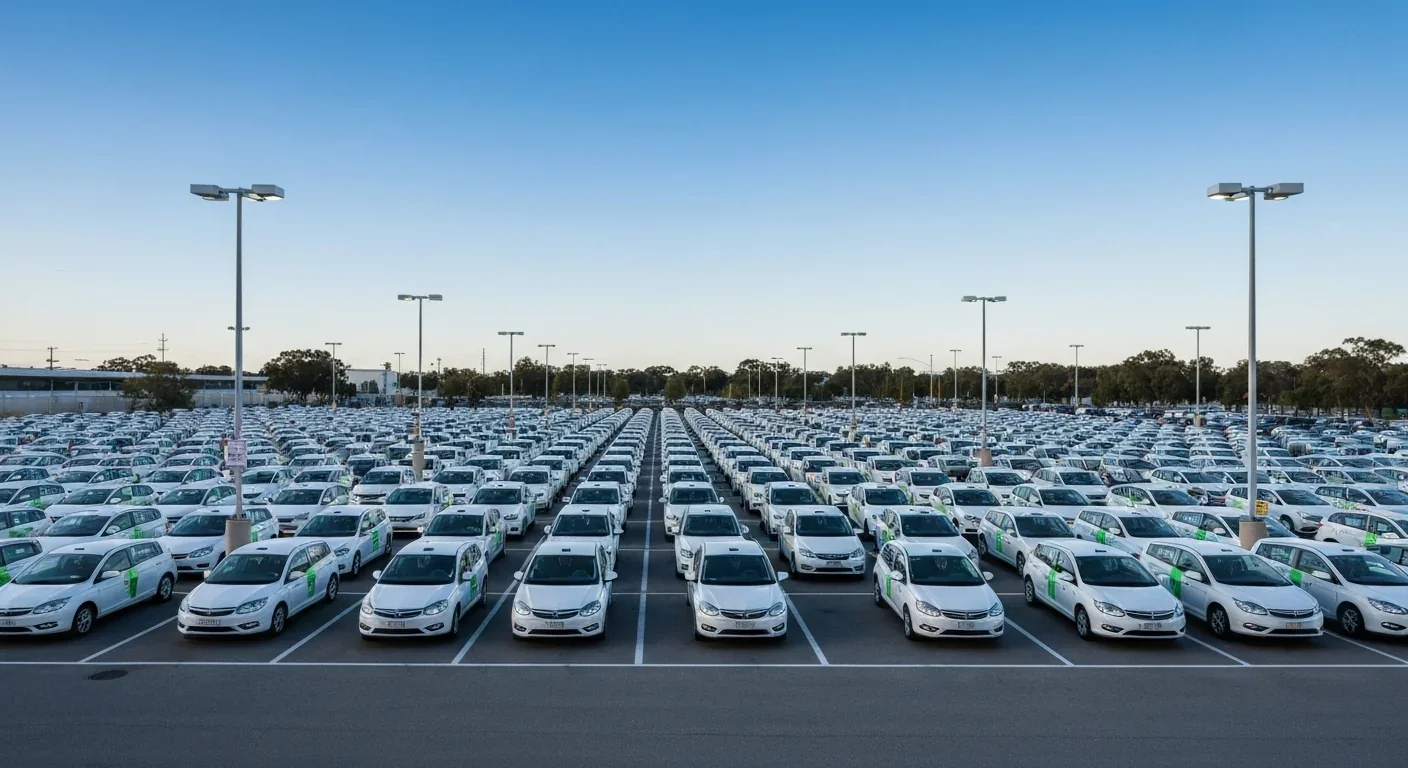
Imagine a world where nobody owns a car, every power drill sits in a communal library instead of gathering dust in your garage, and office desks are shared between three workers on rotating schedules. Sounds like a sustainability utopia. The sharing economy has been sold on exactly this promise: fewer things manufactured, less waste produced, a lighter footprint on the planet. But here's the uncomfortable truth that a growing body of research keeps confirming. When we share resources instead of owning them, we often end up consuming more, not less. The economics are counterintuitive, the psychology is messy, and the implications for climate policy are enormous.
Economists have a name for this phenomenon, and it's been around since 1865. William Stanley Jevons observed something strange about coal-powered steam engines in Victorian England: as engineers made the engines more efficient, total coal consumption didn't fall. It tripled between 1865 and 1900. The reason was deceptively simple. Greater efficiency lowered the cost of using coal, so people found more ways to use it. Factories expanded. New industries sprang up. The savings per unit were real, but they were swamped by the sheer volume of new demand.
This is the Jevons paradox, and its modern cousin, the rebound effect, is now showing up across the sharing economy in ways that should alarm anyone who assumes that sharing automatically equals sustainability. Research published in Nature Climate Change found that rebound effects can offset 50 to 100 percent of anticipated energy savings in many sectors. The International Energy Agency estimates that rebound effects universally remove 10 to 30 percent of energy efficiency gains across all sectors globally.
Now apply that logic to ride-sharing, bike-share programs, Airbnb, co-working spaces, and tool libraries, and the picture gets complicated fast.
The Jevons paradox has held for over 160 years: when you make a resource cheaper to use, people use more of it. The sharing economy is no exception.
The sharing economy didn't emerge from nowhere. It sits in a long lineage of efficiency-driven innovations that produced unexpected consumption surges. The pattern is remarkably consistent across centuries.
When Henry Ford's assembly line slashed the cost of car ownership in the early 1900s, the goal was efficiency. What followed was suburban sprawl, highway expansion, and a transportation system that now accounts for roughly a quarter of global carbon emissions. When airlines deregulated in the 1970s and fares plummeted, flying shifted from a luxury to a routine activity, and aviation emissions soared. When broadband internet made streaming cheap, we didn't watch the same amount of television more efficiently. We invented binge-watching and multiplied data center energy consumption.
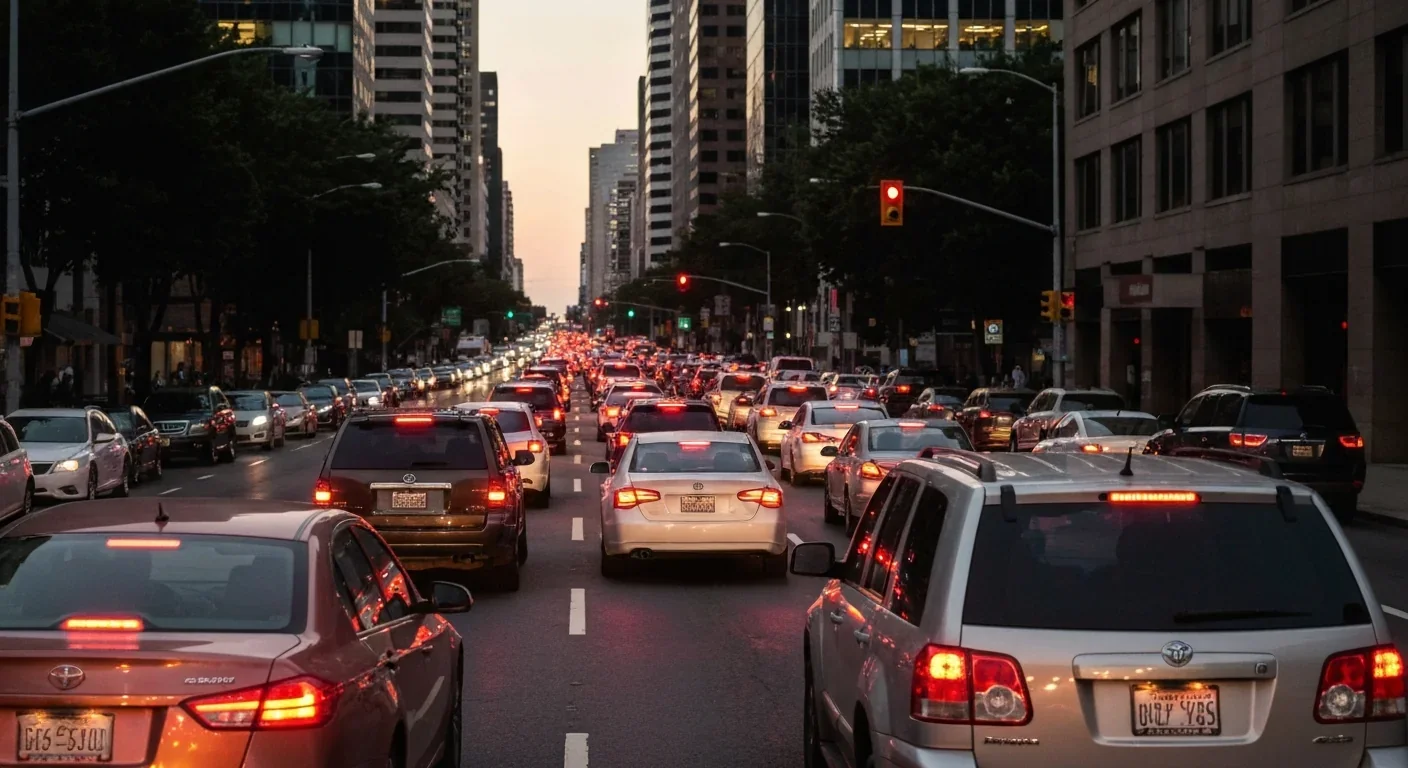
The circular economy rebound effect follows the same template. Efficiency gains lead to cost reductions, which translate into lower prices for consumers. Lower prices stimulate increased demand. The chain is predictable: efficiency gains lead to cost reduction, which triggers a demand response, which produces increased consumption.
What makes the sharing economy different, and potentially more dangerous from a sustainability perspective, is that it doesn't just make existing activities cheaper. It creates entirely new categories of consumption. A person who couldn't afford a car might not have traveled at all. Give them a $7 Uber ride, and suddenly they're making trips that never existed before. This is what economists call induced demand, and it's the sharing economy's most potent hidden engine.
The historical lesson is clear. Efficiency improvements that lower the marginal cost of using a resource will almost always increase total consumption, unless some countervailing force, typically regulation or pricing, deliberately prevents it.
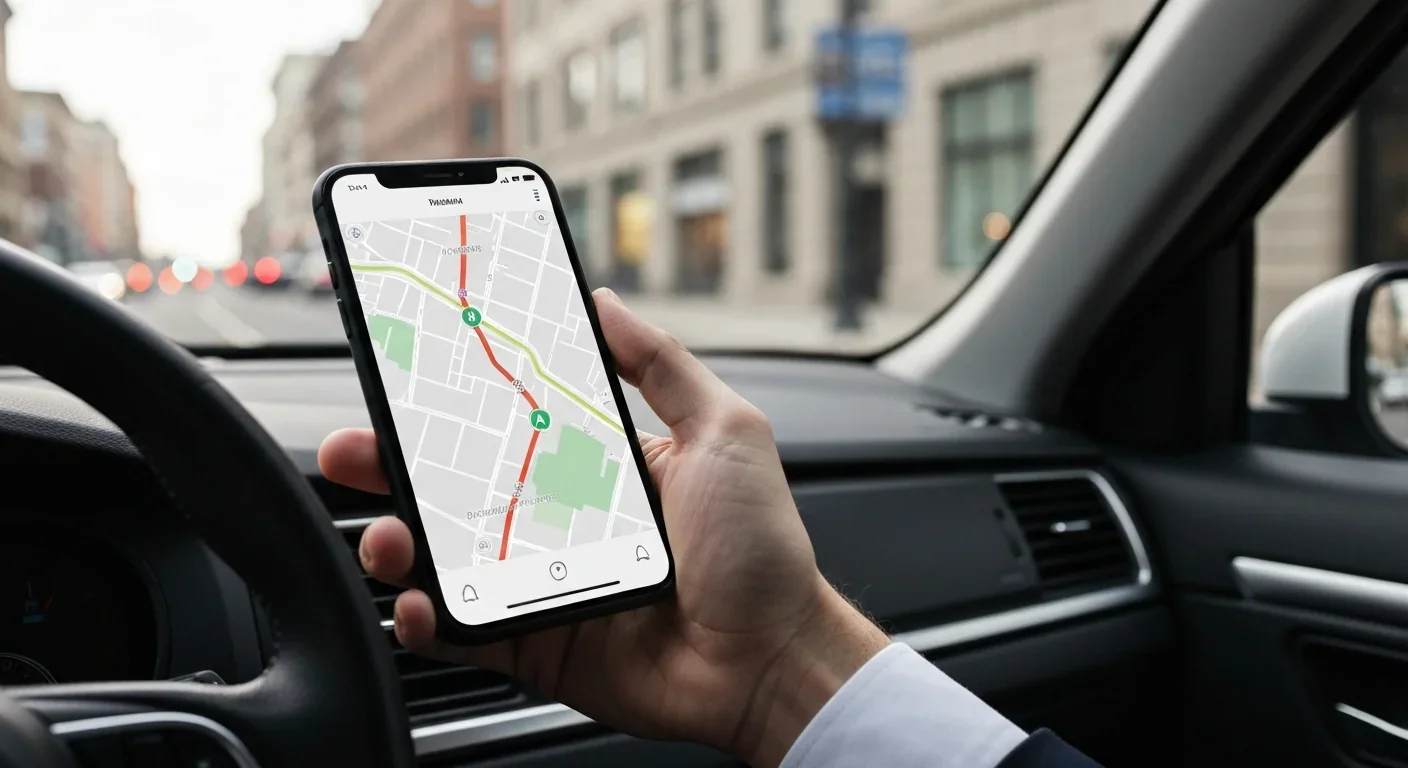
The core mechanism is brutally straightforward. When you own a car, every trip carries the full psychological weight of insurance payments, depreciation, maintenance, and fuel. When you hail a ride, you see only the fare. That cognitive shift, from total cost of ownership to marginal cost per use, is what drives the rebound effect in sharing platforms.
Consider the numbers. Uber completed 11.3 billion trips globally in 2024, generating $162.8 billion in gross bookings. In New York City alone, Uber and Lyft together handle about 634,000 daily trips, roughly five times more than yellow cabs. A 2022 Boston study found that 60 percent of Uber and Lyft rides would not have happened at all, or would have used mass transit, if the apps didn't exist.
That's not replacing car trips. That's creating new ones.
The effect compounds with deadheading, the practice of drivers cruising between fares without passengers. Over 40 percent of ride-share miles are driven empty. Across six major U.S. cities, only 54 to 62 percent of rideshare vehicle miles actually had a rider in the car. The result? Ride-hailing leads to approximately 83.5 percent more vehicle miles traveled than would have occurred without the service. Transportation analyst Charles Komanoff calculated that Uber-caused congestion reduced traffic speeds in downtown Manhattan by around 8 percent.
The empirical evidence is damning. Schaller Consulting reported that ride-sharing services added 5.7 billion miles of driving annually in nine major U.S. cities. MIT urban transport research from 2023 showed vehicle miles traveled increased by 8.3 percent in New York, 12.5 percent in San Francisco, and 9.8 percent in Chicago after ride-sharing took hold. In 2024, Manhattan had 100,000 active ride-hail vehicles, almost double the number from a decade earlier.
There's a nuanced counterpoint worth noting. A Berkeley study tracking 1.7 million vehicles over five years in the Boston region found that Uber's availability wasn't statistically related to VMT changes in the dense urban cores of Boston and Cambridge, only a minor 0.6 percent increase in surrounding areas. This suggests that context matters enormously. Dense cities with strong public transit may be somewhat buffered against the rebound, while sprawling suburban areas are more vulnerable.
"The reduced marginal cost per use drives mass adoption, but at a cost to overall resource use."
- Schaller Consulting, analysis of ride-sharing impacts
Research on cross-platform ride-sharing collaboration offers a glimmer of hope: unified systems that let platforms share rider requests can achieve share rates up to 20 percent higher and reduce VMT by approximately 0.25 miles per trip compared to fragmented platforms. But this requires cooperation that competitive markets rarely produce on their own.
Beyond economics, there's a powerful behavioral dimension. When you own something, you take care of it. Psychologists call this the mere ownership effect: people evaluate objects more favorably simply because they own them. That positive association drives maintenance, careful use, and conservation. Remove ownership, and you remove that psychological bond.
The sharing economy strips away this bond by design. A rental scooter gets thrown in a ditch. A shared bike gets abandoned on a sidewalk. An Airbnb guest runs the air conditioning with windows open. Research from Statista shows that travelers in shared lodging report being less careful with water and energy than they are at home.

This connects to a well-documented phenomenon: diffusion of responsibility. When responsibility is spread across a group, individual effort drops. In Darley and Latane's famous 1968 experiment, 75 percent of solo observers reported an emergency immediately, but only 10 percent did when others were present. In another iteration, 81 percent intervened alone versus 31 percent in a group of five.
Apply this to shared resources, and you get the tragedy of the commons. As Garrett Hardin wrote in 1968, "Each man is locked into a system that compels him to increase his herd without limit, in a world that is limited." Bike-and scooter-sharing companies are discarding millions of damaged vehicles into vast scrap yards and bicycle graveyards, a physical monument to diffused responsibility.
Co-working spaces present themselves as green alternatives to traditional offices. The logic sounds solid: share heating, lighting, and equipment among many workers, and per-person energy use should drop. But the evidence tells a different story. Research suggests that energy consumption per worker in co-working spaces can be comparable to, or even 10 to 20 percent higher than, traditional offices.
The culprit? Extended operating hours. Many co-working spaces run 24/7, keeping HVAC systems and lighting active around the clock. High-density turnover means spaces are cleaned and reset more frequently. And as one industry advocate admitted, the sustainability of co-working "depends on design, who they serve, and values that underpin operations." That's a polite way of saying the default outcome isn't green at all.
Meanwhile, a Cornell and Microsoft study found that full-time remote work can cut commuting emissions by up to 54 percent, though even this comes with a rebound: increased household energy consumption offsets some of those gains.
Co-working spaces can consume 10-20% more energy per worker than traditional offices, largely because they operate around the clock with continuous HVAC and lighting demands.
Not all sharing backfires. The key distinction is whether a shared model replaces purchases or replaces trips.

Tool libraries represent the best-case scenario. When a community of 1,630 people borrows from a shared catalog instead of buying individual power drills, the number of drills manufactured drops. There's no rebound mechanism here because you can't "over-consume" a borrowed drill in the same way you can over-consume cheap rides. As Erica Bello from a Providence tool library explained, "We want people to realize their own self-reliance. You don't have to be a consumer. You can be a repairer."
Life Cycle Assessments consistently show that for products with long lifespans and infrequent use, the greatest environmental savings come from extending functional life and maximizing utilization across multiple users. Community workshops and volunteer repair teams create a sense of social ownership that counteracts the tragedy of the commons.
Bike-sharing also works, but only under specific conditions. Research from Fuzhou, China found that the carbon reduction benefit follows an inverted-U curve with distance: the sweet spot is 3 to 5 kilometers. Beyond that range, benefits diminish. And a Chengdu study revealed that when bike-share trips displace public transit rather than private cars, CO2 savings drop by 38 percent and fuel savings by 34 percent.
Europe, which holds 38 percent of the global car-sharing market, has taken a regulatory approach. Station-based car-sharing models, where vehicles must be returned to designated spots, generally perform better environmentally than free-floating alternatives. The structure itself limits over-consumption.
In China, the rapid deployment of hundreds of thousands of dockless bikes created both impressive carbon savings and enormous waste when companies folded and bikes piled up in graveyards. The lesson from Fuzhou's 500,000 shared bikes is that scale without governance produces its own form of environmental damage.
"If everyone was to act on this individual interest, the situation would worsen for society as a whole. Demand for a shared resource would overwhelm supply, and the resource would become entirely unavailable."
- Garrett Hardin, 1968
The collaborative economy study commissioned by the European Commission found that per-transaction environmental impacts are often lower in sharing models, but total system impacts depend heavily on whether the model generates net new consumption. Europe's approach of coupling sharing platforms with congestion pricing and emission standards offers a template that other regions are beginning to study.
Nobel laureate Elinor Ostrom demonstrated that commons don't have to end in tragedy. Her research identified design principles for governing shared resources: clear boundaries, graduated sanctions, collective decision-making, and monitoring. These principles map directly onto the sharing economy's challenges.
The research points to several interventions that can break the consumption paradox.
Price the externality. Carbon pricing and congestion tolls can counteract the rebound by keeping the effective cost of use high enough to discourage overconsumption. Manhattan's congestion pricing plan, imposing tolls on ride-hail vehicles during peak hours, is exactly this kind of intervention.
Design for accountability. Platforms need clear individual accountability mechanisms, reducing group size, defining expectations, and making usage visible. Tool libraries succeed partly because borrowers sign their name and return items face-to-face.
Measure what matters. Corporate sustainability claims that focus on per-trip emissions obscure aggregate increases. Regulators should require total system impact reporting, not just per-unit efficiency metrics.
Match the model to the resource. Sharing works best for durable goods with low utilization rates: tools, specialized equipment, seasonal items. It works worst for services where lower cost directly generates new demand: rides, accommodation, workspace hours.
The sharing economy isn't inherently good or bad for the planet. It's a tool, and like every efficiency tool since Jevons' steam engines, its environmental impact depends entirely on whether we design the systems around it to capture the savings or let them leak into more consumption. Right now, for too many sharing platforms, we're letting them leak. The question isn't whether to share. It's whether we're honest enough to measure the true cost of sharing, and brave enough to price it accordingly.

Project Orion was a real 1960s program to reach other stars by detonating 800 nuclear bombs behind a spacecraft. The physics worked and the engineering was feasible, but the 1963 nuclear test ban treaty killed it. It remains the most credible interstellar spacecraft ever designed.

The locus coeruleus, a tiny brainstem structure, degenerates decades before Alzheimer's symptoms appear. Its loss cripples the brain's inflammation control, waste clearance, and sleep regulation. New imaging tools and noradrenergic therapies offer hope for early detection and prevention.
Research shows the sharing economy often increases total resource consumption through the Jevons paradox and rebound effects. Ride-sharing adds billions of vehicle miles, co-working spaces use more energy per worker, and diffused responsibility erodes conservation behavior. Breaking the paradox requires congestion pricing, accountability design, and matching sharing models to appropriate resource types.

Psychological reactance theory explains why banning or restricting things makes people want them more. From Prohibition to the Streisand effect to scarcity marketing, research shows that threatening people's freedom reliably backfires, and autonomy-supportive communication is far more effective.

A carnivorous pitcher plant in Borneo evolved to house bats instead of trapping insects, gaining up to 95% of its nitrogen from bat guano. The plant even built an ultrasonic reflector to help bats find it, revealing that carnivory in plants is a flexible spectrum.

The quantified self movement began as a hacker-ethos pursuit of personal insight, but corporate wearables now funnel biometric data to employers, insurers, and data brokers. With 81% of Americans wrongly believing health apps are HIPAA-protected, a regulatory void enables health data to be sold for pennies while generating anxiety instead of empowerment.

CXL memory pooling lets servers dynamically share DRAM over a cache-coherent interconnect, eliminating the 40% stranded memory waste in data centers. With commercial hardware now shipping and Azure deploying CXL cloud instances, this technology promises to cut memory costs by 50% while enabling composable infrastructure.

Loading featured articles...